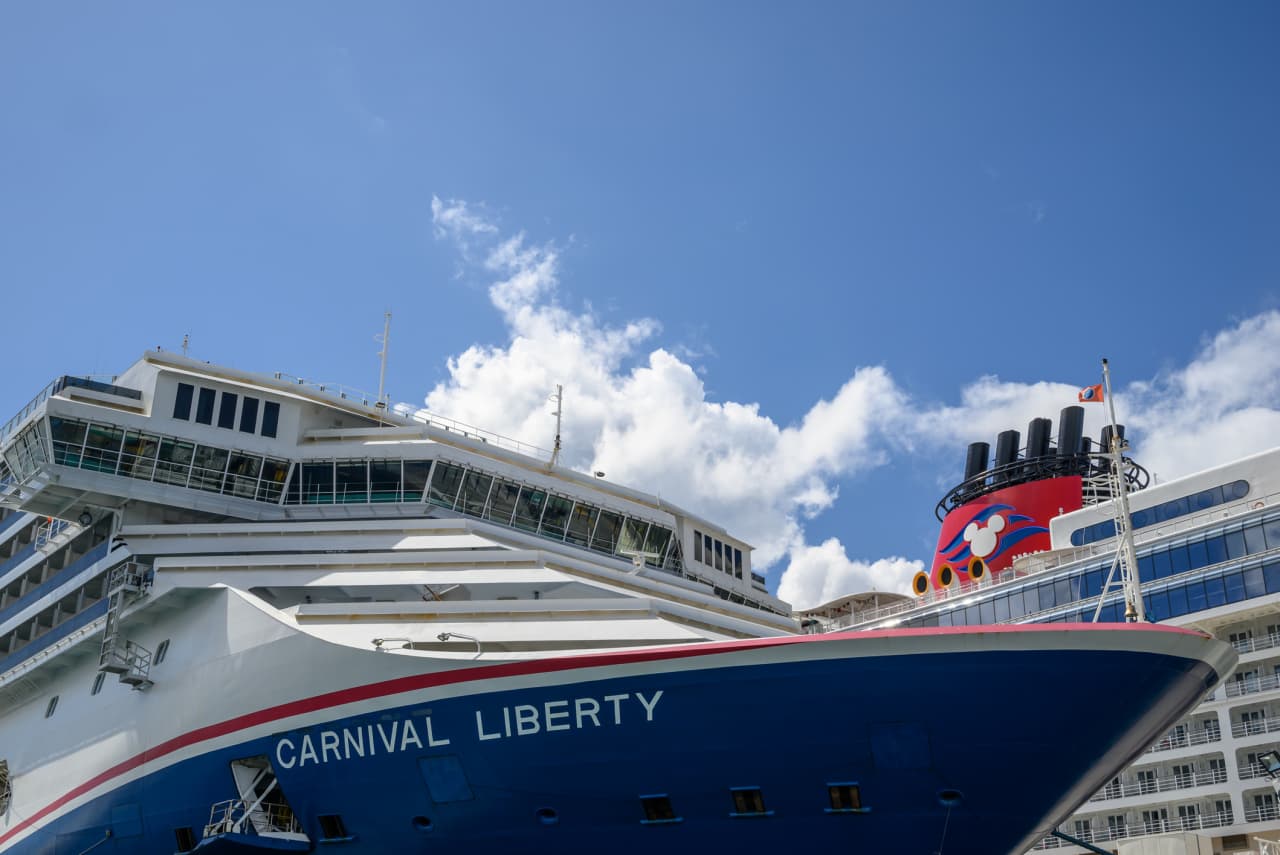
MIAMI – [Date] – Carnival Corporation (NYSE: CCL), the global leader in cruise vacations, today announced a significant downward revision to its profit outlook for the current fiscal year. The leading cruise operator cited an alarming increase in fuel costs, projected to surge by more than 40% in the current quarter compared to the previous one, as the primary driver for the adjustment. This unexpected financial headwind arrives despite the company experiencing record-breaking consumer demand, underscoring the precarious balance between robust sales and escalating operational expenses within the travel sector.
This development comes at a critical juncture for the cruise industry, which is still in a period of robust recovery following the unprecedented disruptions of the COVID-19 pandemic. While demand has rebounded strongly, with bookings outpacing pre-pandemic levels in many segments, the sensitivity to external economic factors, particularly energy prices, remains a significant vulnerability. Carnival's announcement serves as a stark reminder that even with full ships, profitability can be swiftly eroded by surging input costs, a challenge faced by global transport industries.
Key details from Carnival's updated guidance indicate that the company now expects adjusted earnings per share (EPS) to be in the range of $[X] to $[Y] for the fiscal year, down from previous projections of $[A] to $[B]. The company highlighted that the price of bunker fuel, a key cost driver, has escalated far beyond their initial modeling. During the earnings call, CEO [CEO Name] stated, "While we are witnessing unprecedented demand and record booking volumes, the sharp and unpredictable rise in fuel prices has unfortunately necessitated a recalibration of our financial targets. We are actively implementing efficiency measures to mitigate these impacts." The company also noted a slight increase in other operational expenses, though fuel remained the predominant factor.
Broader Industry Implications and Market Reaction
The ripple effect of Carnival's announcement was immediately felt across the market. Shares of Carnival Corporation tumbled by over [X]% in early trading, dragging down competitors such as Royal Caribbean Group (NYSE: RCL) and Norwegian Cruise Line Holdings Ltd. (NYSE: NCLH), which saw declines of [Y]% and [Z]% respectively. This synchronized downturn highlights the market's perception of shared vulnerabilities within the cruise sector. Investors are now scrutinizing the ability of cruise lines to pass on these increased costs to consumers through higher fares without dampening the currently buoyant demand, or if they will be forced to absorb a larger portion of the burden.
Industry analysts have weighed in on the implications. John Doe, a senior analyst at Travel Equity Research, noted, "Carnival's revision is a bellwether for the entire cruise industry. While demand is undeniably strong, the sector's high fixed costs and reliance on global fuel markets mean that profit margins are highly sensitive to price fluctuations. The key question now is how aggressively these companies can implement fuel hedging strategies and pursue operational efficiencies, or if higher ticket prices are inevitable." Jane Smith, an economist specializing in consumer spending, added, "While consumers are currently willing to pay a premium for experiences, there's a ceiling. Persistent price increases driven by fuel could eventually cool demand, especially in discretionary spending categories like cruises."
Navigating Future Challenges and Strategic Responses
Looking ahead, Carnival Corporation and its industry peers will likely intensify their focus on a multi-pronged strategy to combat these cost pressures. This includes enhancing fuel efficiency across their fleets through technological upgrades, such as investing in more eco-friendly propulsion systems and exhaust gas cleaning systems. Furthermore, dynamic pricing strategies, fuel surcharges, and expanded on-board revenue opportunities will become even more critical to maintaining profitability. The push towards alternative fuels, though a longer-term solution, may also gain renewed urgency.
The global geopolitical landscape and its impact on energy markets will remain a critical factor determining the stability of operational costs for cruise lines. While the current demand environment offers a buffer, any sustained spike in fuel prices combined with a potential slowdown in consumer spending could create a challenging scenario. Shareholders and industry observers will be closely monitoring quarterly reports for signs of successful cost mitigation and sustained pricing power, as Carnival and its competitors navigate these turbulent economic waters.