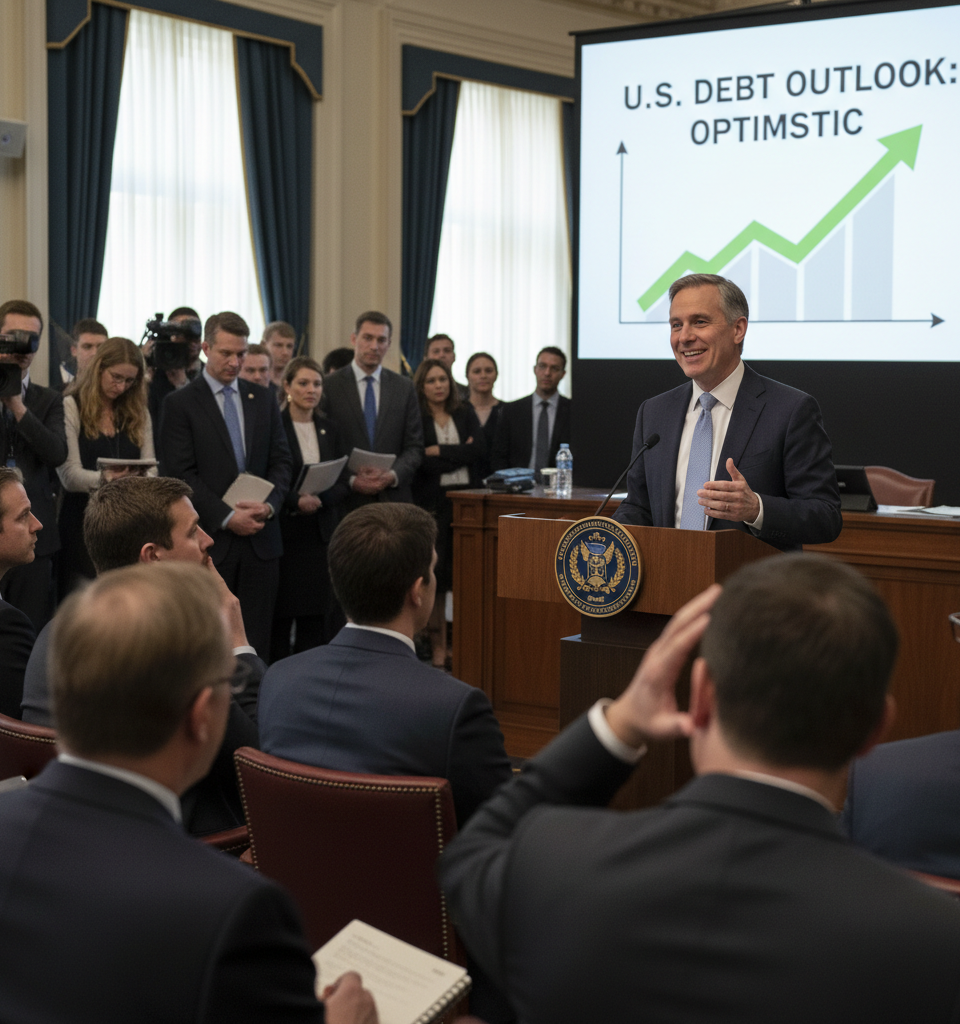
Contextualizing the Debt Dialogue
Swagel's remarks come at a critical juncture, as the national debt continues its steady climb, surpassing $34.5 trillion. The CBO itself has consistently warned about the unsustainable path of federal spending, driven largely by entitlement programs and rising interest payments. Historically, these warnings have fueled concerns among economists and policymakers about potential long-term economic stagnation, inflationary pressures, and a diminished capacity for future government investment. Swagel's pivot from these traditional warnings marks a significant departure, seeking to reframe the conversation from alarmism to proactive problem-solving.
Key Optimistic Projections and Strategic Insights Director
Swagel underscored that "making progress to address the fiscal trajectory would be a positive for the U.S. economy." His optimism is rooted not in a belief that the debt is inconsequential, but rather in the capacity of the American political system and economic resilience to adapt. He highlighted several factors contributing to this view: the U.S. dollar's enduring status as the world's primary reserve currency, the country's robust and innovative economy, and the potential for policymakers, despite their current disagreements, to eventually find common ground. Swagel's perspective suggests that incremental policy adjustments, rather than drastic austerity measures, could be sufficient to stabilize the debt-to-GDP ratio over time, preventing a precipitous decline.
Broad Economic and Market Implications
Swagel's optimistic stance could have multifaceted impacts across various sectors. For financial markets, a toned-down rhetoric from a key fiscal watchdog could temper fears of immediate sovereign debt crises, potentially reducing volatility in bond markets and stabilizing Treasury yields. Businesses might view this as a signal of continued economic stability, encouraging investment and long-term planning. Conversely, some fiscal conservatives might interpret this optimism as a green light for continued deficit spending, further entrenching the existing fiscal trajectory. The international community, often scrutinizing U.S. fiscal health, may find reassurance in this more measured assessment, bolstering confidence in the global financial system.
Expert Commentary and Divergent Views While
Swagel's optimism is a notable shift, it's not universally embraced. Several prominent economists acknowledge the U.S.'s unique position in the global economy but still point to the inherent risks. Dr. Sarah Chen, a senior economist at the Brookings Institution, commented, "While Director Swagel is right that the U.S. has significant advantages, ignoring the underlying structural issues – particularly unfunded liabilities in Social Security and Medicare – would be naive. Optimism must be paired with tangible policy changes." Others, however, appreciate the attempt to foster a more productive dialogue, arguing that constant alarmism can paralyze legislative action rather than spur it.
The Path Forward: Policy Evolution and Future Developments
The immediate future will likely see continued debate over federal spending and taxation, particularly as budgetary deadlines approach. Swagel's call to move beyond the "scolding narrative" implies a desire for a more solution-oriented approach, potentially focusing on bipartisan commissions or long-term fiscal frameworks. Upcoming legislative cycles, especially after the 2024 elections, will be crucial in determining whether policymakers heed his call for constructive engagement. Reforms to entitlement programs, coupled with potential adjustments to tax policy, remain key areas for future consideration if the U.S. is to meaningfully address its fiscal trajectory and validate Swagel's measured optimism.
Conclusion: A New Chapter in Fiscal Discourse? Director
Swagel's tempered optimism offers a refreshing counterpoint to the often-dire warnings surrounding the national debt. By reframing the conversation from unavoidable crisis to manageable challenge, he aims to inspire a more constructive dialogue among policymakers. Whether this shift in tone will translate into meaningful legislative action to secure the nation's long-term fiscal health remains to be seen, but it undoubtedly marks a new chapter in the ongoing narrative of the U.S. national debt.