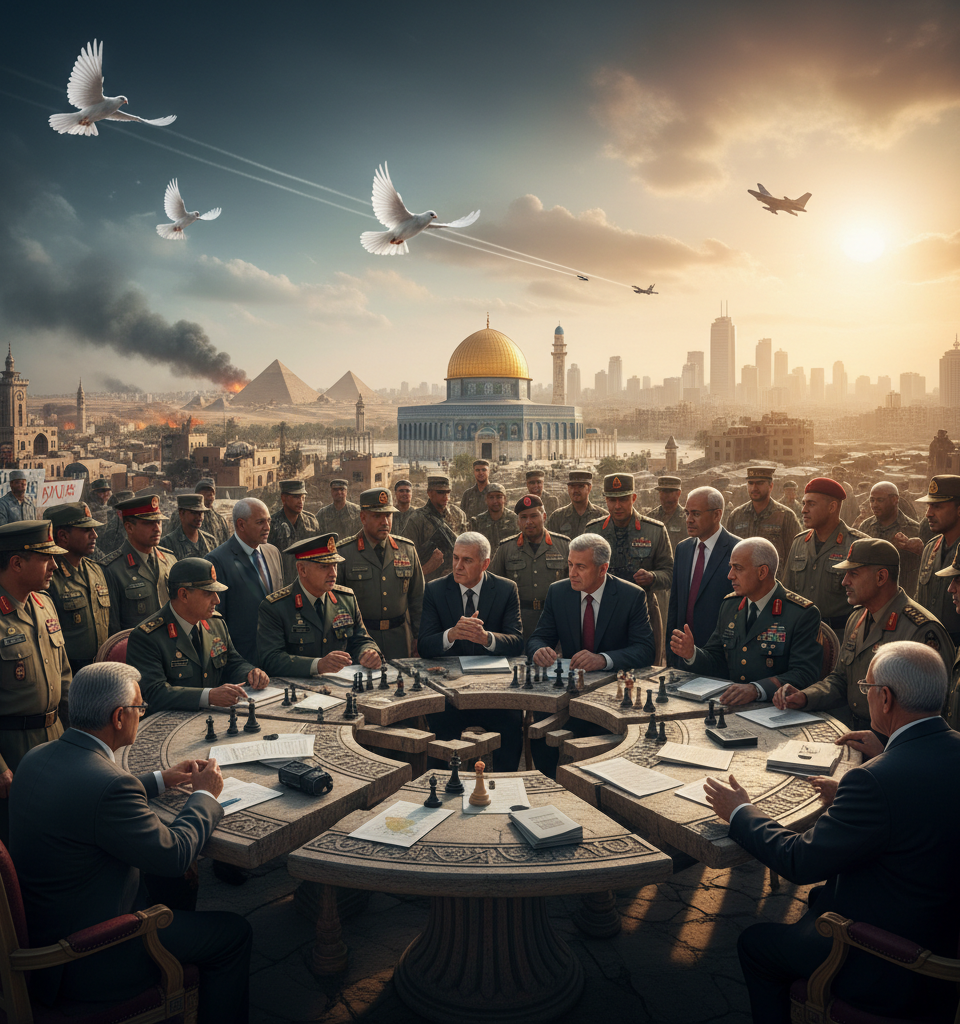
The broader geopolitical reordering of the Middle East is far from complete, a reality that holds true regardless of whether a ceasefire materializes in the immediate future. Current analyses suggest that while all parties involved have strong incentives to de-escalate and end the protracted conflict, a critical absence of common ground on core issues continues to impede any lasting resolution. This fundamental discord ensures that the region's complex power dynamics and strategic alliances remain in flux, with potential for further significant shifts.
The current stalemate is not merely a tactical disagreement but reflects deeper, structural geopolitical forces at play. For decades, the Middle East has been a nexus of global interests, characterized by a delicate balance of regional powers, international interventions, and internal conflicts. The present hostilities, whatever their immediate trigger, are understood as a significant accelerant in a long-standing process of strategic recalibration. This ongoing reshuffling holds profound implications for energy markets, international shipping lanes, and global security, making any potential resolution, or lack thereof, a matter of paramount international concern.
Divergent Interests Fuel Stalemate
At the heart of the persistent deadlock lies the paradox that while both sides acknowledge the overwhelming costs and inherent unsustainability of continued conflict, their definitions of an acceptable peace remain mutually exclusive. One faction likely views a ceasefire as a strategic pause, an opportunity to regroup and solidify gains or prepare for future confrontations under more advantageous terms. The other, conversely, may perceive it as a pathway to achieving specific security guarantees, territorial adjustments, or political concessions that are anathema to their adversary. The lack of a unified vision for a stable post-conflict order ensures that even a temporary halt to fighting would merely defer, rather than resolve, underlying tensions. This complex interplay of short-term tactical advantages versus long-term strategic objectives underscores the difficulty in brokering a comprehensive and durable peace.
Broader Regional Implications
Beyond the immediate conflict zones, the sustained instability is fostering a climate of increased uncertainty across the Middle East. Regional states are actively reassessing their alliances, military postures, and economic strategies in anticipation of evolving power configurations. For instance, countries heavily reliant on stable oil prices or secure maritime trade routes are experiencing heightened anxiety, exploring diversified energy supplies or alternative trade corridors. Investment flows into the region are becoming more cautious, with a preference for short-term, high-return ventures over long-term strategic investments, reflecting the perceived elevated risk profile. The prolonged nature of this 'reshuffling,' punctuated by localized conflicts, could lead to novel security pacts, unexpected diplomatic alignments, and the rise of new economic partnerships, fundamentally altering the existing geopolitical architecture.
Economic and Energy Market Volatility
The ongoing geopolitical uncertainty exerts considerable pressure on global energy markets. While direct supply disruptions have been managed, the risk premium associated with crude oil prices remains elevated, reflecting fears of wider regional escalation that could impede major arteries like the Strait of Hormuz or disrupt significant production facilities. International shipping and insurance sectors are also navigating a landscape of increased risk, impacting supply chain costs and leading to potential rerouting of cargo, especially concerning routes through the Red Sea and Gulf regions. This sustained volatility could prompt major economies to accelerate their transition away from fossil fuels or incentivize the development of geographically diverse energy sources, fundamentally altering long-term energy dynamics.
Diplomatic Efforts and Future Outlook
Despite the formidable challenges, diplomatic channels remain active, albeit with limited visible progress. Various international bodies and mediation efforts are continuously attempting to bridge the chasm between the warring parties. However, without a fundamental shift in the core demands and strategic calculus of the principal actors, these efforts are likely to result in temporary agreements rather than comprehensive settlements. Looking ahead, the Middle East is expected to continue its trajectory of strategic realignment. The interplay of internal political dynamics, external pressures from global powers, and the economic imperative for stability will dictate the speed and direction of this ongoing reshuffle. The future state of the region hinges not just on a potential ceasefire, but on a more profound reconciliation of disparate geopolitical ambitions.