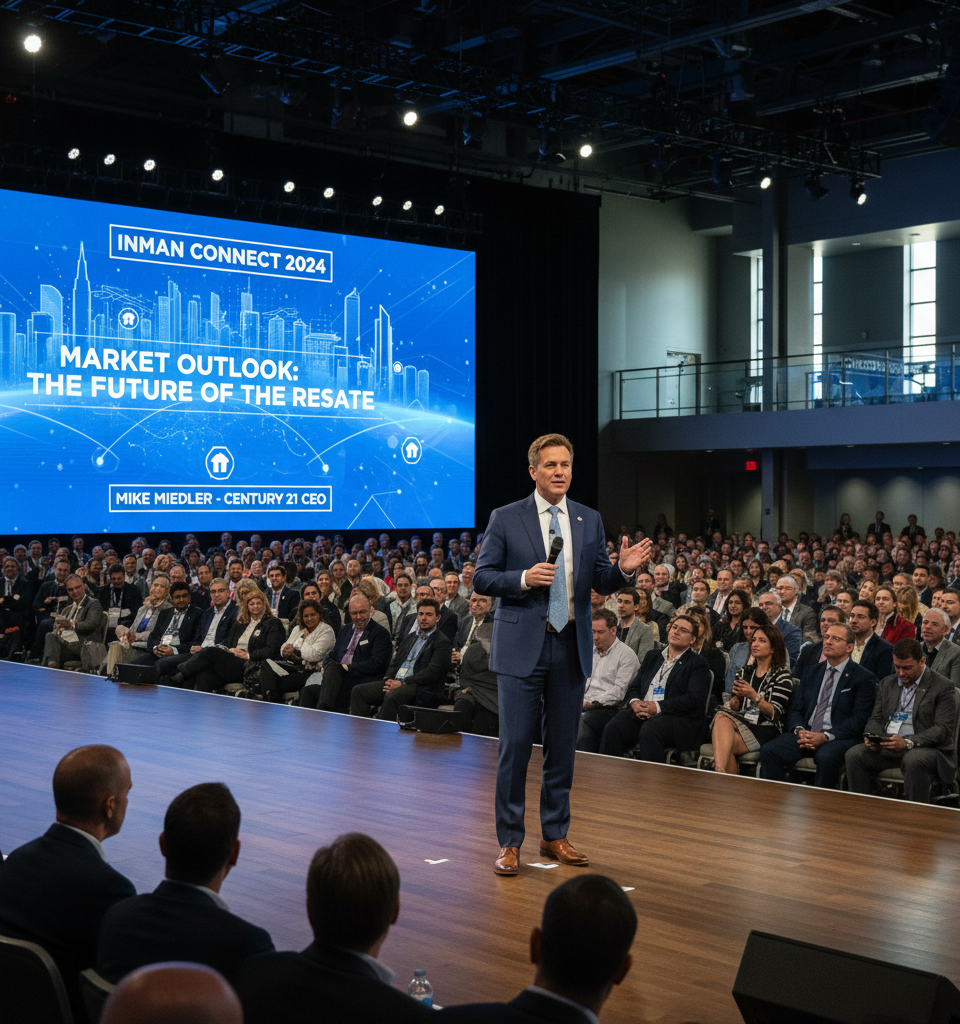
Mike Miedler, President and CEO of Century 21 Real Estate, delivered a stark forecast for the real estate industry, projecting an acceleration of consolidation as firms grapple with a fiercely competitive and contracting market. Speaking to Inman, Miedler outlined his perspective on the industry's trajectory and offered crucial guidance for agents striving to thrive amidst these unprecedented conditions.
The Shifting Landscape of Real Estate
The real estate sector is currently navigating a period of profound transformation, characterized by elevated interest rates, constrained inventory, and evolving consumer behavior. This confluence of factors has placed considerable pressure on brokerage firms, particularly smaller independent operations that may lack the financial reserves or technological infrastructure to weather prolonged downturns. Miedler's prediction of increased consolidation echoes observations from market analysts who have noted a growing trend of mergers and acquisitions, driven by the pursuit of economies of scale, enhanced technology integration, and broader market share in a tightening environment.
Miedler's Strategic Insights and Agent Advice
Miedler articulated three key strategies for agents to not just survive but indeed flourish in this challenging climate. Firstly, he underscored the paramount importance of hyper-local expertise, urging agents to become irreplaceable resources within their specific communities. Understanding micro-market trends, local amenities, and community nuances can differentiate agents in a crowded field.
Secondly, he stressed the need for technological adoption and proficiency, advising agents to leverage AI-powered tools and cutting-edge CRM systems to streamline operations and enhance client communication. The third, and arguably most critical, piece of advice was the cultivation of strong relationships and networking, emphasizing that in an increasingly digital world, human connection remains the bedrock of successful real estate transactions. These tenets, Miedler believes, are essential for agents aiming to elevate their value proposition.
Industry Impact and Broader Implications
Increased consolidation within the real estate industry carries significant implications for agents, consumers, and technology providers alike. For agents, it could mean fewer independent brokerages, potentially leading to varied commission structures or increased competition for positions within larger entities. Consumers might benefit from more streamlined services and enhanced digital platforms offered by consolidated firms, though concerns about reduced choice and market diversity could also arise. Technology firms specializing in real estate solutions may find a more concentrated buyer base for their products, necessitating a focus on enterprise-level solutions and integrations.
Expert Perspectives on Consolidation
Industry analysts largely corroborate Miedler's outlook. For instance, recent reports from firms like RESO and T3 Sixty have highlighted a consistent downward trend in the number of active real estate agents post-pandemic, coupled with a decrease in transaction volumes across many major markets, sometimes as much as 20% year-over-year in specific regions. This economic pressure inherently favors larger, better-capitalized firms capable of absorbing smaller competitors or investing in market-differentiating technologies. Economists point to rising operational costs and increased regulatory scrutiny, such as recent shifts in commission structures, as additional catalysts likely to accelerate this consolidation trend.
The Road Ahead for Real Estate
The immediate future of the real estate industry appears to be one of both challenge and opportunity. While consolidation may lead to a more streamlined and perhaps more efficient market, it also underscores the imperative for individual agents to continually adapt and enhance their skills. The focus will increasingly shift towards value-added services, leveraging data analytics, and delivering an unparalleled client experience. Industry observers anticipate further developments in proptech innovation and strategic partnerships as firms seek competitive advantages. The strategic advice offered by Miedler offers a practical blueprint for agents to navigate these evolving dynamics, ensuring their relevance and success in a transforming market.
Regulatory and Technological Influences
Beyond market forces, regulatory shifts and technological advancements are also playing a pivotal role in shaping the industry's future. The ongoing discussions and potential changes surrounding agent commission structures, ignited by recent legal challenges and industry settlements, could fundamentally alter business models and profit margins for brokerages. Concurrently, the rapid evolution of artificial intelligence and machine learning offers tools for unprecedented efficiency in lead generation, property valuation, and client communication, but requires substantial investment and adaptation. Firms that can master these twin demands – regulatory compliance and technological integration – are best positioned to lead the consolidated market.
The Agent's Evolving Role
In this environment of change, the role of the real estate agent is undeniably evolving from a transactional facilitator to a strategic advisor. Miedler’s emphasis on hyper-local expertise and relationship building aligns with this broader shift. Agents who can articulate genuine value through deep community knowledge, personalized service, and a sophisticated understanding of market dynamics will be indispensable. The era of the generalist agent is waning, replaced by a demand for specialists who can navigate complex transactions and provide nuanced insights. This professionalization of the agent's role is a direct consequence of the market pressures and consolidation described by Miedler, emphasizing quality over sheer quantity in a shrinking pool of transactions.