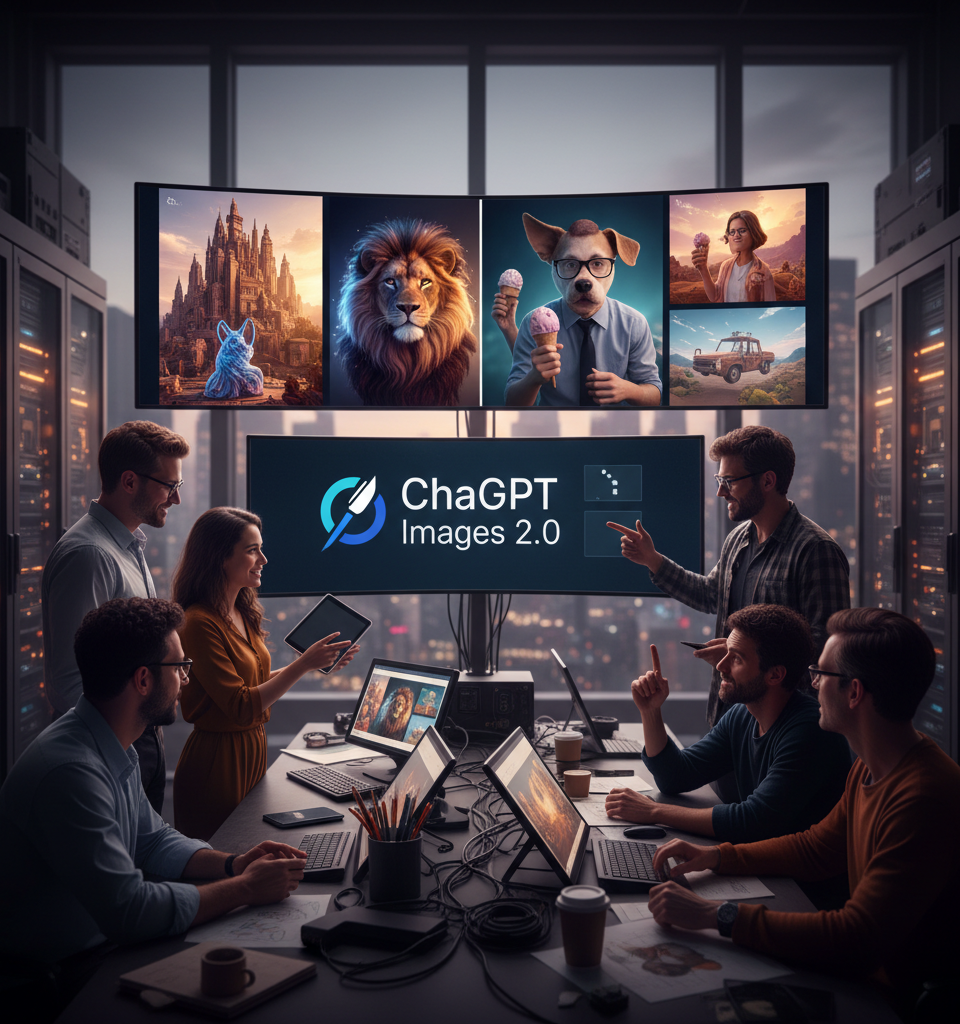
0, presenting a substantial upgrade to its AI image generation capabilities that analysts are calling a "generational leap." This new version promises enhanced fidelity, improved understanding of complex prompts, and a broader range of artistic styles, positioning it as a pivotal tool for a diverse array of users, from digital artists to marketing professionals. Early evaluations indicate a highly capable system, though particular challenges persist in areas critical for commercial adoption, such as precise brand representation and accurate textual rendering within images.
This development arrives at a critical juncture in the rapidly evolving AI landscape, where the demand for high-quality, on-demand visual content is surging. The previous iteration of ChatGPT's image generation was often criticized for its inability to produce consistent branding elements, legible text, and visually coherent infographics—limitations that significantly hampered its practical utility in corporate environments. 0 aims to address these shortcomings, reflecting a broader industry trend towards more sophisticated and reliable AI tools.
Its release follows a period of intense private testing and feedback, underscoring OpenAI's commitment to iterative improvement in a highly competitive market currently valued in the tens of billions of dollars and projected to grow dramatically. Initial user experiences, particularly from lead testers, highlight several key advancements. The model demonstrates a much-improved capacity to interpret and execute complex visual instructions, resulting in images that are not only aesthetically pleasing but also more closely aligned with user intent.
For instance, attempts to generate mock product packaging or branded promotional material showed remarkable progress in capturing brand aesthetics, though occasional inaccuracies in logo placement or color matching were still observed. Crucially, the model's ability to render text within images, while still imperfect, marks a noticeable improvement, shifting from often nonsensical gibberish to sometimes legible, albeit occasionally misspelt or awkwardly placed, words. Infographics, while visually more appealing, continued to face hurdles in displaying precise data points or maintaining numerical accuracy, suggesting that human oversight remains indispensable for critical applications.
0 is set to intensify competition within the generative AI sector. Companies like Adobe, with its Firefly suite, and Stability AI, with Stable Diffusion, are vying for dominance in this space, each offering unique features and integrations. OpenAI's move to enhance its visual capabilities directly impacts graphic design, advertising, and content creation industries, potentially streamlining workflows and reducing production costs.
0 could disrupt traditional creative agencies by offering an in-house, on-demand solution for preliminary design concepts or rapid content iteration. The global market for generative AI is forecast to reach $118 billion by 2032, driven significantly by advancements in visual AI. 0. Dr. Anya Sharma, a leading AI ethics researcher, noted, "While technically impressive, the continuous challenge for these models lies not just in aesthetic output, but in their reliability and ethical considerations for commercial use.
Issues like deepfakes and misinformation remain pressing concerns that improvements in fidelity will only amplify." Marketers appreciate the creative boost but stress the need for human editors for final product quality and brand integrity. 0 and similar AI models involves ongoing refinement in critical areas. Future iterations are expected to prioritize greater control over fine-grained details, especially for brand assets and textual elements, and to integrate more seamlessly with existing creative software ecosystems.
OpenAI's roadmap likely includes features that allow for iterative editing within the AI itself, reducing the need for external post-production. Furthermore, ethical AI development, including robust mechanisms to prevent misuse and ensure content authenticity, will remain a paramount focus as these technologies become increasingly sophisticated and pervasive in commercial and public spaces. The next 12-18 months are expected to bring further breakthroughs, potentially reshaping creative industries even more profoundly.