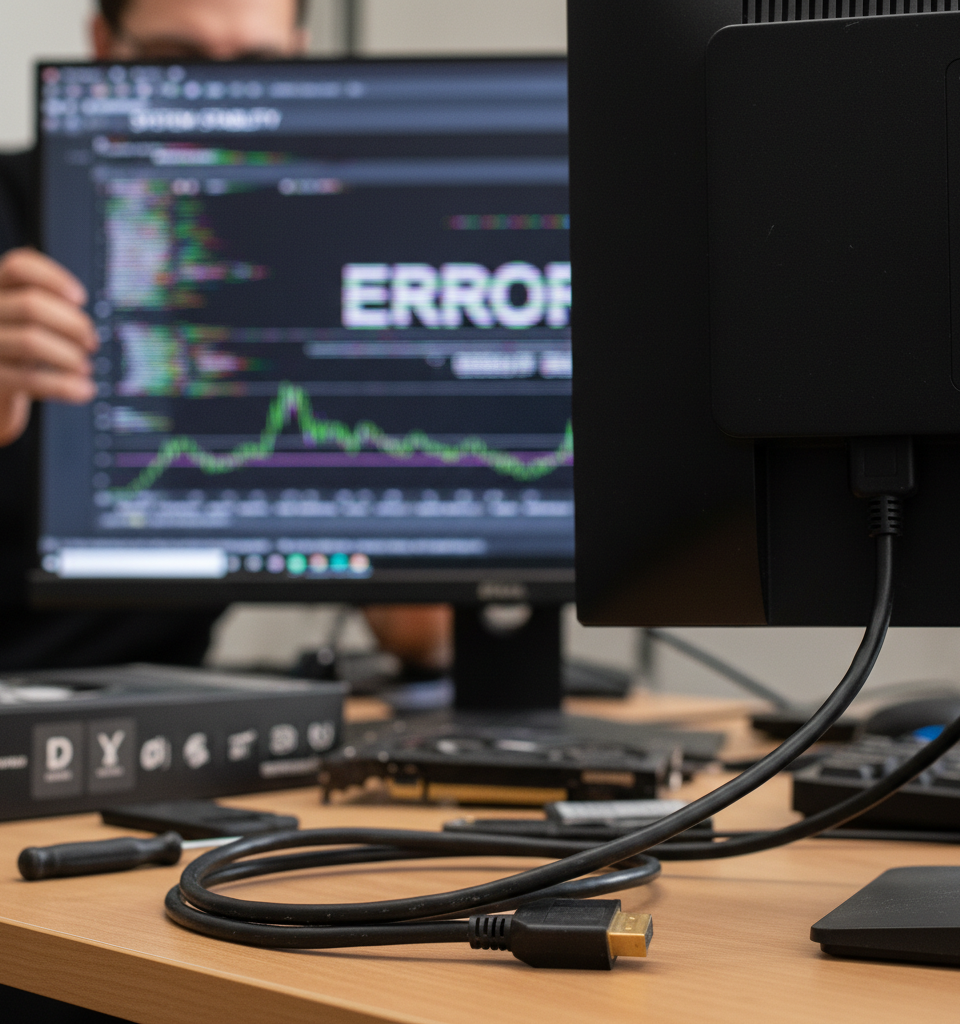
Consumers and PC builders are increasingly facing a perplexing array of technical glitches, and a key factor is emerging from an unexpected quarter: cheap DisplayPort cables. Underscoring a growing industry concern, these seemingly innocuous peripheral components are being identified as a primary source of intermittent display issues, system crashes, and reduced overall PC performance. The problem stems from often imperceptible manufacturing defects that can wreak havoc on high-bandwidth data transmission, directly impacting user experience and hardware longevity.
The Technical Underpinnings of Failure
Unlike their HDMI counterparts, DisplayPort cables leverage sophisticated signal integrity and error correction mechanisms to transmit video, audio, and supplementary data across high-frequency interfaces. The specifications, particularly for newer versions like DisplayPort 1.4 and 2.0, demand meticulous adherence to impedance matching, shielding, and connector pinouts. Even a microscopic imperfection in the wiring, a poorly crimped pin, or inadequate shielding can introduce signal degradation, leading to dropped frames, visual artifacts, or even complete loss of signal. This issue is exacerbated by the increasing demands of high-resolution monitors (e.g., 4K, 8K) and high refresh rates (144Hz, 240Hz), where data throughput can exceed 40 Gbps. A faulty cable can effectively bottleneck an otherwise powerful system, negating the investment in premium graphics cards and displays.
Economic Impact and Consumer Frustration
The market for DisplayPort cables is vast, with options ranging from budget-friendly generics costing under $10 to premium, certified versions priced at $50 or more. The allure of cost savings often leads consumers to opt for the cheaper alternatives, unaware of the potential downstream consequences. Reports from tech support forums and hardware review sites consistently highlight users spending hours troubleshooting seemingly complex software or driver issues, only to discover a faulty DisplayPort cable was the root cause. This not only results in significant time loss but can also lead to unnecessary hardware replacements, such as purchasing new graphics cards or monitors, before the true problem is identified. The cumulative economic impact, including lost productivity for professionals and recreational time for gamers, is substantial.
Industry Response and Certification
Recognizing the growing problem, organizations like the Video Electronics Standards Association (VESA) have implemented stringent certification programs for DisplayPort cables. The DisplayPort Certified logo indicates that a cable has undergone rigorous testing to ensure compliance with VESA's exacting standards for signal integrity, electromagnetic compatibility (EMC), and overall performance. However, a significant portion of the market is flooded with uncertified cables from lesser-known manufacturers that bypass these crucial quality control steps. Industry giants like NVIDIA and AMD have also issued advisories, emphasizing the importance of using certified cables to ensure optimal performance with their latest GPU architectures, which often push the boundaries of DisplayPort capabilities.
Expert Insights on Cable Quality
"The 'garbage in, garbage out' principle applies acutely to DisplayPort cables," states Dr. Eleanor Vance, a senior electrical engineer specializing in high-speed digital interfaces. "Modern display technologies require pristine signal paths. A cable with incorrect impedance or insufficient shielding acts like an antenna, picking up electromagnetic interference, or worse, reflecting signals back into the source, causing data corruption. Consumers often prioritize display resolution or refresh rate, but overlook the critical interdependency with cable quality. It's a classic case where saving a few dollars upfront can lead to disproportionately large headaches and expenses later on." Vance advises looking for clear VESA certification markings and purchasing from reputable brands with established quality control processes.
Navigating the Cable Landscape: What's Next
1** with its even higher bandwidth requirements (up to 80 Gbps for UHBR20), will only amplify the necessity of high-quality cabling. Manufacturers are expected to further refine cable construction techniques, potentially incorporating advanced materials and shielding solutions to meet these demands. For consumers, the message is clear: prioritize quality and certification over cost, particularly when connecting high-end monitors and graphics cards.
Educating the market about the critical role of DisplayPort cable quality will be an ongoing challenge, but one that is essential for ensuring a stable and high-performance PC experience in an increasingly demanding technological landscape. The industry is also exploring more robust fault detection and reporting mechanisms within graphics drivers and operating systems to help users more quickly identify cable-related anomalies.