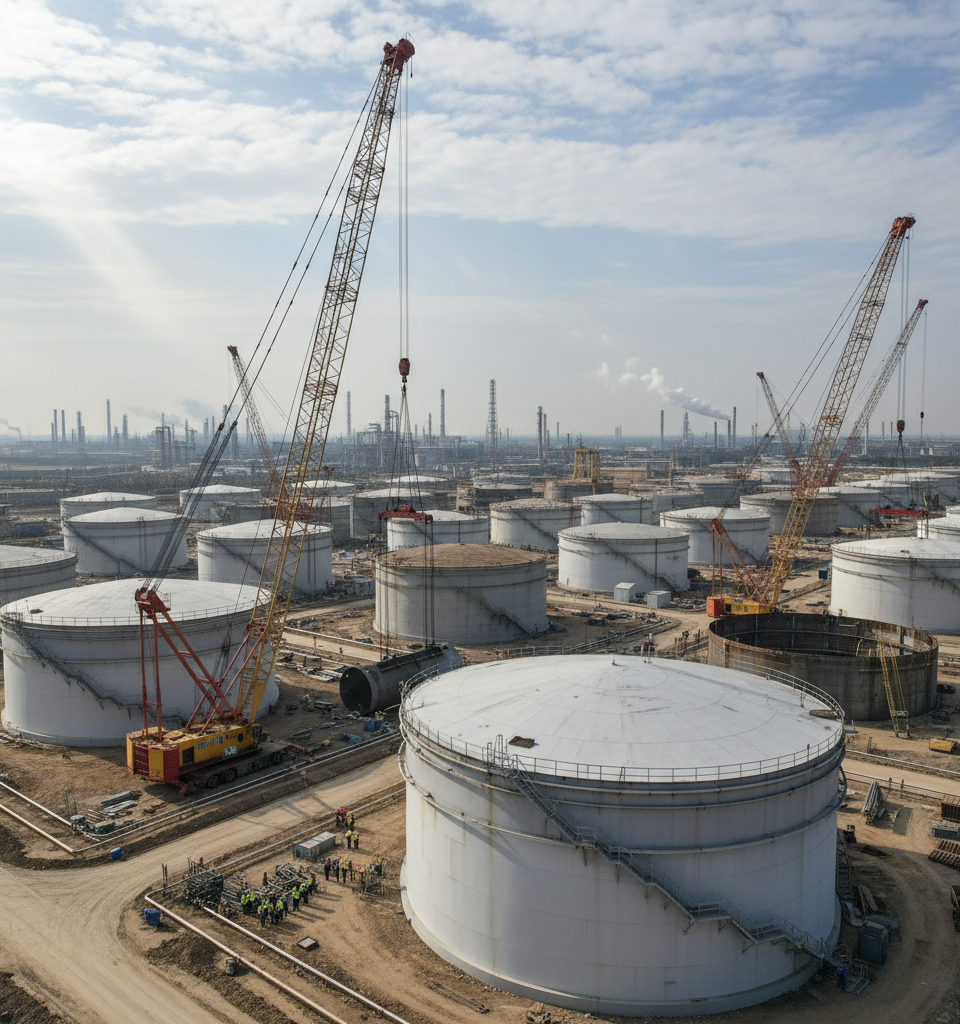
Beijing, China – China, the world's largest crude oil importer, is aggressively bolstering its strategic petroleum reserves (SPR) in a concerted effort to enhance national energy security and mitigate the impact of potential global supply shocks. This strategic maneuver, confirmed by government-affiliated sources and corroborated by satellite imagery analysis of storage facilities, comes at a time of heightened geopolitical tensions and persistent volatility in international energy markets.
Contextual Imperatives and Historical Precedent
The push to expand oil stockpiles is not new for China but has gained renewed urgency in recent years. The nation's rapid economic growth has fueled an insatiable demand for energy, making it profoundly vulnerable to disruptions in global oil supplies. Historically, China has maintained a more opaque stance on its strategic reserves compared to nations like the United States, which regularly publishes SPR levels. However, the current expansion reflects a more overt commitment to resilience, driven by lessons learned from past price spikes and supply interruptions. The COVID-19 pandemic, followed by the Russia-Ukraine conflict, laid bare the fragility of global supply chains and the critical importance of secure energy access.
Specifics of the Expansion Effort
While official figures remain closely guarded, industry analysts estimate that China aims to increase its crude oil storage capacity by at least 15-20% over the next five years. This involves expanding existing underground caverns and building new above-ground tank farms across various provinces, with a particular focus on coastal regions facilitating easier imports. This initiative is distinct from commercial inventories held by refiners, focusing specifically on nationally controlled strategic reserves. Sources indicate the current expansion could add several hundred million barrels of new capacity, potentially bringing China's total SPR capacity closer to, or even exceeding, one billion barrels, a level comparable to the United States' historic reserves.
Broader Market and Geopolitical Implications
China's aggressive stockpiling has significant implications for global oil markets. Increased demand for crude to fill these reserves could provide a floor for oil prices, especially during periods of oversupply. Simultaneously, it could exacerbate price volatility if the buying sprees coincide with supply constraints. Geopolitically, a larger SPR grants China greater strategic autonomy, reducing its susceptibility to energy blackmail or the direct impact of international sanctions on oil-producing regions. It also positions Beijing as a more formidable player in global energy diplomacy, capable of influencing market dynamics through its purchasing power and release decisions.
Expert Analysis and Economic Considerations
Energy experts view China's strategy as a pragmatic response to an unpredictable global landscape. "China is hedging against a future of increasing supply uncertainty," states Dr. Mei Lin, a Senior Energy Fellow at the Beijing Institute for International Relations. "Whether it's geopolitical conflicts, natural disasters impacting production, or even cyberattacks on energy infrastructure, having a robust strategic reserve is a critical national security asset." She adds that the economic cost of such an expansion, while substantial, is considered a necessary investment to safeguard continued economic development and national stability, particularly given the long-term projections for sustained oil demand in China.
The Road Ahead: Monitoring and Future Outlook
The ongoing expansion of China's SPR will be closely watched by international energy agencies and oil market participants. Key indicators will include the pace of construction, the types of crude being purchased (e.g., sour vs. sweet, different origins), and any shifts in transparency around reserve levels. The long-term impact will be a more resilient, albeit potentially more self-reliant, energy superpower. While it could introduce short-term buying pressure, in the long run, a well-stocked China might contribute to greater global supply stability by absorbing excess crude in times of glut and releasing it during shortages, albeit primarily for its domestic needs. Future developments will likely include continued diversification of oil import sources and potential investments in global upstream projects to further secure supply lines.