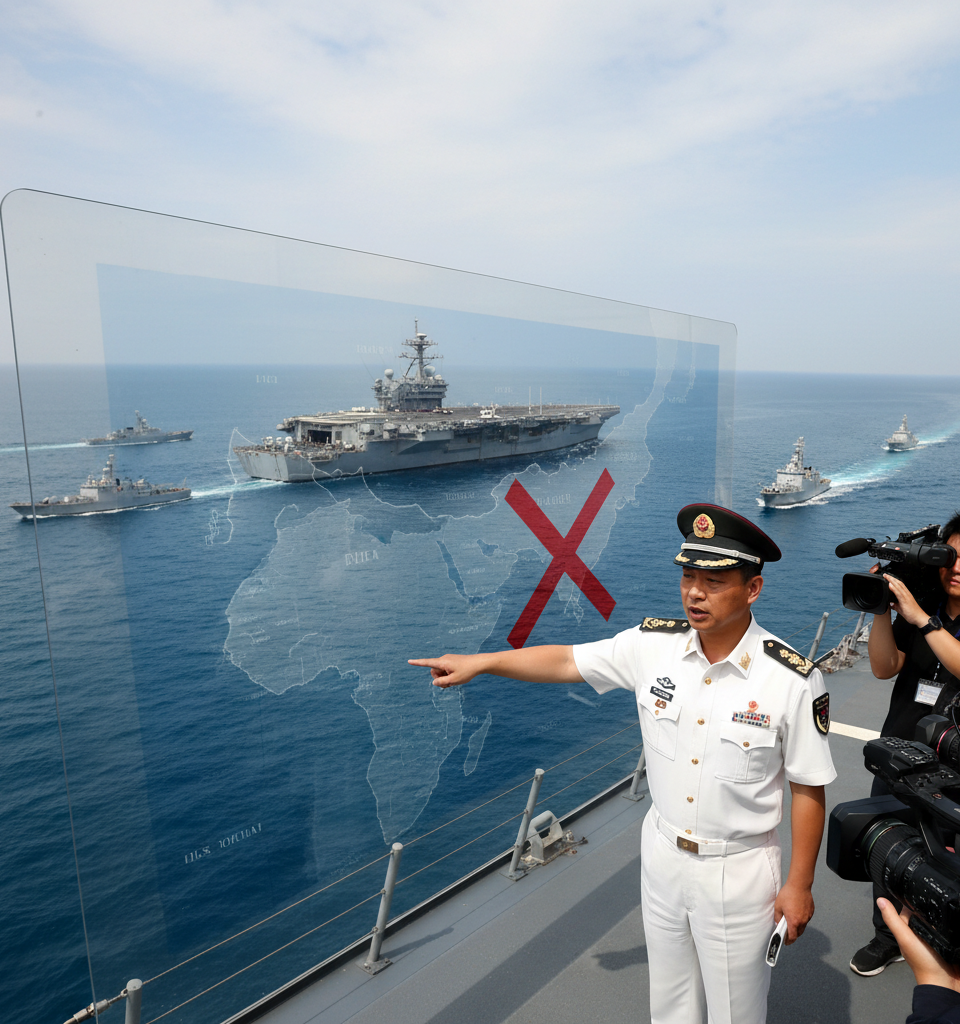
Beijing, China – The Chinese Ministry of Foreign Affairs today issued a stern rebuke against the hypothetical prospect of a U.S. blockade of the Strait of Hormuz, asserting that such a move would be "dangerous and irresponsible." The statement from Beijing underscores the growing international alarm over geopolitical tensions in the Middle East, with China advocating for a "comprehensive ceasefire" as the sole viable pathway to de-escalation.
The Strait of Hormuz, a vital maritime chokepoint between the Persian Gulf and the Gulf of Oman, is globally recognized as one of the most strategically important waterways for oil transit. Approximately one-fifth of the world's total petroleum consumption, including nearly all of the Middle East's oil exports, passes through this narrow channel daily. A blockade, even a partial one, carries the potential to trigger catastrophic disruptions to global energy markets and international trade, reverberating far beyond the immediate region.
Geopolitical Tensions and Energy Security
China's forceful condemnation highlights the profound concern among major global powers regarding any action that could further destabilize the already volatile Middle East. For China, a nation heavily reliant on imported energy, particularly oil from the Persian Gulf, the unimpeded flow of maritime trade through the Strait of Hormuz is a matter of critical national security and economic stability. Therefore, any perceived threat to this shipping route is met with significant diplomatic apprehension.
The terminology used by the Chinese foreign ministry – "dangerous and irresponsible" – reflects a deep-seated worry about the potential for miscalculation and escalation. Beijing's consistent diplomatic approach to the Middle East often prioritizes stability and peaceful resolution, frequently positioning itself as an advocate for multilateralism and adherence to international law. A U.S.-led blockade, from their perspective, would represent a unilateral action carrying severe international ramifications.
Call for Comprehensive Ceasefire
The Chinese statement did not merely condemn; it also offered a proposed solution. The foreign ministry reiterated its long-standing position that only a "comprehensive ceasefire" in the ongoing conflicts in the Middle East could genuinely help ease the crisis. This stance aligns with China's broader diplomatic efforts in the region, where it has consistently called for a cessation of hostilities and a return to dialogue among all parties involved. The emphasis on a ceasefire suggests a belief that military posturing, particularly involving critical maritime routes, only exacerbates the underlying issues.
The broader implications of such a hypothetical blockade extend to global supply chains, international insurance markets, and the stability of commodity prices. Even the threat of disruption can send ripple effects through these interconnected systems, leading to increased shipping costs, higher energy prices, and exacerbated inflationary pressures worldwide. Major economies, regardless of their direct involvement in the Middle East, would inevitably feel the economic fallout.
International Implications and Future Outlook
While the U.S. has not explicitly announced plans for a blockade, the Chinese statement serves as a preemptive diplomatic warning against any such consideration. It signals to the international community China's strong opposition to actions that could imperil global trade and potentially ignite wider regional conflicts. The incident underscores the ongoing complex dynamics between major world powers and their divergent approaches to maintaining stability in key strategic regions.
The international community will be closely watching how these diplomatic tensions evolve. Continued calls for de-escalation and dialogue from various nations reflect a widespread desire to prevent any actions that could transform existing regional crises into broader global economic or security challenges. The focus remains on diplomatic solutions, with China's latest statement serving as a clear indicator of its position on the potential consequences of military intervention in critical international waterways.