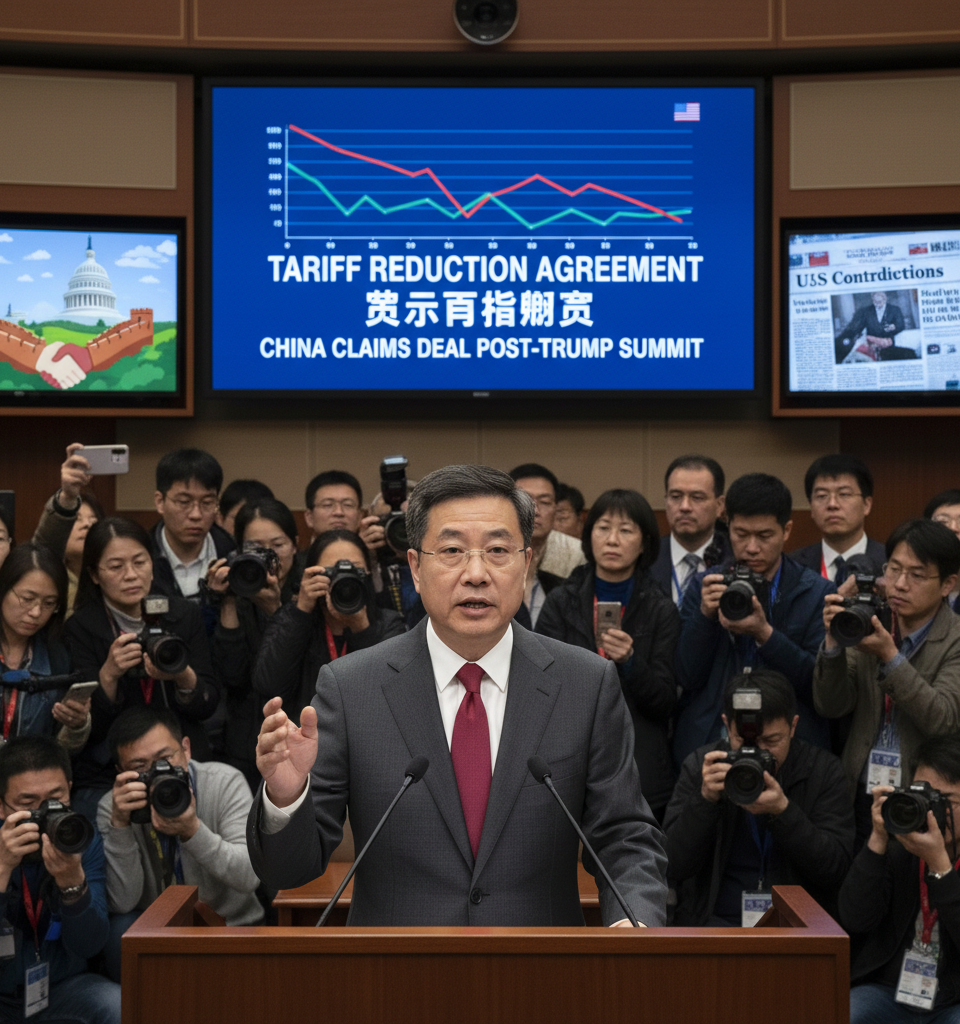
Beijing, China — China's Ministry of Commerce on Saturday asserted that it had reached a preliminary understanding with the United States to reduce existing tariffs, a significant development following high-stakes trade discussions. This announcement, communicated through a regular press briefing, directly challenged subsequent remarks made by U.S. President Donald Trump, who publicly denied any such agreement had been struck. The conflicting narratives highlight the volatile and often opaque nature of the ongoing trade dispute between the two global economic powerhouses.
Context and Background
The U.S.-China trade war, initiated in early 2018, has seen both nations impose tariffs on hundreds of billions of dollars worth of each other's goods, disrupting global supply chains and dampening economic growth. The dispute has escalated through multiple rounds of retaliatory measures, impacting industries from agriculture to technology. Both sides have been engaged in protracted negotiations, with periodic breakthroughs and setbacks. A 'Phase One' trade deal has been a primary objective, aimed at de-escalating tensions and addressing structural economic issues.
Key Details
Chinese Ministry of Commerce spokesman Gao Feng stated during a press conference that the agreement was reached after "serious and constructive discussions" over the past two weeks, implying a mutual understanding to "cancel tariffs in phases." He elaborated that the extent of the tariff rollback would depend on the implementation of the Phase One deal. However, just hours later, President Trump, speaking to reporters at the White House, dismissed these claims, stating, "They'd like to have a rollback, but I haven't agreed to anything." He further indicated that the U.S. would only agree to a significant deal, not just a partial rollback. The initial phase of tariff imposition saw the U.S. levy duties on over $360 billion of Chinese imports, with China retaliating on about $110 billion of U.S. goods.
Industry and Market Impact
The ambiguity surrounding the tariff negotiations has kept global markets on edge. Industries heavily reliant on international trade, such as manufacturing, agriculture, and technology, have experienced significant volatility. The prospect of tariff reductions would offer a much-needed boost to business confidence and potentially alleviate some of the cost pressures faced by American consumers and businesses. Conversely, continued uncertainty and the potential for further escalation prolong the economic strain. For instance, the agricultural sector, particularly U.S. soybean farmers, has been severely hit by Chinese retaliatory tariffs, losing access to a critical export market.
Expert Perspective
Economists and trade analysts are closely monitoring the situation, largely viewing the conflicting statements as illustrative of the deep mistrust and divergent priorities still present in the U.S.-China relationship. "This isn't an uncommon tactic in high-stakes negotiations, where both sides want to project strength and control the narrative," noted Dr. Eleanor Vance, a senior fellow at the Peterson Institute for International Economics. "However, the open disagreement on such a fundamental aspect of a potential deal points to a very fragile foundation, and potentially significant hurdles remain before any concrete agreement is finalized." Others suggest that China's announcement could be an attempt to pressure the U.S. into a more definitive stance.
What's Next
The immediate future of a Phase One trade deal now hinges on further clarification and reconciliation of these contrasting positions. Both countries are slated to continue discussions, with a high-level meeting potentially scheduled for mid-November. The U.S. has threatened additional tariffs, including a 15% duty on approximately $160 billion worth of Chinese goods due to take effect on December 15, if a deal is not reached. The global economic outlook remains largely tied to the resolution of these trade tensions. Investors and businesses will be keenly watching for any official joint statements or concrete actions that signal genuine progress, rather than conflicting public remarks, before making long-term strategic decisions.
The persistent discord underscores the complexity of re-calibrating the world's most significant economic relationship. While both nations express a desire for an agreement, the path to a comprehensive resolution remains fraught with challenges and public disagreements over the most basic parameters of a deal.