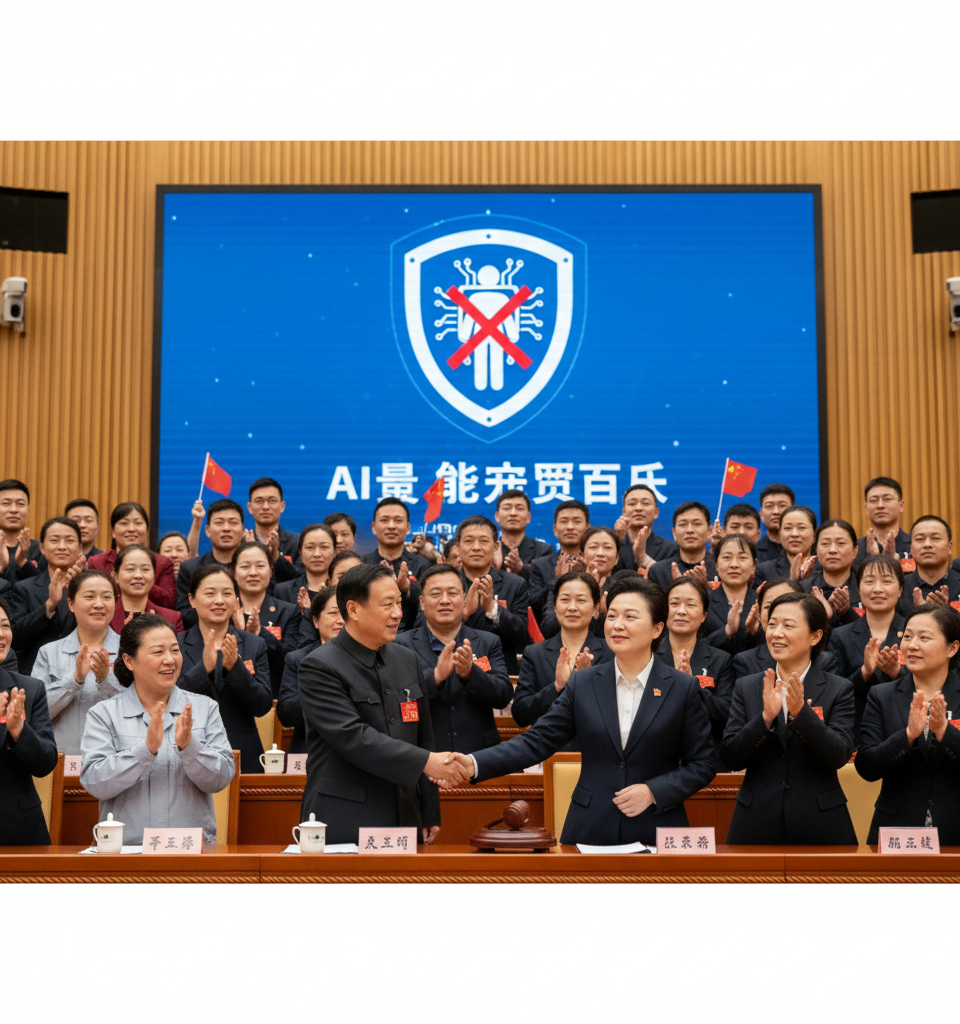
In a precedent-setting move, Chinese authorities have declared the dismissal of an employee on the grounds that an artificial intelligence system can now perform their job duties to be unlawful. This decision comes to light through the case of a quality assurance supervisor, identified only as Zhou, who was reportedly terminated by a technology company in Hangzhou in 2024. Zhou, who earned 25,000 yuan (approximately $3,640) per month, had been employed since November 2022 to optimize AI large language model outputs and filter sensitive content. His company, citing advances in its AI capabilities, deemed his role redundant, leading to the legal challenge and subsequent ruling.
Context and Background
This ruling emerges at a critical juncture, as the rapid advancement of generative AI technologies intensifies concerns about large-scale job displacement across various sectors. While the narrative of automation replacing human labor is not new, the sophistication and expansive applicability of current AI models present unprecedented challenges to the global workforce. China's proactive legal intervention stands in stark contrast to the less defined regulatory landscapes in Western countries, none of which have, to date, enacted similar protections specifically addressing AI-driven layoffs. The decision underscores a deeper philosophical question about the value of human labor in an increasingly automated economy and the ethical responsibilities of corporations deploying advanced technology.
Key Details of the Ruling
The specifics of Zhou's case highlight the direct impact of AI on specialized roles, even those initially designed to work with AI. Zhou's company argued that their internal AI systems had improved to such an extent that his role, focused on refining AI outputs and content moderation, was no longer necessary. The Chinese court's decision, details of which have begun to circulate, posits that profitability or technological advancement alone do not constitute legitimate grounds for dismissal if the human role can still be performed.
This implies a higher burden for employers seeking to justify layoffs due to automation, potentially requiring them to consider retraining, redeployment, or proving absolute redundancy beyond performance. The precise legal framework invoked for this ruling relies on existing labor laws which protect against unfair dismissal, now interpreted to encompass AI-driven job obsolescence.
Industry and Market Impact
The implications for China's vast technology sector are substantial. Companies in the country, from burgeoning startups to established tech giants like Tencent and Alibaba, will need to re-evaluate their human resources strategies concerning AI implementation. This ruling could prompt a shift from purely efficiency-driven automation projects to those that prioritize human-AI collaboration or seek to upskill existing workforces. Globally, the decision sets a potential precedent, inviting other nations to consider similar legislative action. For multinational corporations operating in China, it adds a new layer of complexity to workforce planning, requiring careful navigation of divergent labor laws concerning automation.
Expert Perspective
Labor law experts and futurists are closely watching the fallout. "This is a landmark ruling that could significantly influence the global conversation around AI and employment," comments Dr. Li Wei, a labor policy analyst based in Beijing. "It signals a clear intent from the Chinese government to prioritize worker protection over unfettered technological disruption, potentially forcing companies to innovate in how they integrate AI without outright replacing human employees." Economists, however, note the potential trade-off between job security and economic competitiveness, suggesting that overly stringent regulations could slow down technological adoption or innovation if companies face disincentives for leveraging AI's full capabilities. However, proponents argue that this approach fosters a more ethical and sustainable technological advancement.
What's Next
This decision is expected to spur further legislative and judicial developments within China. Companies may explore new contracts or job descriptions to better define roles in an AI-integrated environment, while labor unions may gain leverage in negotiations regarding automation. Internationally, the ruling is likely to ignite broader policy debates in Western economies, where discussions around universal basic income, reskilling initiatives, and taxation of automated labor are already underway.
While it's unlikely that Western countries will immediately adopt identical laws due to different legal traditions and economic priorities, China's bold step provides a tangible model for how a government might actively regulate the social impact of advanced AI technologies on employment. The future will tell if this leads to a global trend of stronger worker protections or remains a unique element of China's regulatory approach.