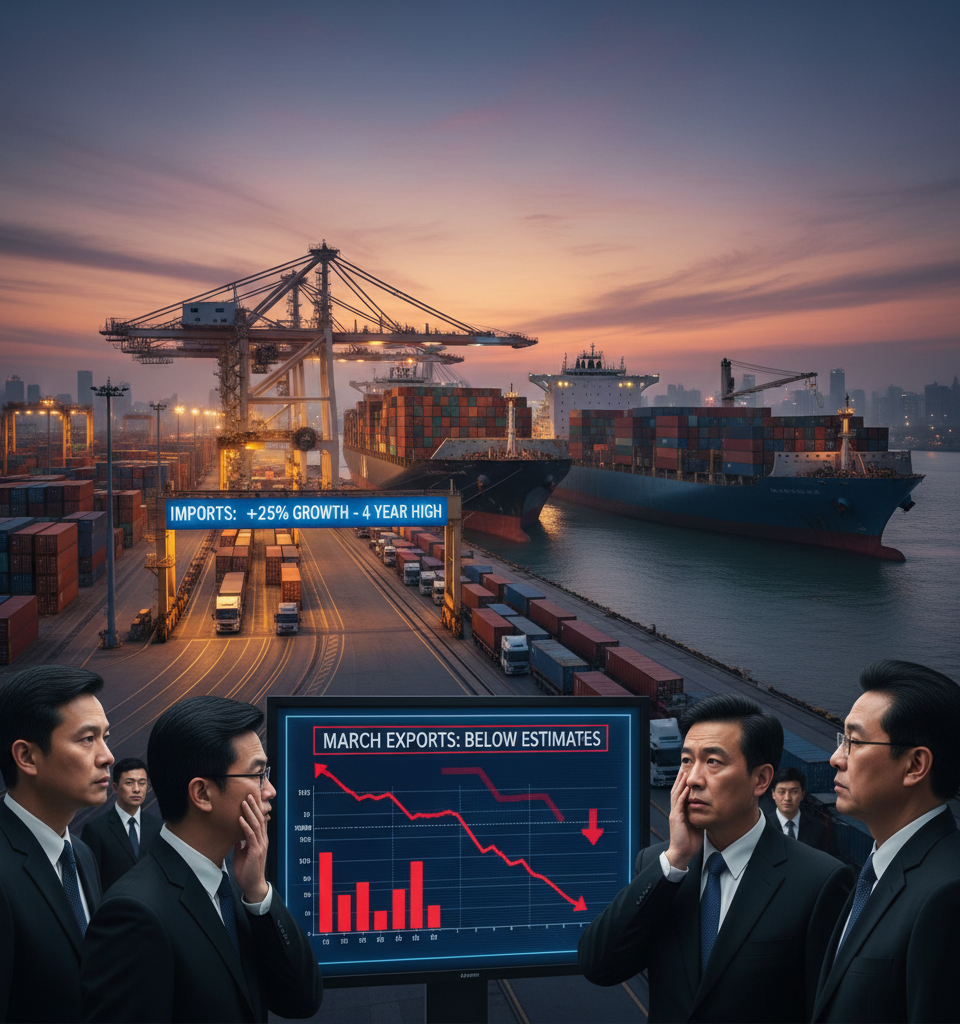
Shanghai, China – China's economic data for March painted a mixed picture, with export growth falling short of analyst expectations while imports demonstrated surprising strength, achieving their best performance in over four years. The slowdown in exports is largely attributed to manufacturers grappling with a significant surge in energy costs, a situation exacerbated by ongoing disruptions stemming from the Iran war.
The unexpected deceleration in export activity underscores a mounting challenge for China's vast manufacturing sector. Global supply chains, already under strain from post-pandemic recoveries and geopolitical tensions, are now confronting heightened price pressures on critical energy inputs. The Iran war's impact on global energy markets has translated directly into higher operational costs for Chinese factories, potentially eroding their competitive edge in international trade. Despite these headwinds, China continues to play a pivotal role in global commerce, making these figures closely watched by economists worldwide.
Export Performance and Underlying Challenges
Official figures revealed that China's exports in March grew at a slower pace than anticipated by market analysts. This subdued performance marks a notable shift after periods of robust growth, reflecting the intricate interplay of global demand dynamics and domestic cost pressures. Manufacturers across various sectors have reported increased expenditure on fuel and electricity, directly impacting production costs and, consequently, export pricing.
The nexus between the Iran war and China's export slowdown is particularly evident in energy-intensive industries. The conflict has contributed to volatility and upward pressure in global oil and gas markets, with knock-on effects for producers reliant on stable and affordable energy. This situation forces Chinese exporters to either absorb higher costs, thereby narrowing profit margins, or pass them on to international buyers, which could dampen demand for Chinese goods. The scale of this impact suggests a broader vulnerability within the manufacturing ecosystem to geopolitical events affecting global commodity prices.
Import Surge Signals Domestic Resilience
In stark contrast to the export figures, China's imports experienced a substantial jump in March, exceeding market forecasts and registering their highest growth in more than four years. This robust import performance could be indicative of several factors. Firstly, it may signal strong domestic demand within China, suggesting a healthy appetite for foreign goods, raw materials, and components necessary for both consumption and further industrial production. Secondly, the import surge might also reflect stockpiling activities by Chinese companies anticipating further global supply chain disruptions or price increases, particularly for critical commodities.
This discrepancy between export and import performance highlights a complex economic landscape. While external demand for Chinese goods appears to be tempered by rising production costs, internal demand seems resilient. The sustained growth in imports supports the narrative of a dynamic domestic economy, potentially rebalancing towards greater internal consumption and investment, even as its export engine faces new challenges. The strength of imports helps to cushion the impact of the export slowdown on China's overall trade balance and economic stability.
Broader Economic Implications
The March trade data carries significant implications for both China's economic outlook and global markets. A prolonged period of heightened energy costs and reduced export competitiveness could compel Chinese policymakers to consider additional supportive measures for businesses. These might include energy subsidies, tax relief, or other incentives aimed at bolstering manufacturing resilience and maintaining employment levels. For international markets, a softer Chinese export performance could translate into slightly reduced availability of certain goods or shifts in global pricing strategies.
Conversely, strong import growth positions China as a powerful engine for global economic recovery, providing significant demand for goods and services from its trading partners. This dynamic suggests that while China's role as the "world's factory" faces evolving pressures, its importance as a major consumer and importer remains undiminished. The coming months will be critical in determining whether the energy cost surge is a transient factor or a more enduring challenge for China's export-oriented economy, and how its domestic demand continues to evolve in response to global uncertainties.