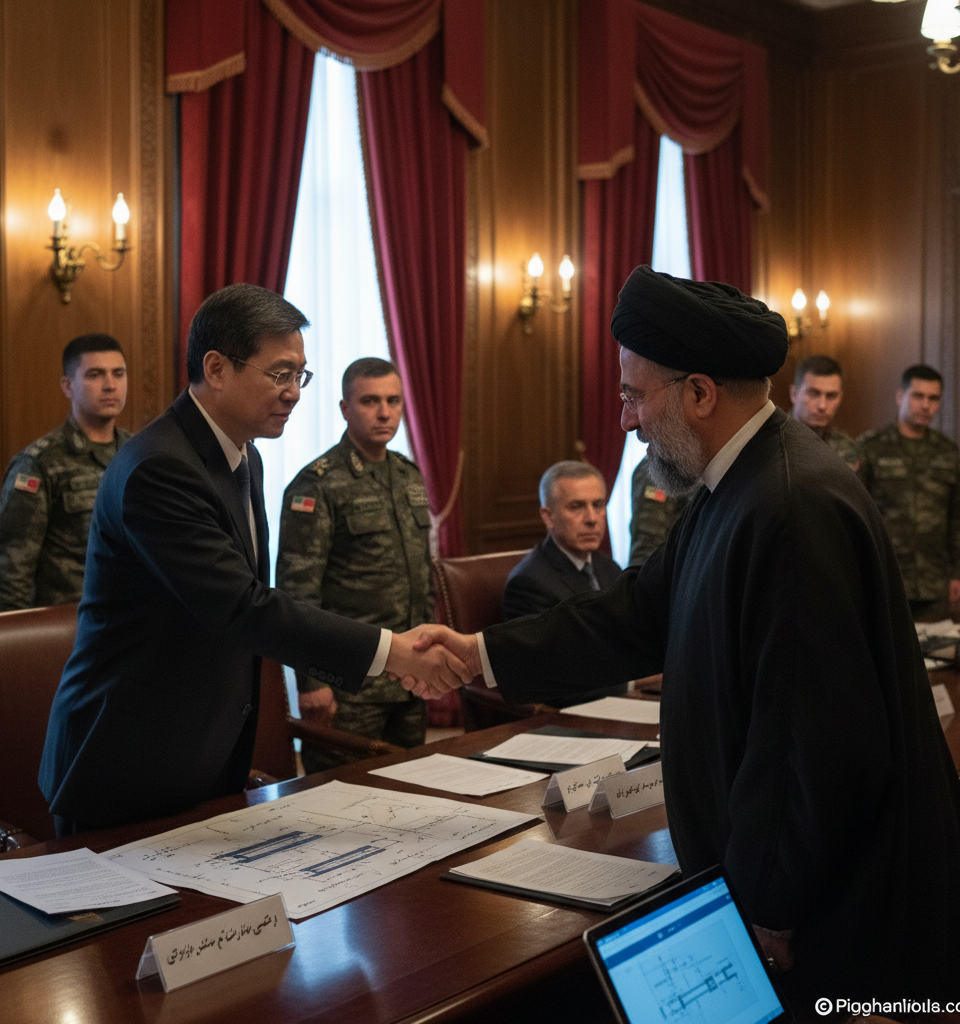
Beijing has squarely refuted recent assertions from U.S. intelligence circles suggesting overt arms transfers to Tehran, reigniting a long-standing debate over the nature and implications of the military relationship between the two nations. While direct weapon sales have become less prominent in recent years, the strategic partnership has evolved into a more nuanced exchange focusing on dual-use technologies and foundational components, raising concerns in Washington about Iran's burgeoning indigenous defense capabilities and regional destabilization.
This renewed focus on the China-Iran defense corridor is not new; it extends back decades to the devastating Iran-Iraq War (1980-1988), during which China emerged as a significant, albeit often surreptitious, arms supplier to both sides, including Iran. Over time, as Iran faced stringent international sanctions, China's role shifted from direct arms sales to providing the technological bedrock and components necessary for Iran to develop its own missile, drone, and naval assets. This strategic pivot allowed Iran to circumvent sanctions and bolster its self-sufficiency, a development closely monitored by the United States and its allies in the Middle East.
In recent years, the transfer of dual-use parts – items with both civilian and military applications – has become the cornerstone of this strategic collaboration. Reports indicate that Chinese entities have supplied Iran with critical components for its burgeoning drone program, advanced missile guidance systems, and naval technology. Specific examples often cited include the provision of specialized metals, advanced electronics, and sophisticated software, which, while ostensibly for commercial use, are vital for Iran's military industrial complex. While specific dollar figures for these transfers are difficult to ascertain due to their often clandestine nature, analysts suggest the cumulative value runs into hundreds of millions, possibly billions, of dollars over the last two decades, significantly enhancing Iran's capabilities to project power across the Persian Gulf and beyond.
This evolving dynamic directly impacts global security and the regional power balance in the Middle East. Iran's enhanced ballistic missile and drone capabilities, heavily influenced by foreign technological assistance, pose a direct threat to shipping lanes, regional adversaries like Saudi Arabia and Israel, and U.S. interests. The proliferation of these technologies, enabled by an indirect supply chain, complicates efforts to prevent regional conflicts and enforce international non-proliferation treaties. Moreover, it allows Iran to maintain plausible deniability regarding the sources of its advanced weaponry, further muddying diplomatic waters.
Expert analysis frequently highlights the strategic rationale behind Beijing's approach. Dr. Sanam Vakil, Deputy Director of the Middle East and North Africa Programme at Chatham House, notes, “China perceives Iran as a crucial node in its 'Belt and Road' initiative and a vital partner in challenging U.S. hegemony in the Middle East. While direct arms sales carry high diplomatic costs, the provision of dual-use technologies offers a less visible, yet equally effective, means of supporting Tehran and advancing its own geopolitical interests without provoking direct confrontation.” Other analysts point to the economic benefits for Chinese manufacturers, who find a willing and often cash-rich market in Iran despite sanctions.
Looking ahead, the trajectory of China-Iran military-technological cooperation is likely to remain complex and understated. The U.S. will undoubtedly intensify its intelligence gathering and diplomatic pressure campaigns to curb these transfers, particularly as Iran's nuclear program remains a flashpoint. Future developments could include more targeted sanctions against Chinese companies identified as supplying key components, increased intelligence sharing with allies, and potentially a more aggressive enforcement posture in international waters and cyberspace. China, in turn, is expected to continue developing sophisticated methods to mask its involvement, leveraging shell companies and intermediary nations, ensuring its strategic ties with Tehran persist while maintaining deniability.
Furthermore, the long-term implications extend to the potential for Iran to become a significant exporter of these technologies itself, particularly to non-state actors or other rogue states. This 'reverse proliferation' could create a far more unstable global security environment, fueled by components originally sourced, directly or indirectly, from China. The international community, therefore, faces a continuing challenge in curtailing a relationship that has, over decades, profoundly reshaped the military landscape of a volatile region.