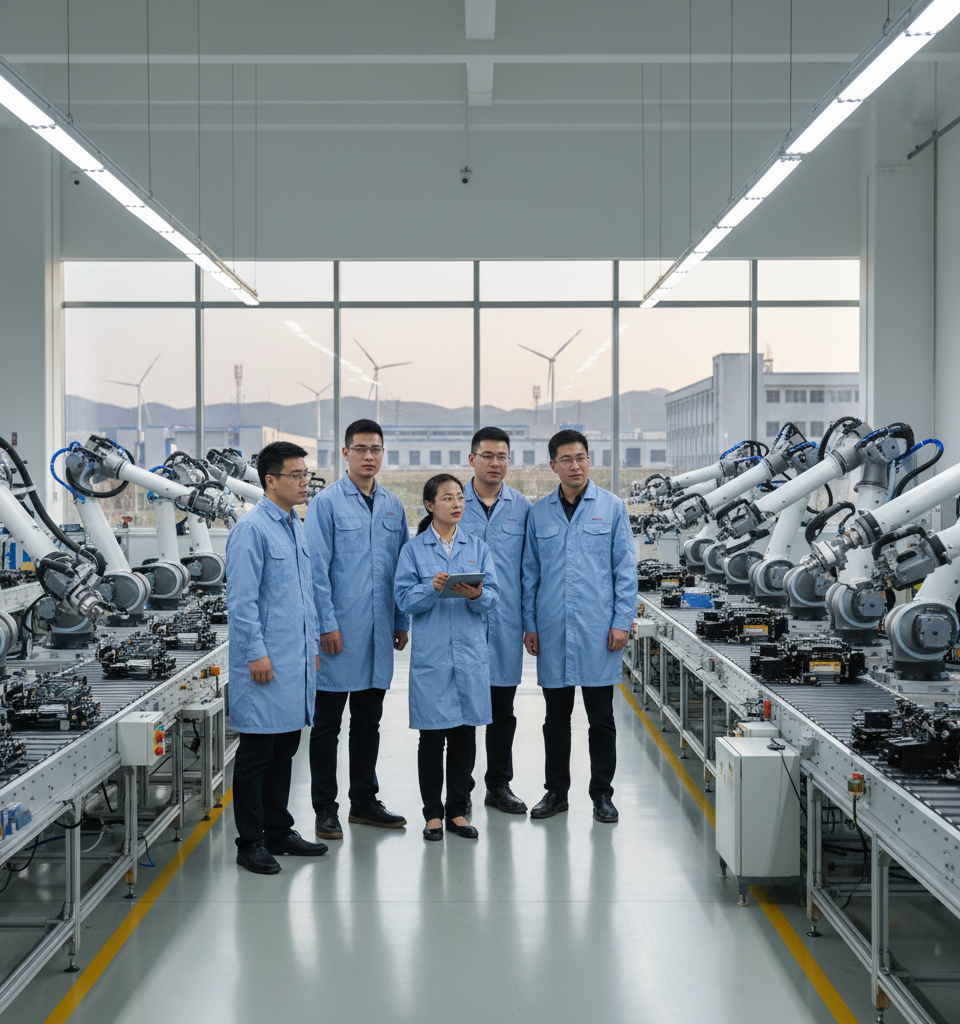
Beijing, China — A confluence of aggressive national policy, burgeoning domestic demand, and a formidable manufacturing ecosystem is propelling China to the forefront of the global robotics industry, positioning the nation to capture the bulk of its economic value in the coming decades. This strategic ascendancy is not merely about production volume but encompasses the entire value chain, from cutting-edge research and development to component manufacturing, system integration, and advanced application deployment across diverse sectors.
The Strategic Imperative: Made in China 2025 and Beyond
This concerted effort is deeply rooted in national strategic objectives, most notably the "Made in China 2025" initiative launched in 2015, which explicitly identified robotics as a key strategic emerging industry. The goal is to achieve 70% domestic market share for industrial robots by 2025 – a target that, while ambitious, underscores the government's commitment. Historically, China has been a significant consumer of robots, primarily importing from Japan, Germany, and the United States. However, the current trajectory indicates a significant shift towards domestic innovation and production, aiming to reduce reliance on foreign technology and establish self-sufficiency in critical high-tech domains.
Key Drivers of China's Robotics Expansion
Several critical factors underscore China's advantageous position. Firstly, a massive industrial base provides an unparalleled testing ground and demand driver for robotics. Industries ranging from electronics and automotive to textiles and food processing are rapidly automating to boost productivity, improve quality, and mitigate rising labor costs.
Secondly, substantial government subsidies, tax incentives, and preferential land policies encourage both domestic robotics companies and foreign firms to establish R&D centers and manufacturing facilities within China. Furthermore, the country boasts a vast pool of STEM graduates and a rapidly maturing artificial intelligence sector, vital for advanced robotics capabilities like machine vision, autonomous navigation, and human-robot interaction. Data from the International Federation of Robotics (IFR) shows that China installed approximately 268,700 new industrial robots in 2022, representing a 5% increase from the previous year and solidifying its position as the world's largest robot market by far.
Industry and Market Impact: A Global Ripple Effect
China's aggressive push into robotics is sending ripple effects across the global industry. International robot manufacturers are increasingly looking to establish R&D and production facilities in China to tap into its massive market and benefit from its supply chain efficiencies. This competitive environment is driving down robot prices globally and accelerating technological advancements. Domestically, the rise of powerful Chinese players like Ecovacs Robotics, UBTech Robotics, and Siasun Robot & Automation is challenging established foreign incumbents. These companies are not only expanding within China but are also beginning to make inroads into international markets, particularly in service robotics and specific industrial applications.
Expert Perspectives on China's Trajectory
Industry analysts widely acknowledge China's strategic advantage. Dr. Li Xiang, a senior robotics analyst at a leading global consultancy, noted in a recent seminar, "China’s integrated approach, combining top-down government directives with bottom-up entrepreneurial zeal, creates a formidable engine for robotics growth. Their ability to quickly scale production and integrate new technologies is unrivaled." Another expert, Professor Chen Wei of Tsinghua University, emphasized, "The sheer volume of data generated by China's manufacturing sector provides an invaluable asset for training AI algorithms essential for the next generation of intelligent robots." While challenges remain, particularly in core component technologies such as high-precision reducers and servo motors, significant progress is being made through national innovation programs and strategic acquisitions.
The Road Ahead: Innovation and Integration
The trajectory for China's robotics industry points towards continued rapid expansion, with a stronger emphasis on innovation in key areas. Future developments are expected to focus on fully autonomous systems, collaborative robots (cobots) that work alongside humans, and the deeper integration of AI and 5G technology to create smarter, more connected robotic ecosystems. The nation is also heavily investing in educational initiatives to cultivate a skilled workforce capable of designing, deploying, and maintaining these advanced systems. Furthermore, as labor shortages loom in many developed economies, China's proven ability to scale robotics solutions could make it a crucial partner for global industries seeking automation solutions, further cementing its role as a central player in the global economic robotics value chain.
The global robotics market is projected to reach an estimated US$170 billion by 2028, and China is strategically positioning itself to capture a dominant share through its comprehensive approach to technological development and market penetration. This will not only reshuffle the cards in industrial manufacturing but also profoundly impact sectors from healthcare to logistics, driven by Chinese innovation and market power.