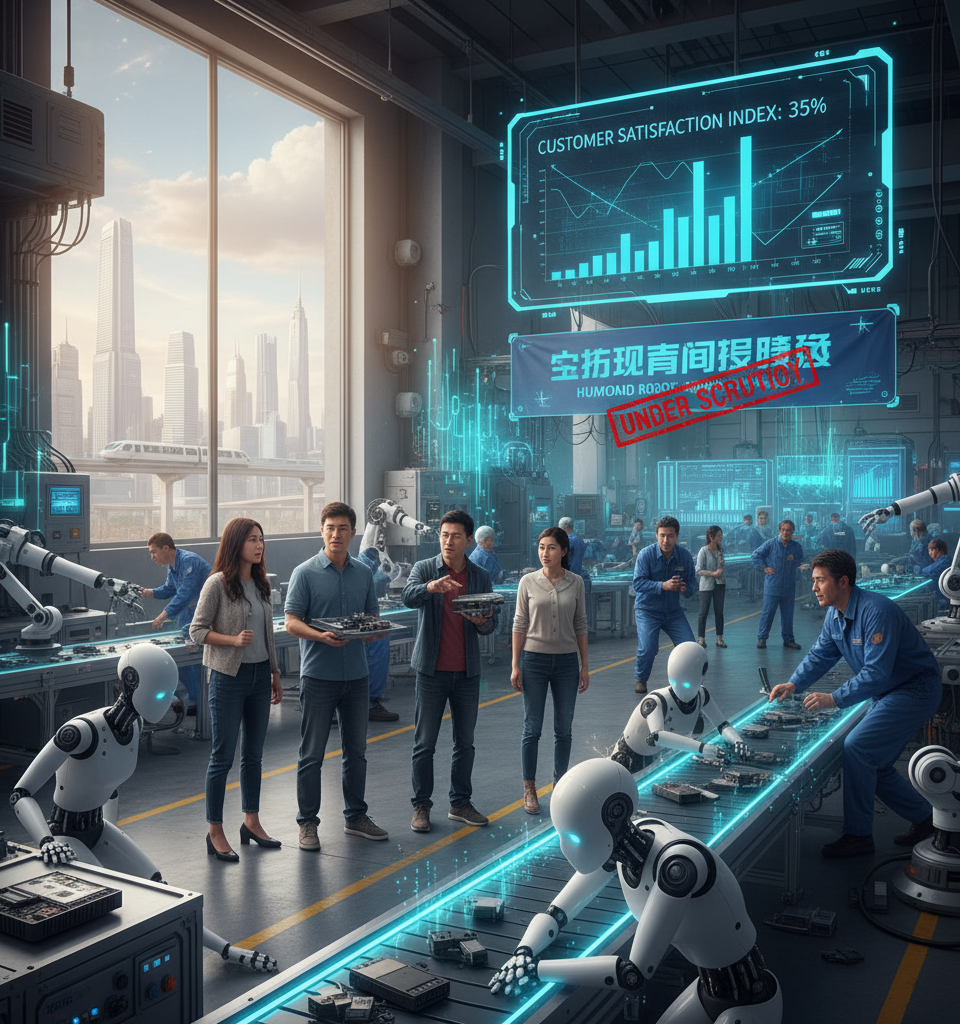
China's burgeoning humanoid robot sector, home to more than 150 companies, is grappling with a stark reality check: only 23% of its buyers report satisfaction with their purchases. This low satisfaction rate casts a shadow over an industry poised for explosive growth, even as two of its largest players, Unitree and AgiBot, gear up for initial public offerings (IPOs) that could collectively value them at a staggering $13 billion. The narrative of unbridled expansion, underscored by the country's projected 90% share of global humanoid robot shipments by 2025, now confronts the practicalities of market adoption and user experience.
Context and Background
This development comes at a pivotal moment, highlighting the inherent tension between rapid technological advancement and practical market integration. China's aggressive push into robotics is a cornerstone of its national industrial strategy, aiming to lead in high-tech manufacturing and artificial intelligence. The sheer volume of companies entering this space, coupled with significant investment, suggests a strong belief in the long-term potential of humanoid robots across various applications, from industrial automation to service roles. However, the low satisfaction metric suggests that current offerings may not yet align with consumer expectations or deliver sufficient value proposition, potentially hindering mass adoption despite technological prowess.
Key Details
According to recent market analyses, China is on track to account for roughly 90% of the world’s humanoid robot shipments in 2025, solidifying its global manufacturing dominance in this emerging field. The impending IPOs of Unitree and AgiBot are testament to the significant financial interest in the sector, with their combined valuation projections underscoring investor confidence in their future prospects. Morgan Stanley has notably doubled its delivery forecast for the Chinese market this year, signaling an optimistic outlook on sales volumes.
Yet, the persistent issue of low customer satisfaction—with less than one-quarter of buyers expressing contentment—presents a critical challenge that sophisticated financing and high production volumes cannot alone resolve. This disparity suggests a gap between product capabilities and user needs or perhaps an overestimation of current robotic functionality by consumers.
Industry and Market Impact
The disconnect between high production capacity, investor confidence, and low customer satisfaction points to potential growing pains for the entire industry. While China's prolific manufacturing ecosystem can churn out vast quantities of robots, the challenge now shifts towards refining product utility, reliability, and user-friendliness. This situation could pressure companies to innovate more rapidly, focusing on practical applications and enhanced performance to improve post-purchase experiences. Furthermore, it might lead to a consolidation within the industry as smaller, less effective companies struggle to compete against firms capable of delivering higher quality and more satisfying products. The global market, heavily reliant on Chinese production, will undoubtedly feel the ripple effects of these domestic challenges.
Expert Perspective
Industry analysts indicate that while the technological foundation for humanoid robots in China is robust, the current market dynamics reflect an nascent stage of development. Experts suggest that the low satisfaction rate is likely due to a combination of factors, including the high cost of current models, limited practical functionality in diverse real-world scenarios, and potentially unmet expectations spurred by optimistic marketing. "The enthusiasm to invest is there, and the manufacturing capability is undeniable, but the product-market fit is still evolving," noted one robotics industry analyst.
"Companies need to move beyond proof-of-concept demonstrations to delivering tangible, consistent value that justifies the investment for end-users, whether they are industrial clients or advanced research institutions.
What's Next
Looking ahead, the sector is at a crossroads. The success of Unitree and AgiBot's IPOs will not only inject significant capital into these companies but also serve as a barometer for investor appetite in the broader humanoid robotics market. However, sustainable growth will hinge on the industry's ability to address the pervasive issue of customer satisfaction.
This could manifest in several ways: a stronger emphasis on research and development into more versatile AI and locomotion, a pivot towards niche industrial applications where robots can demonstrate clearer ROI, or a concerted effort to manage consumer expectations more realistically. The coming years will likely see intensified competition, a push for greater standardization, and a critical focus on translating advanced robotics into genuinely useful and reliable tools that meet the demands of a discerning market, ultimately shaping the long-term viability of China's ambitious humanoid robot aspirations.