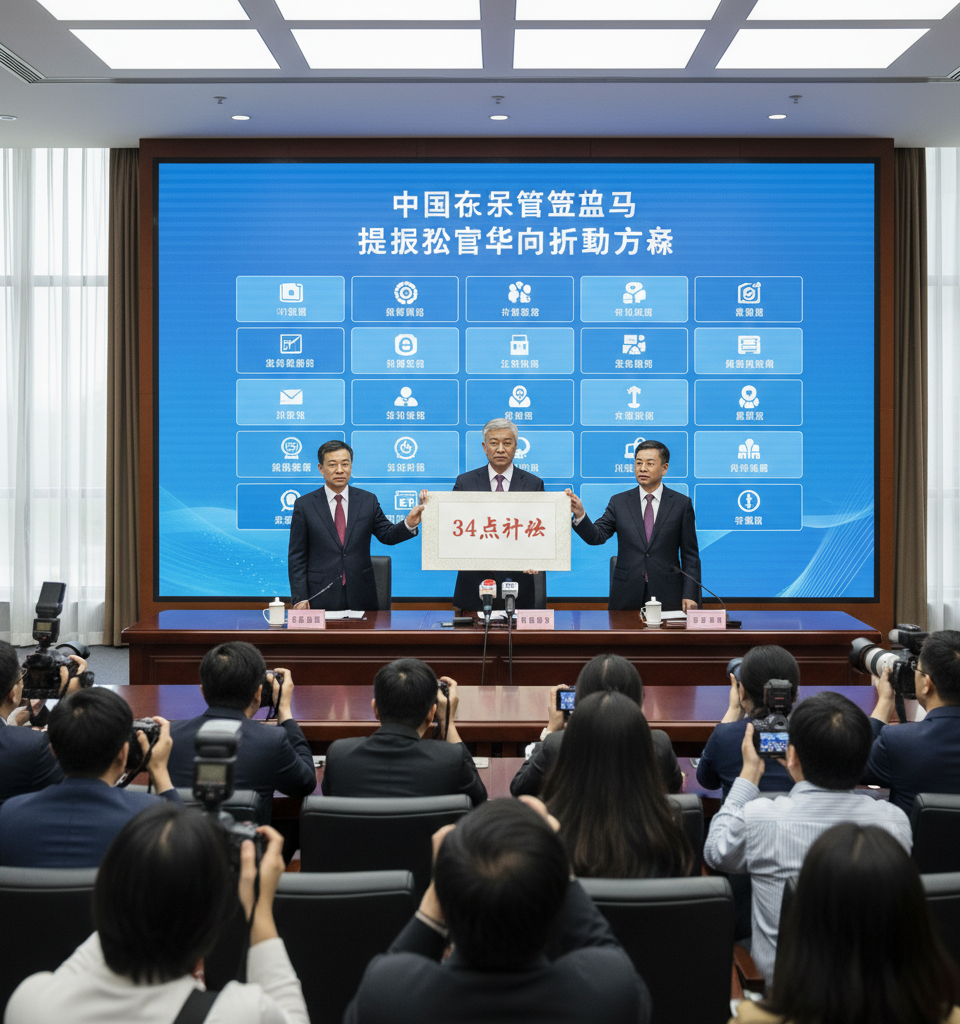
Beijing, China – China's State Administration for Market Regulation (SAMR) has unveiled a comprehensive 34-point action plan, setting its strategic priorities through 2026 to significantly bolster the private sector. The detailed roadmap, announced earlier this week, emphasizes creating a level playing field, strengthening legal safeguards for businesses, and enhancing the efficiency and predictability of regulatory oversight. This move underscores Beijing's intention to re-energize private companies, which are crucial drivers of innovation, employment, and economic growth within the world's second-largest economy.
Context and Background
The initiative comes at a critical juncture for China's economy, which has faced headwinds from a property sector downturn, flagging consumer confidence, and geopolitical tensions. Over the past few years, a series of regulatory crackdowns, particularly in the technology and education sectors, led to uncertainty and a perception of diminishing support for private capital. Recognizing the private sector's indispensable role – contributing over 60% of national GDP, 70% of technological innovation, and 80% of urban employment – the government has been signaling a pivot towards renewed encouragement. This action plan by SAMR is a tangible step in translating those intentions into actionable policy, aiming to restore confidence and stimulate investment.
Key Details of the Plan
SAMR's 34-point agenda is structured around several core pillars. Key provisions include a commitment to eliminating hidden barriers to market access for private enterprises and combating local protectionism and administrative monopolies. The plan explicitly targets the simplification of administrative approvals and a significant reduction in discretionary regulatory practices through clearer guidelines and increased transparency.
Furthermore, it pledges to strengthen intellectual property rights protection, a long-standing concern for both domestic and international businesses. SAMR also aims to refine and standardize product quality and safety regulations, ensuring fair competition while upholding consumer interests. While specific financial targets or projected growth rates linked to the plan were not provided, the emphasis is clearly on creating an environment conducive to sustained private sector expansion.
Industry and Market Impact
The announcement is expected to have a broad impact across various industries, particularly those dominated by smaller and medium-sized enterprises (SMEs). For the technology sector, the renewed focus on regulated, fair competition could signal the end of the more volatile crackdown period, offering greater clarity for future investments and expansion. Manufacturing and services industries are likely to benefit from streamlined bureaucratic processes and reduced compliance burdens. The push for stronger legal protections could encourage foreign direct investment by providing greater assurance of a stable and predictable operating environment. Market analysts have generally reacted positively, noting the comprehensive nature of the plan and its potential to unlock pent-up private sector dynamism.
Expert Perspective
Economists and industry observers largely view SAMR's initiative as a positive and necessary step. "This 34-point blueprint is arguably the most comprehensive statement of intent to support the private sector that we've seen from a top regulator in years," commented Dr. Xiaojian Zhao, a senior economist specializing in Chinese policy at a prominent Beijing think tank.
"The challenge, as always, will be in the implementation and consistency across different levels of government. " Other analysts point to the importance of follow-through, noting that past pronouncements have not always translated into immediate, widespread improvements on the ground. "The details of enforcement and the response from regional authorities will be critical indicators of its ultimate success," added Sarah Chen, a partner at a Shanghai-based business consultancy.
What's Next
Over the coming months and years leading up to the 2026 target, SAMR and other relevant government bodies will be tasked with rolling out the specific measures and regulatory adjustments outlined in the plan. Companies will be closely watching for concrete policy implementations, such as revised laws, simplified application processes, and demonstrable actions against unfair practices. The success of this initiative will be measured not just by its comprehensive nature but by its ability to tangibly improve the operating environment for private businesses, leading to increased investment, job creation, and sustained economic growth.
Future developments will undoubtedly include more detailed guidelines on specific provisions and potentially mechanisms for private enterprises to provide feedback on the policy's effectiveness. The government's continued emphasis on this strategic shift suggests that further pro-private sector policies are likely to emerge in the near future.