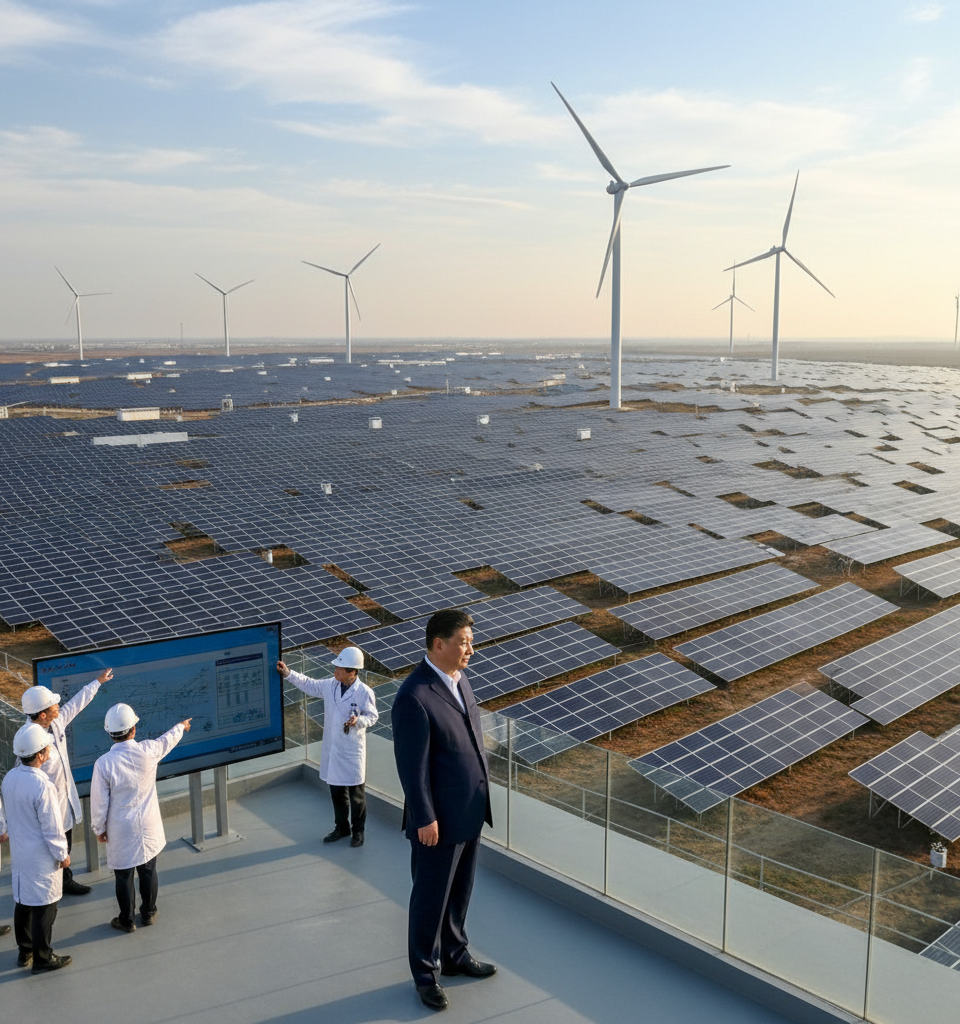
Beijing has, for years, been quietly and diligently implementing a comprehensive strategy to enhance its energy security, a critical undertaking now proving prescient amidst today's volatile global geopolitical landscape. While Chinese officials consistently emphasize non-intervention and neutrality in ongoing conflicts, internal policies enacted long before current crises highlight a stark understanding of future vulnerabilities. This proactive approach, significantly catalyzed by intensified US-China trade tensions during the Trump administration, underscores a deep-seated concern within the Communist Party leadership regarding reliance on external energy sources and the potential for supply disruptions.
The Genesis of a Grand Strategy
China's long-standing apprehension about its energy supply chain vulnerabilities, particularly its heavy reliance on seaborne oil and gas imports traversing strategic chokepoints, has been a central tenet of its national security doctrine. The escalating trade war and subsequent diplomatic friction with the United States from 2017 onwards served as a critical accelerant for these pre-existing concerns. Beijing recognized that energy could become a potent lever in any future international disputes, prompting a decisive shift towards aggressively de-risking its energy portfolio. This period saw a significant increase in investments in domestic exploration, renewable energy infrastructure, and strategic reserves, reflecting a systematic re-evaluation of its energy future.
Core Pillars of China's Energy Fortification
Key components of China's energy security strategy include a multi-pronged approach encompassing significant domestic resource development, aggressive diversification of import sources, and a monumental push into renewable energies. Domestically, state-owned energy giants like PetroChina and Sinopec have been mandated to ramp up exploration and production of oil and natural gas, with billions of dollars allocated to previously uneconomical fields. Concurrently, China has expanded its global energy footprint, forging long-term supply agreements with non-traditional partners in Africa, Latin America, and Central Asia, thereby reducing over-reliance on Middle Eastern suppliers. Furthermore, China's commitment to renewable energy, particularly solar and wind power, is unparalleled, with over 100 GW of new renewable capacity added in 2023 alone, representing roughly 50% of global new capacity.
Global Market Repercussions and Shifting Dynamics
China's inward turn on energy security has profound implications for global energy markets. Its decreased reliance on spot markets and diversified procurement strategies can dampen price volatility to some extent, particularly for oil and LNG. However, the sheer scale of China's demand means its strategic stockpiling and long-term contracts can also create scarcity in specific regional markets. Moreover, China's dominance in renewable energy manufacturing, particularly solar panels and lithium-ion batteries, grants it significant leverage in the global transition away from fossil fuels, impacting both supply chains and technological development worldwide. This dual impact—stabilizing some segments while exerting control over others—cements China's role as an undeniable force in the global energy landscape.
Expert Insights: A Geopolitical Chess Game
Energy analysts widely interpret China's strategic moves as a sophisticated adaptation to a more fragmented and confrontational international system. Dr. Li Hong, a senior fellow at the Institute of International Relations, notes, "Beijing's energy strategy is not merely economic; it's a deeply embedded component of its national security doctrine. They understood early on that economic interdependence could be weaponized, and they've systematically worked to insulate themselves." Others, like Dr. Mei Lin from the Asia Energy Research Group, highlight the long-term vision: "This isn't about avoiding one specific conflict, but building resilience against an era of heightened geopolitical instability. Their investments in renewables, particularly, indicate a strategic pivot that goes beyond fossil fuel dependency."
Looking Ahead: The Future of China's Energy Autonomy
The trajectory of China's energy strategy points towards continued aggressive domestic resource development and an accelerated transition to a clean energy economy. The nation aims for over 80% of its energy mix to come from non-fossil fuel sources by 2060, a target that necessitates sustained massive investment in renewables and nuclear power. This push will likely see China further solidify its position as a global leader in renewable technology while simultaneously maintaining a robust, diversified fossil fuel backup. Future developments will also include intensified efforts in energy efficiency and building stronger regional energy grids, particularly with Central Asian partners, thereby deepening its web of energy alliances and reducing maritime vulnerabilities. The unfolding geopolitical climate will only serve to reinforce Beijing's commitment to self-sufficiency, shaping both its internal development and its external foreign policy for decades to come.
Data Points & Statistics
- Total Energy Consumption: China accounted for approximately 26% of global primary energy consumption in 2022.
- Oil Imports: China imports over 70% of its crude oil, making it the world's largest oil importer.
- Natural Gas Imports: Roughly 40% of China's natural gas supply is imported.
- Strategic Petroleum Reserves (SPR): Estimates suggest China's SPR capacity is around 500-600 million barrels, with consistent efforts to expand it.
- Renewable Energy Capacity: China installed a record 216 GW of new renewable energy capacity in 2023, primarily solar and wind. This includes over 150 GW of solar and 69 GW of wind capacity. (Source: International Energy Agency).
- Domestic Oil Production: In 2023, China's domestic crude oil output reached approximately 4.2 million barrels per day, a slight increase from previous years, demonstrating ongoing efforts to boost local supply.
- Solar Panel Production: China controls over 80% of the world's solar panel manufacturing capacity.
- Battery Manufacturing: China produces over 70% of the world's lithium-ion batteries, critical for EVs and energy storage.