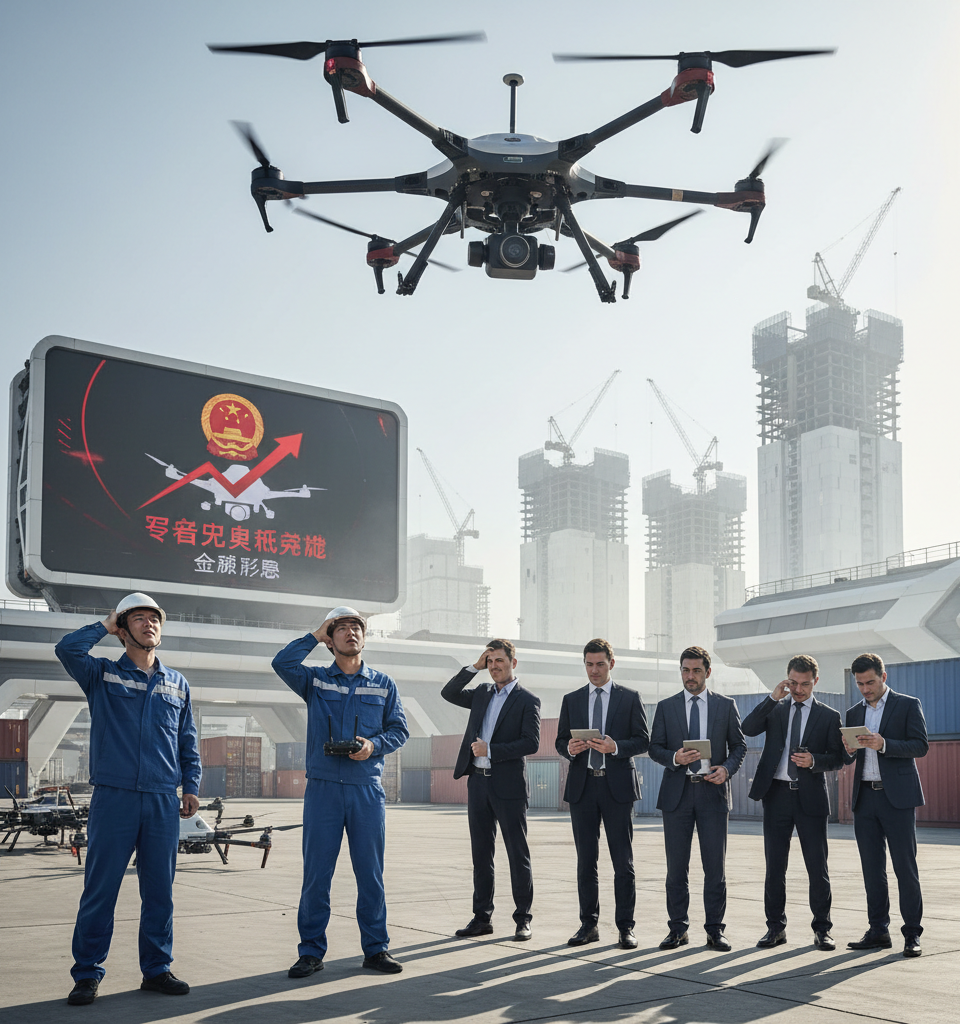
Beijing, China – In a move sending ripples across the burgeoning global drone industry, the Chinese government has dramatically tightened regulations governing unmanned aerial vehicles (UAVs). Citing national security concerns and a desire to curb what it describes as pervasive "illegal drone use," these new directives, enacted progressively over the past year, impose significant restrictions on drone ownership, operation, and airspace access. While the intent is to enhance public safety and surveillance, domestic drone users and international industry observers are increasingly vocal about the regulations being overly restrictive, hindering not only recreational pilots but also stifling crucial commercial and industrial applications within the world's largest drone manufacturing nation.
The Strategic Imperative: Securing the Skies
This regulatory crackdown is not an isolated incident but rather a strategic response by Beijing to a series of high-profile incidents involving unauthorized drone flights. Reports of drones interfering with commercial aviation, surveillance over sensitive government installations, and even weaponized modifications have proliferated in recent years. For a nation placing paramount importance on internal security and control, the largely unregulated skies presented a growing liability. Historically, China fostered a remarkably permissive environment that allowed its domestic drone industry, spearheaded by giants like DJI, to achieve global dominance, accounting for an estimated 70% of the world's civilian drone market. This laissez-faire approach, however, appears to be decisively over.
Unpacking the New Restrictions and Their Reach
The new regulations, which became fully effective in recent months, introduce a multi-tiered licensing system, mandatory real-name registration for virtually all drones, and significantly expanded no-fly zones, particularly around urban centers, government facilities, and critical infrastructure. Notably, drones exceeding a certain weight threshold (often 250 grams) now frequently require pre-approved flight plans submitted days in advance, a process many operators describe as cumbersome and often denied without clear justification. Furthermore, restrictions on the sale of core drone components and advanced flight control systems have also been implemented, creating supply chain bottlenecks for both manufacturers and hobbyists. Domestic reports indicate a dramatic decrease in recreational drone activity, with commercial operators struggling to adapt to the bureaucratic hurdles, sometimes seeing their essential operations delayed by weeks.
Global Industry Impacts and Local Challenges
The immediate impact on China's massive drone manufacturing sector is a primary concern. While DJI maintains its market leadership, the tightening domestic market could force a re-evaluation of its strategies, potentially shifting focus towards international markets where regulations, while evolving, may be less stringent. Smaller Chinese drone manufacturers, which often cater to the domestic commercial and agricultural sectors, are facing significant headwinds, with some reporting substantial drops in sales and operational viability. On the ground, industries such as agriculture, infrastructure inspection, and logistics, which have eagerly adopted drone technology for efficiency gains, now face unprecedented operational challenges. For instance, a construction company in Sichuan reported a 40% reduction in its drone-based surveying projects due to the inability to secure timely flight permits, leading to increased costs and project delays.
Expert Opinions: Balancing Security and Progress
Industry analysts are divided on the long-term implications. Dr. Lei Wang, a technology policy expert at the Peking University, comments, "While enhanced security is undeniably crucial, the current framework risks stifling the very innovation that made China a global drone powerhouse. There's a delicate balance between control and fostering technological advancement, and presently, the scale seems heavily tipped towards control." Conversely, state media outlets laud the measures as essential for public safety and national security. "These regulations underscore China's commitment to responsible technological governance," a recent editorial in the Global Times stated, "ensuring that cutting-edge technology serves the people, not endangers them."
The Path Forward: Adjustment and Adaptation
Looking ahead, the drone industry in China faces a period of significant adjustment. While a complete reversal of these policies is unlikely, there is a possibility that Beijing may introduce more nuanced regulations over time, perhaps creating specific zones or streamlined approval processes for established commercial operators. The domestic market will likely see a consolidation, favoring larger enterprises with the resources to navigate the complex regulatory landscape. Internationally, these regulations may prompt other nations to examine their own drone policies, potentially leading to a more fractured global regulatory environment. The question remains whether China, having built the world's drone industry, can now manage to control it without inadvertently grounding its future growth effectively.
As the world watches, the Chinese drone industry, once flying high on innovation and minimal oversight, is now navigating denser regulatory skies. Its ability to adapt and innovate within these new constraints will be a crucial indicator of its sustained global influence and the future trajectory of drone technology itself. The coming months will reveal if this regulatory tightening will clip the wings of China's drone ambitions or merely guide them onto a more controlled flight path.