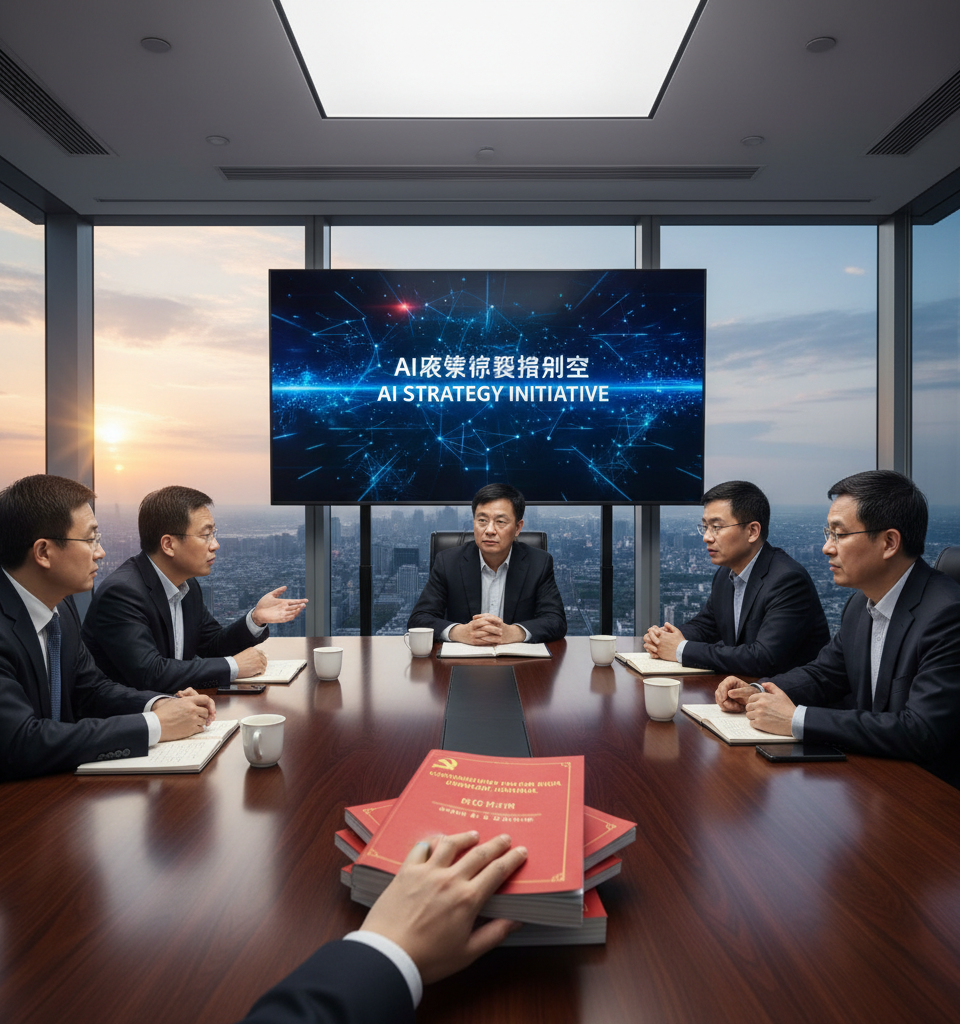
A draft commentary poised for publication in the esteemed Qiushi journal on Monday is set to unveil a pivotal shift in how the Chinese government intends to manage its sprawling internet sector. The directive, emanating from a high-level Communist Party source, signals that Beijing's focus for its leading technology companies will transition from unchecked growth fueled by price competition to a more strategically guided development emphasizing innovation, particularly in artificial intelligence.
The impending commentary underscores a delicate balance the Communist Party aims to strike: fostering continued economic expansion within the technology sector while simultaneously strengthening regulatory oversight. This nuanced approach suggests a maturation of Beijing's regulatory philosophy, moving beyond punitive measures to a more directive role in shaping the industry's future trajectory. Companies such as Alibaba and Meituan are specifically mentioned as key entities to which this new guidance is directed, indicating a broad scope that encompasses e-commerce, food delivery, and other dominant internet services.
Reframing Regulatory Engagement
The move represents a significant departure from previous regulatory cycles, which often focused on antitrust concerns, data security, and consumer protection. While these areas of oversight are unlikely to disappear, the emphasis on AI investment introduces a new dimension to Beijing's engagement with its tech giants. The message indicates a desire to channel the considerable resources and innovation capabilities of these companies towards national strategic priorities, with AI being a critical frontier for global competition.
For years, China's internet sector has been characterized by intense competition, often manifesting in aggressive price wars and market share battles. This new guidance from the Communist Party suggests that such strategies are no longer deemed beneficial for the long-term health or strategic objectives of the nation. Instead, the focus will be on directing capital and talent towards advanced technological development, aiming to solidify China's position as a leader in emerging technologies.
Implications for Tech Titans
For major players like Alibaba and Meituan, the commentary could necessitate a re-evaluation of their core business strategies and investment portfolios. Shifting away from price-driven competition towards substantial AI development will require significant capital allocation to research and development, talent acquisition, and infrastructure. This pivot could lead to a wave of mergers and acquisitions in the AI space, as well as increased investment in internal R&D capabilities.
The enhanced regulatory oversight mentioned in the commentary suggests that while the government aims to support growth, it will do so with a firmer hand. This likely translates to continued scrutiny over monopolistic practices, data governance, and potentially new regulations concerning AI ethics and deployment. The state's increasing involvement in guiding corporate strategy highlights the unique interplay between government and enterprise in China's socialist market economy.
Broader Market Repercussions
The implications of this policy shift extend beyond just the immediate tech giants. Smaller tech firms specializing in AI, or those developing foundational AI technologies, could see increased opportunities for partnerships, investment, or even acquisition by the larger platforms now compelled to boost their AI capabilities. Conversely, companies heavily reliant on traditional, competitive business models without a strong AI component might find themselves at a disadvantage.
This strategic redirection could also influence investor sentiment. While the focus on AI might signal long-term growth potential and national backing, the increased regulatory oversight could introduce a degree of uncertainty regarding operational autonomy and profit margins. Investors will likely be scrutinizing how these tech giants adapt to the new directives and what impact it has on their profitability and market valuations.
The Path Forward
The release of the Qiushi commentary on Monday is highly anticipated as it will provide the definitive articulation of these new policy directives. Industry observers will be closely watching for granular details regarding incentives for AI investment, specific areas of enhanced regulation, and any further clarification on what constitutes an acceptable balance between growth and oversight. The move is expected to shape the future landscape of China's technology sector, ushering in an era where strategic innovation, guided by state priorities, takes precedence over unbridled market competition.