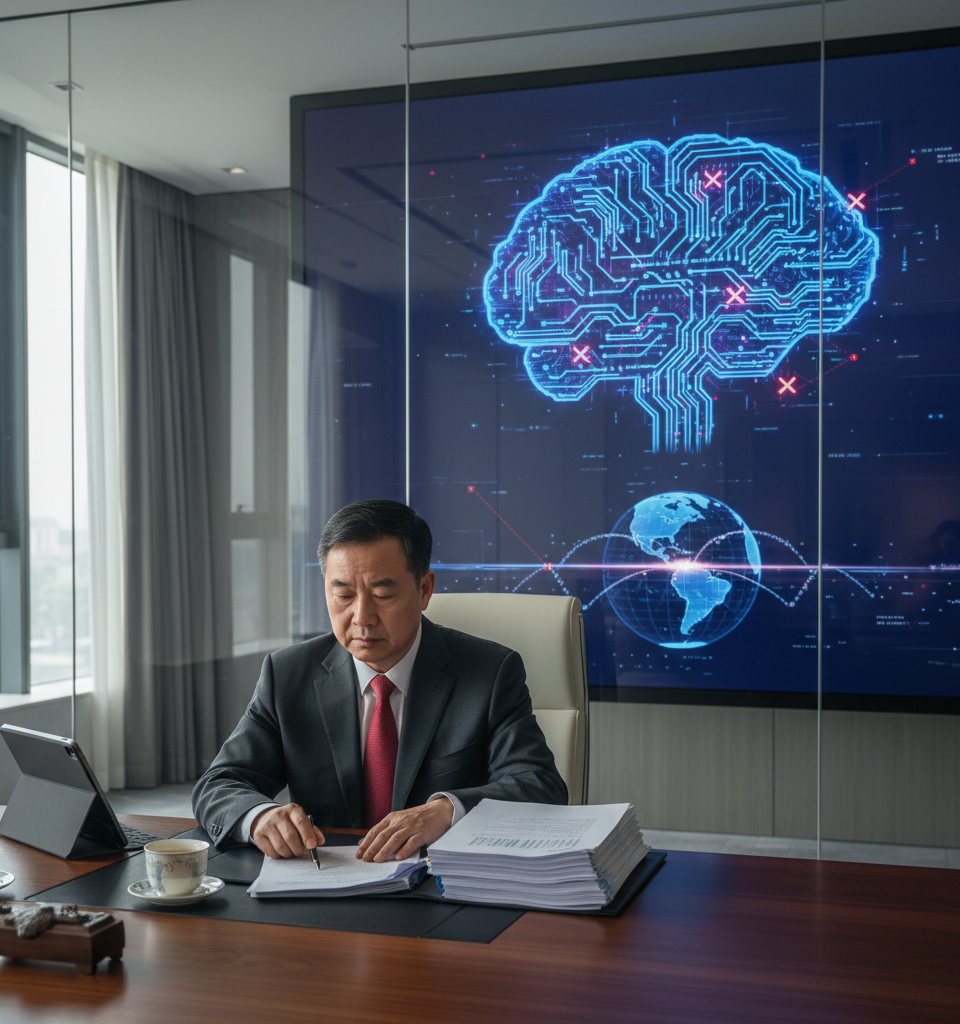
Beijing is reportedly poised to implement new restrictions that will prohibit its top artificial intelligence companies, including burgeoning AI startups, from accepting investment capital from the United States without explicit government consent. This strategic maneuver, first reported by Bloomberg News on Friday, citing informed sources, marks a critical pivot in the escalating technological contest between the two global superpowers. The decision underscores a deliberate effort by China to assert greater control over the financial underpinnings of its burgeoning AI sector, amidst a backdrop of increasing US scrutiny and previous restrictions on technology transfers.
This development represents a substantial deepening of the US-China AI rivalry, moving beyond the well-documented battles over semiconductor chips and export controls to directly impact the flow of capital and the strategic development of AI models. For years, American venture capital has played a pivotal role in fueling the growth of China's tech landscape, including many of its most innovative AI enterprises. The proposed restrictions reflect a growing apprehension within the Chinese government regarding potential foreign influence and the desire to cultivate indigenous technological self-sufficiency, particularly in areas deemed critical for national security and economic dominance.
Key Details of the Proposed Restrictions While the specific details of the proposed regulations remain somewhat opaque, the
Bloomberg report suggests that the new rules would necessitate a governmental review and approval process for any US investment in designated Chinese AI firms. This could involve stringent due diligence, national security assessments, and potentially, conditions on the nature or size of such investments. The scope of "leading AI firms" is also expected to be broad, encompassing both established giants and emerging startups identified as strategically important. Such measures are reminiscent of foreign investment review mechanisms in other countries, designed to protect critical infrastructure and technologies from adversarial influence. The swiftness of these parallel moves within 24 hours highlights the accelerating pace at which both nations are recalibrating their strategic positions in the global tech arena.
Impact on the Global AI Landscape
Should these restrictions be implemented, the immediate impact on the global AI investment landscape could be significant, creating a more bifurcated market. US venture capitalists, who have historically been active in funding innovative Chinese tech, will likely face substantial hurdles, potentially reallocating capital to other markets or domestic opportunities. Conversely, Chinese AI firms could be forced to seek alternative funding sources, such as domestic state-backed funds or venture capital from allied nations, potentially slowing their development due to reduced access to a once-vibrant and experienced investor base. This could also spur Chinese investors to fill the void, further nationalizing key segments of the AI industry.
Expert Analysis and Forecasts
Industry analysts and geopolitical experts view this as a tit-for-tat response to Washington's previous actions, including export controls on advanced semiconductors and discussions around outbound investment screening. "Beijing's move is a clear signal that they are not just reacting, but proactively shaping their national technological destiny," commented Dr. Eleanor Vaughn, a senior fellow at the Center for Strategic and International Studies. "It's about decoupling capital as much as it is about decoupling technology. We could see a significant chilling effect on cross-border tech investment and a further acceleration of the 'tech iron curtain' between these two powers." Other experts point out that while this might limit access to some capital, it could also foster greater innovation within China as local firms are incentivized to rely more on domestic resources and talent.
What Comes Next: A Shifting Global Order
Looking ahead, this move is likely to intensify the broader technological competition. The US could respond with further outbound investment restrictions targeting American capital flowing into sensitive Chinese tech sectors. Simultaneously, China is expected to bolster its internal mechanisms for nurturing AI talent and facilitating domestic capital formation to offset the potential loss of US investment. The long-term implications include a potentially more fragmented global AI ecosystem, with distinct technological stacks and supply chains emerging in the US-aligned and China-aligned spheres. Companies operating across these borders will face increasing regulatory complexities and compliance risks, ultimately reshaping global innovation and economic interdependence in the coming decade. Future developments will likely include more detailed regulatory frameworks from both nations and potentially a shift in global venture capital flows towards regions perceived as less geopolitically risky.