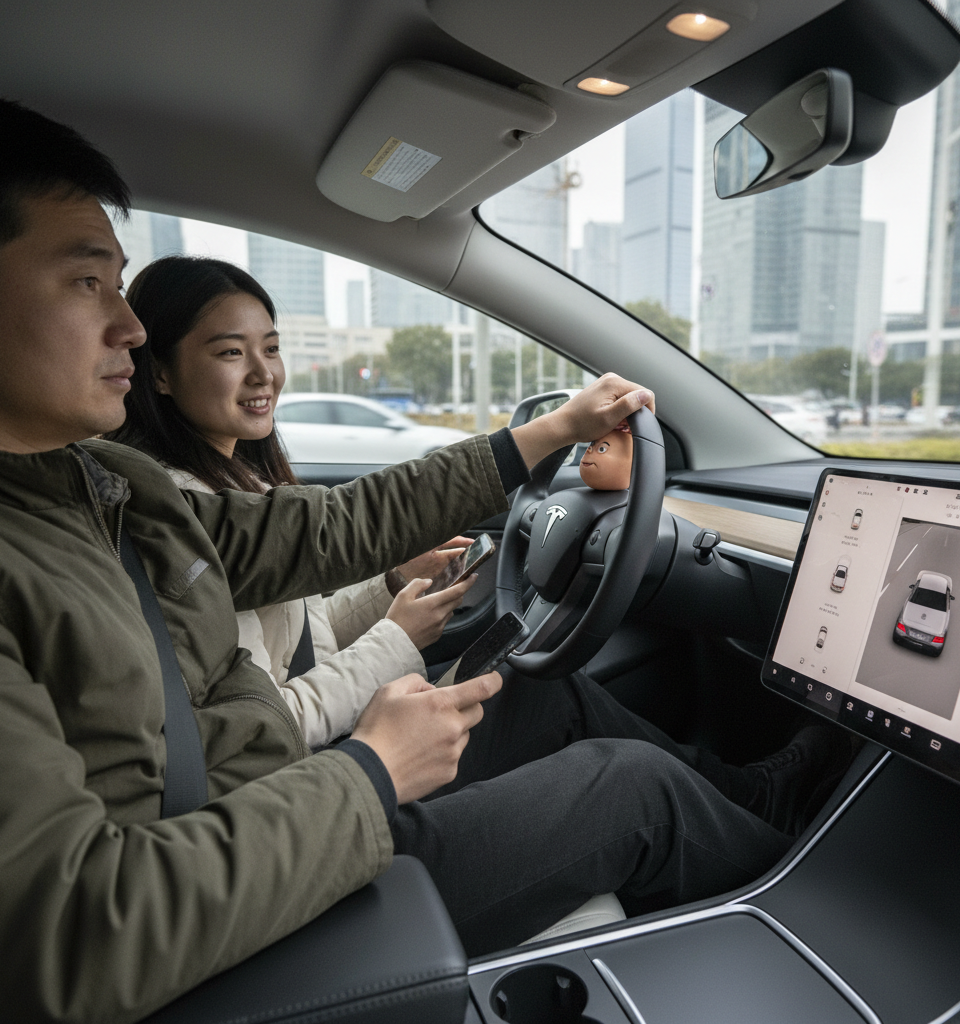
Chinese Tesla owners are increasingly resorting to a variety of inventive, do-it-yourself gadgets to bypass the company’s driver-distraction safeguards for its Autopilot system. These rudimentary yet effective tools, ranging from tiny plastic replicas of celebrity heads to sophisticated blinking screens, are designed to trick the vehicle into perceiving a driver's attentive presence, thereby allowing the continued operation of assisted driving features without genuine human engagement. The emergence of this practice highlights a significant challenge in the development and deployment of advanced driver-assistance systems (ADAS) in diverse global markets.
This trend underscores a growing tension between vehicle manufacturers' safety protocols and drivers' desires for uninterrupted convenience offered by semi-autonomous features. Historically, the evolution of automotive safety has often been a race between manufacturers implementing new protections and consumers finding ways around them for perceived comfort or utility. The current situation with Tesla's Autopilot and Chinese drivers reflects a contemporary iteration of this ongoing dynamic in the age of sophisticated automotive technology.
Key to these circumvention methods are objects designed to mimic human characteristics that Tesla's internal cameras and sensors are programmed to detect. The "tiny plastic heads," for instance, are often attached to the steering wheel or dashboard, strategically positioned to blink or move subtly, replicating typical driver behaviors such as head movement or eye blinks. Other drivers have reportedly employed small, flashing LED screens or even smartphone applications that emit specific light patterns, all crafted to fool the car's monitoring systems into thinking the driver is fully attentive and engaged.
The widespread adoption of these gadgets in China suggests a significant demand for continuous Autopilot use without the system's intended interruptions for driver attention. This phenomenon could have broader implications for the global automotive industry, particularly as ADAS technologies become more prevalent. Other manufacturers developing similar semi-autonomous driving features may need to re-evaluate the robustness of their own driver monitoring systems in light of these developments, anticipating similar circumvention attempts in various markets.
While the original news does not offer specific expert analysis on this precise phenomenon, the general consensus among automotive safety experts is that any bypass of driver monitoring systems significantly increases the risk of accidents. These systems are crucial layers of safety, designed to ensure that a human driver remains ready to take control, especially in situations where the ADAS might struggle or require intervention. Circumventing them inherently undermines engineered safety nets.
Looking ahead, this situation could prompt Tesla to enhance the sophistication of its driver monitoring systems, potentially incorporating more complex behavioral analytics or multi-modal sensing to detect genuine driver engagement versus simulated presence. It may also lead to a stronger regulatory push in China and elsewhere to enforce stricter penalties for tampering with vehicle safety features. As autonomous driving technology continues to advance, the cat-and-mouse game between system developers and determined users is likely to evolve, pushing the boundaries of both technological safeguards and user ingenuity.
The broader conversation this trend initiates revolves around the ethical implications of ADAS technology and user responsibility. While the convenience of these systems is self-evident, their safe operation fundamentally relies on adherence to manufacturer guidelines. The development of more robust, un-bypassable driver-monitoring solutions will be critical for the continued safe rollout and public acceptance of increasingly automated vehicles worldwide. This ongoing challenge underscores the need for continuous innovation in both hardware and software solutions to ensure that technological advancements in autonomy do not inadvertently lead to increased safety risks on public roads.