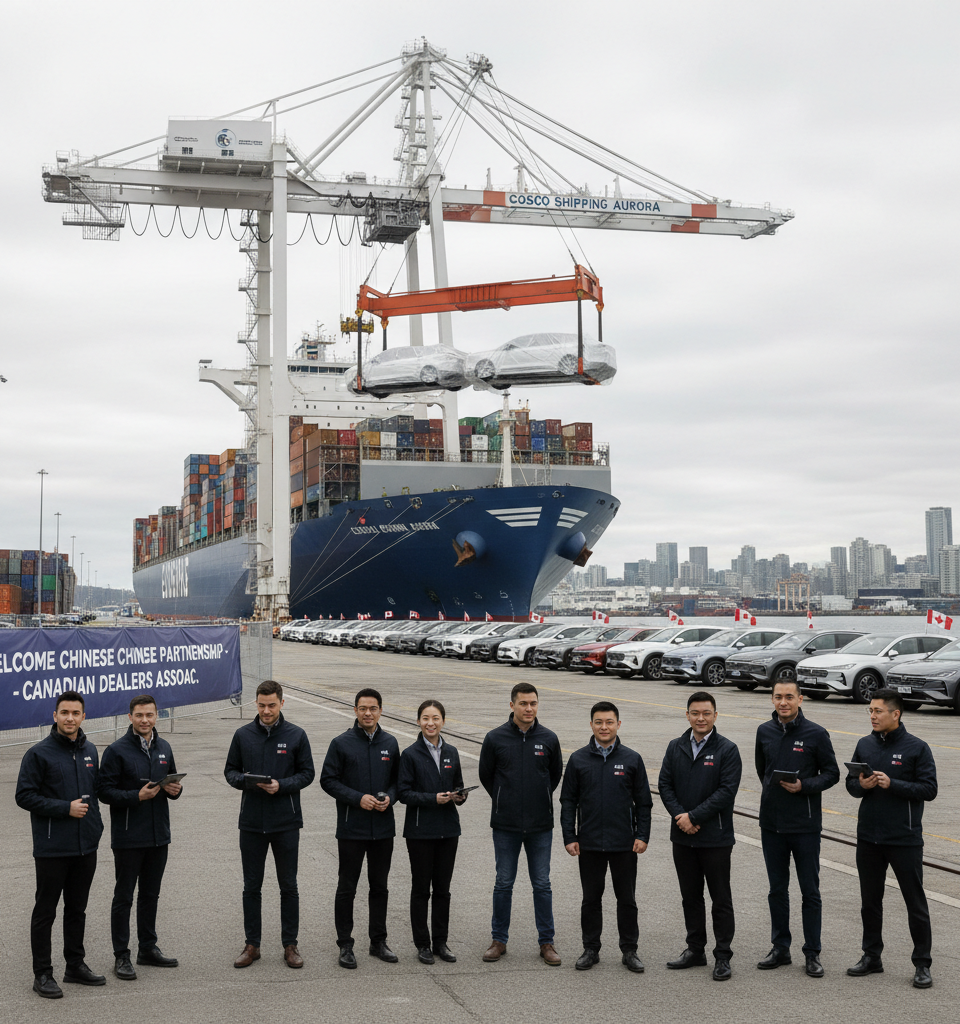
Canada has recently finalized an agreement that will permit the annual import of up to 49,000 Chinese-manufactured electric vehicles (EVs) for retail sale, subject to a 6.1% tariff rate. This development signals a strategic divergence from some international allies, notably the United States, in its approach to Chinese automotive imports. The decision has been met with anticipation from a segment of Canadian automotive dealerships eager to introduce more affordable EV options to consumers, potentially reshaping the competitive dynamics of the burgeoning electric vehicle market nationwide.
Context and Background
The move comes amidst a global race to electrify transportation and reduce carbon emissions. While countries like the U.S. have expressed concerns regarding China's EV manufacturing dominance, citing potential national security risks and unfair trade practices, Canada appears to be charting a more pragmatic course focused on consumer choice and market diversification. The 6.1% tariff, while present, is significantly lower than the 27.5% tariff currently imposed by the U.S. on similar imports, highlighting a different economic calculus by Ottawa. This policy could be seen as an effort to accelerate EV adoption by increasing accessibility, particularly for budget-conscious buyers, given the higher price point of many existing EV models.
Key Details and Specifics
The agreement specifies an annual quota of 49,000 vehicles, a figure that represents a substantial entry point into the Canadian market. 1% tariff is applied to the manufacturer's suggested retail price (MSRP) of each vehicle, a cost that will ultimately be borne by the consumer. While the specific brands poised to enter are not yet officially confirmed, market observers anticipate the arrival of well-known Chinese EV manufacturers such as BYD, Nio, and XPeng, which have already established presences in other international markets.
Numerous Canadian automotive groups have reportedly initiated discussions with these manufacturers, signaling strong interest in distribution partnerships. Dealerships view these imports as crucial for meeting increasing consumer demand for diverse and more economically viable EV options, especially in an environment where supply chain issues have, at times, constrained inventory for established brands.
Industry and Market Impact
The influx of Chinese EVs is expected to intensify competition within Canada's automotive sector. Traditional automakers, who have invested heavily in their own EV lines, will likely face new pressures to innovate and perhaps adjust pricing strategies. For consumers, this translates into a broader selection of electric vehicles across various price points, potentially driving down the overall cost of EV ownership. This could particularly boost the mid-market segment, where Canadian consumers currently have fewer affordable EV choices. Analysts suggest that the increased availability could also contribute to Canada's overarching goal of achieving net-zero emissions by encouraging quicker adoption of electric transportation.
Expert Perspective
Automotive industry analysts are largely in agreement that this initiative will shake up the Canadian market. "This isn't just about more choice; it's about shifting the competitive landscape dramatically," noted one leading industry expert from a Toronto-based consulting firm. "The quality and technological sophistication of certain Chinese EVs have advanced rapidly, and their pricing strategy is aggressive.
" Concerns occasionally surface regarding data privacy and cybersecurity linked to foreign-made technology, but Canadian regulators are expected to implement stringent standards.
What's Next
The coming months will likely see significant announcements regarding specific Chinese EV brands entering the Canadian market. Dealerships will begin establishing sales and service networks, a critical component for consumer confidence and long-term success. The Canadian government will monitor the impact of these imports on domestic manufacturing and overall market dynamics, leaving open the possibility of future adjustments to tariff rates or quotas. As the 2035 deadline for 100% zero-emission new light-duty vehicle sales approaches, the integration of Chinese EVs is anticipated to play a substantial role in Canada's transition to a fully electrified transportation system, with initial shipments expected to arrive by early next year.