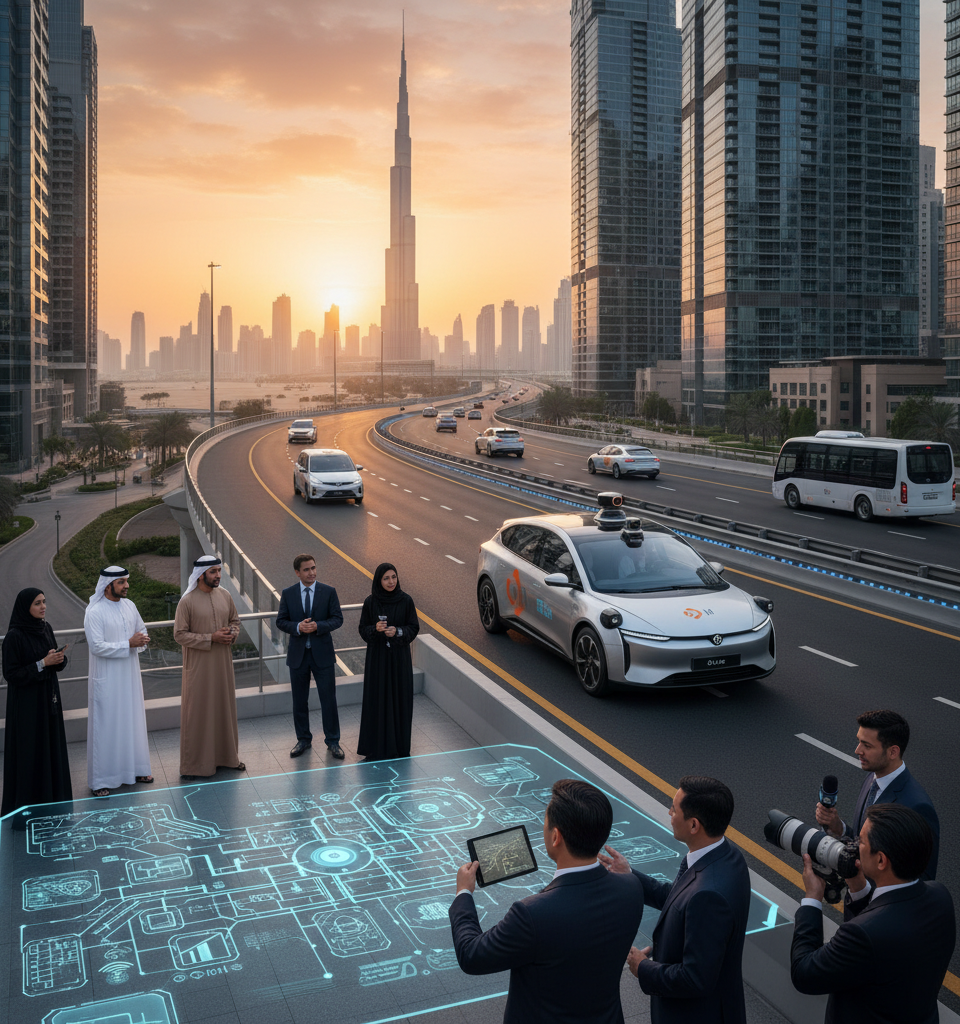
DUBAI, UAE – In a significant move highlighting the global ambitions of China's autonomous vehicle sector, Didi Global, the country's dominant ride-hailing platform, is poised to commence its first international robotaxi testing operations in the United Arab Emirates later this year. This strategic deployment marks a critical juncture for Didi's autonomous driving unit, Didi Autonomous Driving, as it seeks to expand beyond its domestic market and establish a footprint in a rapidly developing international hub. The initiative comes even as the wider Middle East region grapples with heightened tensions stemming from the ongoing conflict in Iran, underscoring the long-term vision and commitment of these technology companies.
This expansion is not an isolated incident but rather indicative of a broader trend. Chinese autonomous driving companies, including Pony.ai and WeRide, have been aggressively exploring opportunities in the UAE for several years, recognizing the nation's forward-thinking regulatory environment, robust infrastructure, and ambition to become a global leader in smart city technologies. The UAE, particularly Dubai and Abu Dhabi, has launched various initiatives to integrate autonomous transportation into its urban fabric, aiming for a significant percentage of its transportation to be driverless within the next decade. This synergy creates a fertile ground for Chinese tech firms seeking to commercialize their cutting-edge solutions.
Didi's entry follows extensive preparatory work and engagements with Emirati authorities. While specific details regarding the scale of the initial testing fleet, the designated operational zones, and the precise timeline remain under wraps, sources familiar with the matter indicate that the trials will focus on gathering crucial data on diverse road conditions, cultural driving behaviors, and the integration of autonomous systems within a novel regulatory framework. This real-world testing is vital for iterating on their technology and tailoring it for international deployment, potentially paving the way for eventual commercial services.
The strategic importance of the UAE for Chinese robotaxi firms extends beyond just growth; it represents a crucial diversification effort amid tightening regulatory scrutiny and intense competition within China. The opportunity to operate in a market with strong government backing for autonomous technology and a clear roadmap for widespread adoption offers a valuable testing ground and a potential blueprint for wider global expansion. Furthermore, strong economic ties and burgeoning investment flows between China and the UAE provide a supportive backdrop for such ventures.
Industry analysts view this aggressive push into the UAE as a calculated risk, particularly given the geopolitical instability. "The UAE presents a unique blend of regulatory receptiveness, capital availability, and a desire to leapfrog traditional transportation models," stated Dr. Aisha Al-Mansoori, a technology policy expert based in Dubai. "While regional tensions are a constant consideration, the long-term economic and technological benefits of becoming a leader in autonomous mobility likely outweigh the perceived short-term risks for these companies." She further added that the UAE's strong security measures and stable governmental structures provide a degree of confidence frequently sought by international investors.
Looking ahead, the success of Didi's initial trials could significantly influence the pace and scale of its future international ventures. It could also encourage other global autonomous driving players to re-evaluate their strategies and accelerate their own entries into the Middle East. The insights gained from operating in the UAE, from navigating diverse traffic scenarios to integrating with local digital ecosystems, will be invaluable. The ultimate goal for these firms is not just to operate robotaxis, but to develop comprehensive smart mobility solutions that can be scaled globally, potentially transforming urban transportation as we know it.
The coming months will be critical as Didi initiates its testing, with the potential to demonstrate the viability and safety of its autonomous technology under international conditions. The journey for Chinese robotaxi companies in the UAE is emblematic of a larger global race for autonomous driving dominance, where technological prowess is increasingly matched by strategic geopolitical and economic considerations. The vision of driverless cars seamlessly navigating the streets of Dubai and Abu Dhabi is steadily transitioning from concept to reality, with Chinese innovation at the forefront.