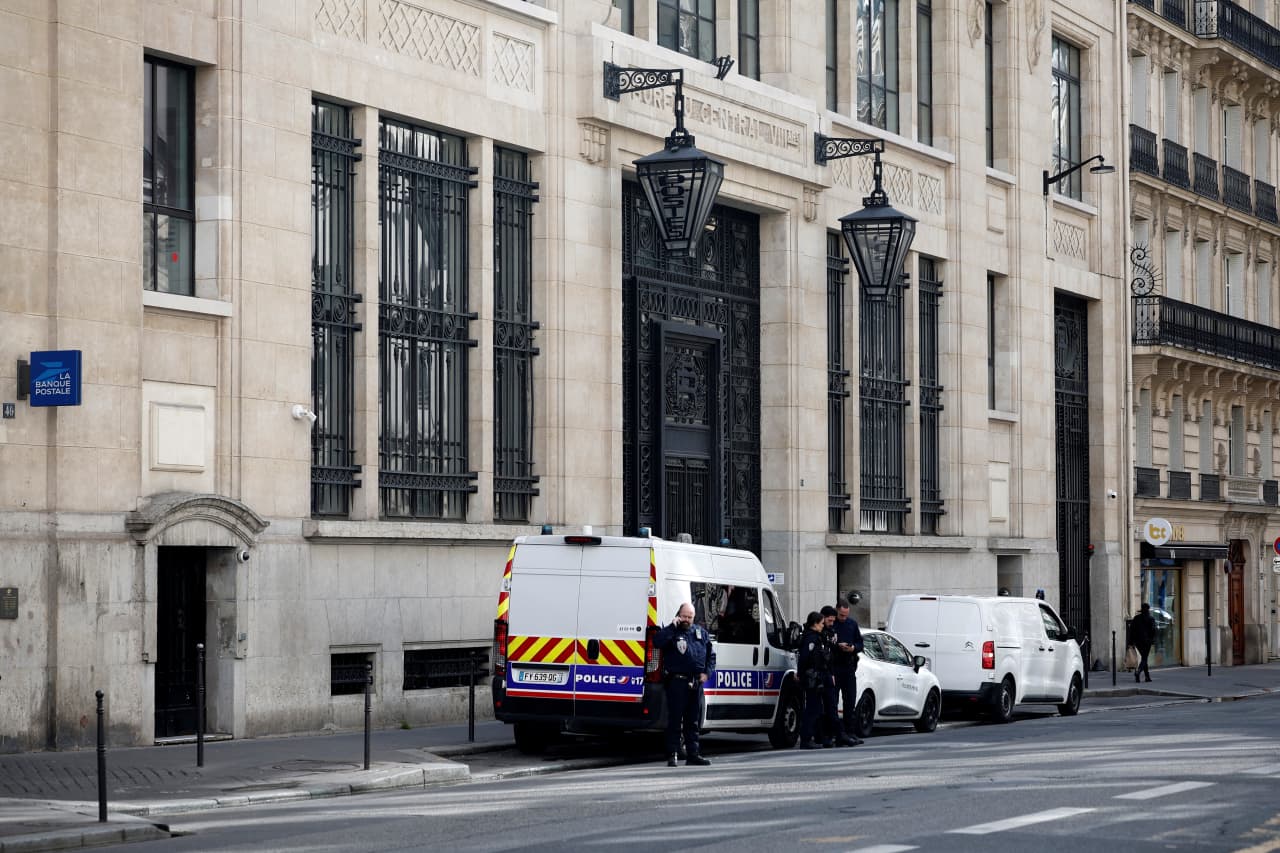
**PARIS, FRANCE – ** – Citigroup, one of the world's leading financial institutions, has directed its employees in Paris and Frankfurt to work remotely with immediate effect. This precautionary measure follows a foiled bomb attempt earlier this week that targeted a Bank of America facility situated in Paris, raising significant alarm bells regarding security protocols within the European financial landscape. The directive, communicated internally, aims to prioritize employee safety and maintain operational continuity amidst heightened security concerns.
Context: A Lingering Threat to Financial Institutions
This incident is not an isolated event but rather a stark reminder of the enduring threat posed by extremist elements and criminal organizations to critical infrastructure, including financial institutions. Major banks, with their symbolic value and extensive reach, have historically been targets. The swift police action in Paris to neutralize the threat before any detonation underscores the constant vigilance required by law enforcement and corporate security teams. The European financial sector, particularly in key cities like Paris and Frankfurt which serve as crucial hubs for investment banking, asset management, and trading, operates under a perpetual state of security alert, often augmented following geopolitical tensions or significant public events.
Details of the Foiled Attack and Immediate Response
The thwarted attack, which French authorities have described as a serious and credible threat, involved the discovery of an improvised explosive device (IED) near a Bank of America branch in the 8th arrondissement of Paris, a district known for its concentration of financial establishments. Police sources, who requested anonymity due to ongoing investigations, confirmed that the device was rendered safe without any casualties or damage. While Bank of America has not publicly commented on specific internal security measures, Citigroup’s rapid response indicates a coordinated and proactive approach to potential risks. An internal memo from Citigroup's European management, seen by this publication, emphasized that the shift to remote work was a temporary, protective measure, with offices remaining closed until further security assessments are completed by local authorities and internal teams.
Broader Implications for the European Financial Market
The incident has inevitably cast a shadow over market sentiment, particularly concerning the operational security of major financial centers. While no direct market disruption was reported, the psychological impact on employees and the potential for increased security costs across the sector are tangible. Analysts suggest that such events could prompt a re-evaluation of physical security infrastructure, investment in surveillance technologies, and a greater emphasis on cyber resilience, given that physical threats often precede or coincide with cyber-attacks. The financial services industry in Europe collectively spends billions annually on security, a figure likely to trend upwards following this and similar incidents.
Expert Perspectives on Corporate Security
Security experts are weighing in on the implications. Dr. Evelyn Reed, a counter-terrorism specialist focusing on critical infrastructure, stated, “The fact that the device was found before detonation is a testament to effective intelligence and rapid response. However, it also highlights the ingenuity and persistence of those seeking to cause disruption. Financial institutions must continuously evolve their security posture, moving beyond perimeter defenses to include robust intelligence gathering and rapid evacuation protocols.” She added that “hybrid work models, ironically, could become a security asset, diversifying the human presence and reducing the concentration of personnel in single locations during times of heightened threat.”
Looking Ahead: Enhanced Security and Operational Flexibility
In the aftermath of this incident, it is highly probable that financial institutions across Paris, Frankfurt, and potentially other major European cities will review and significantly enhance their security protocols. This could include increased visible security presence, more stringent access controls, and potentially the acceleration of remote work capabilities as a fundamental component of business continuity planning, rather than merely a pandemic-era adaptation. French and German authorities are expected to share intelligence and coordinate efforts to prevent future incidents, potentially leading to new regulatory guidelines for corporate security in critical sectors. Citigroup has indicated that a phased return to offices will be considered only when conditions are deemed entirely secure, with employee well-being as the paramount factor.
The swift, decisive action by Citigroup underscores a growing trend in corporate security: agility and flexibility in managing unforeseen threats. As the investigation continues, the broader financial community will be watching closely, ready to adapt and reinforce defenses against an ever-evolving threat landscape. Maintaining financial stability in the face of such challenges remains a top priority for governments and corporations alike. The coming weeks will likely see a wave of internal security audits and a renewed focus on safeguarding personnel and assets across the European banking sector.