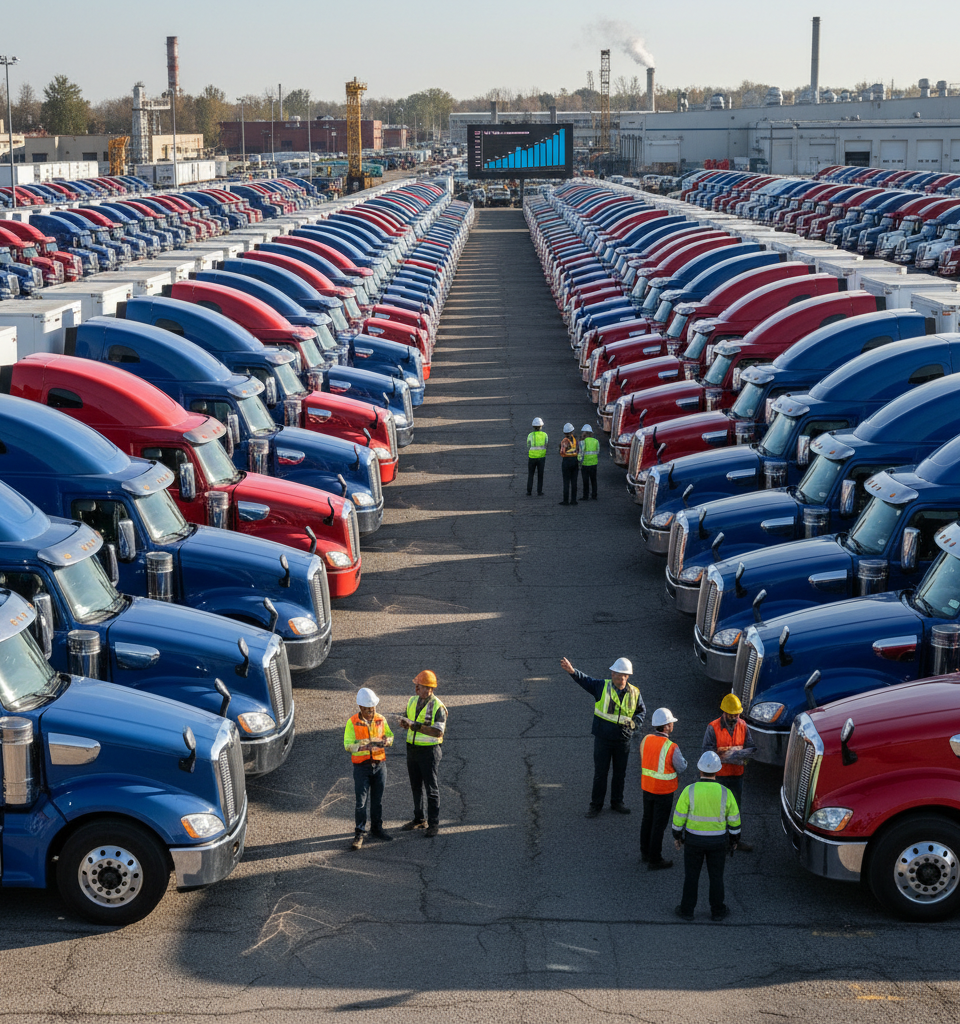
Recent data indicates a significant uplift in Class 8 heavy-duty truck orders, driven by a confluence of robust freight activity, tightening transportation capacity, and an escalating need for fleet modernization. This surge in ordering reflects a broad-based recovery within the trucking industry, with carriers actively investing in new equipment to meet burgeoning demand and enhance operational efficiency across the supply chain.
This sustained buying spree in the heavy-duty truck market is not merely a fleeting trend but rather a critical indicator of the underlying health and future direction of the broader logistics and transportation sectors. Following a period of economic uncertainty, the current momentum underscores a renewed confidence among carriers in long-term freight volumes. Historically, Class 8 truck orders are a bellwether for economic activity, with increased purchases signaling anticipated growth in industrial production, retail sales, and consumer spending.
Key figures from industry analysts highlight the impressive scale of this rebound. According to data released by ACT Research, net Class 8 truck orders for recent months have consistently outperformed historical averages, with some months seeing year-over-year increases exceeding 50%. This robust order book translates into extended lead times for new vehicles, pushing delivery windows well into the next year for many manufacturers. Major truck manufacturers like Daimler Truck North America, Volvo Group, and PACCAR are reportedly operating at near-full capacity to keep up with the overwhelming demand. The average price for a new Class 8 truck has also seen an uptick, reflecting both increased demand and rising input costs for manufacturers.
The implications of this accelerated fleet modernization extend across the entire economic landscape. For shippers, the influx of new, more efficient trucks could eventually lead to a stabilization of freight rates, though capacity will likely remain tight in the short to medium term. For truck drivers, newer equipment often translates to improved working conditions, greater fuel efficiency, and enhanced safety features. Furthermore, this investment in new vehicles is a crucial step towards reducing the average age of the national truck fleet, which has aged significantly in recent years due to deferred purchases and supply chain disruptions.
Market analysts like Kenny Vieth, President and Senior Analyst at ACT Research, emphasize the fundamental strength underpinning these orders. "The market is being driven by strong freight demand and rates, combined with an aging fleet and the need for replacement," Vieth stated in a recent industry brief. "Carriers are demonstrating a strong appetite for new iron, signaling strong expectations for 2024 and beyond." Other experts point to the current environment of high spot rates and contract renewals as providing carriers with the necessary capital and incentive to invest heavily in their fleets.
Looking ahead, the trajectory of Class 8 truck orders will remain a critical metric for monitoring the economic pulse. While current demand is exceptionally strong, potential headwinds include ongoing supply chain challenges, particularly for semiconductors and other components, which could constrain production. Furthermore, evolving environmental regulations and the gradual shift towards electric and alternative fuel vehicles may influence future purchasing decisions, albeit on a longer timeline. Manufacturers are actively investing in these new technologies, signaling a fundamental transformation of the heavy-duty trucking landscape in the coming years.
The durable strength in Class 8 truck buying underscores a broader narrative of an economy recalibrating and adapting to new realities. As businesses strive to optimize their logistics operations and meet ever-increasing consumer demands, the heavy-duty truck market stands as a testament to the ongoing vitality of the freight economy and its indispensable role in global commerce.