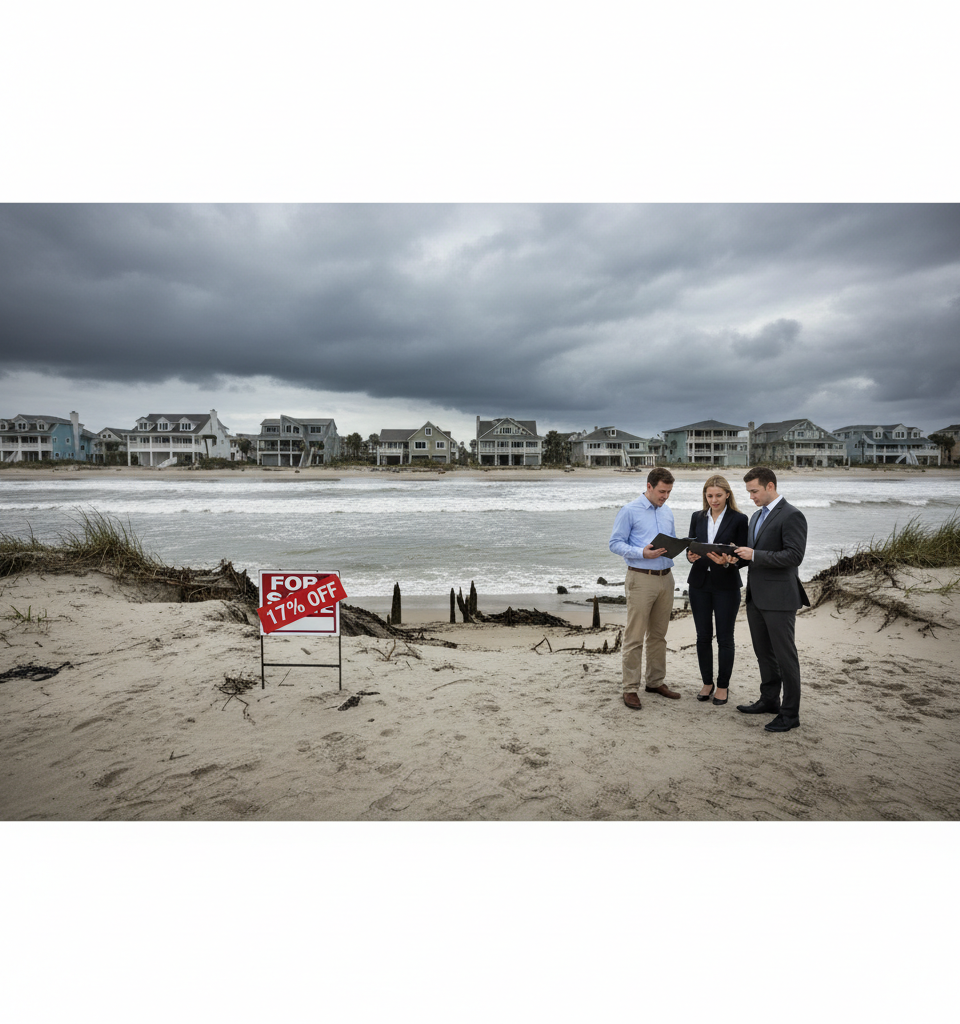
The mounting costs associated with climate change are directly impacting the financial bedrock of commercial real estate, as a new report indicates a substantial 17% reduction in property values within markets highly susceptible to natural disasters. This decline is largely attributed to the increasing burden of insurance premiums, which are becoming prohibitively expensive or entirely unavailable in areas prone to hurricanes, wildfires, and flash floods. The findings underscore a critical shift in how climate risk translates from environmental concern to direct economic consequence, compelling investors and developers to re-evaluate traditional valuation models and geographic investment strategies.
The Unfolding Crisis in Real Estate Valuation
For decades, commercial real estate valuations have primarily focused on economic fundamentals, location, and property specifics. However, the accelerating frequency and severity of climate-related events are introducing a potent new variable: actuarial risk. This emerging dynamic means that properties in regions like Florida's hurricane-prone coastlines, California's wildfire interface, or the flood plains of the Midwest are no longer just facing a physical threat, but a systemic devaluation driven by the financial sector's response to that threat. This shift is particularly stark as insurance carriers, faced with mounting losses, are either exiting these markets or dramatically increasing their premiums, making properties less attractive and, consequently, less valuable.
Key Findings and Data Points
The study, conducted by a leading academic institution, analyzed commercial property transactions and insurance market data across various U.S. regions over the past five years. It specifically identified a direct correlation between rising property insurance costs and diminished market values. In areas designated as having a "high climate risk profile"—characterized by a significant historical incidence of natural disasters and projections of increased future severity—commercial properties experienced an average depreciation of 17%. For a property valued at $10 million, this represents a loss of $1.7 million, a substantial figure that can sway investment decisions and mortgage approvals. These impacts are not uniform, with coastal regions facing hurricane threats exhibiting some of the most pronounced declines, alongside mountainous areas battling persistent wildfires.
Broader Market Repercussions
The ripple effects of this devaluation are profound, extending beyond individual property owners to the broader financial ecosystem. Lenders are becoming increasingly cautious about underwriting mortgages in high-risk zones, leading to tighter credit conditions and higher interest rates for developers and buyers. This, in turn, can stifle new development and economic growth in communities that rely heavily on real estate investment. Furthermore, municipal tax revenues, often tied to property values, face potential shortfalls, impacting public services and infrastructure projects. The commercial real estate market, a bedrock of the U.S. economy, is thus undergoing a fundamental recalibration, with climate resilience emerging as a critical factor for long-term viability and profitability.
Expert Perspectives on the Climate-Value Link
Industry experts and financial analysts are increasingly echoing the study's conclusions. "The insurance market is the canary in the coal mine for climate risk in real estate," stated Dr. Eleanor Vance, a prominent real estate economist. "When insurers pull back or price in significant risk, it's a clear signal that the underlying asset's value is fundamentally compromised." She further suggested that investors who previously overlooked climate models are now integrating them as a core component of their due diligence. This sentiment is shared by investment fund managers who are starting to divest from particularly vulnerable assets, opting instead for properties in areas deemed more resilient to future climate shocks, even if it means lower initial cap rates.
Future Implications and Adaptation Strategies
Looking ahead, the study's findings suggest a bifurcated real estate market: properties in climate-resilient zones will likely command premium valuations, while those in high-risk areas will face continued pressure. This trend is expected to accelerate, pushing property owners, developers, and local governments to adopt more aggressive adaptation strategies. These include investing in reinforced building codes, developing protective infrastructure like seawalls and advanced drainage systems, and exploring innovative insurance products that cover climate-related perils.
Government intervention, potentially through subsidized insurance programs or incentives for resilient construction, may also become necessary to stabilize these at-risk markets and prevent widespread economic dislocation. The long-term challenge will be to mitigate these financial impacts while simultaneously addressing the root causes of climate change.
The Path Forward for Investors and Policymakers
The implications of this research are far-reaching, demanding a concerted effort from all stakeholders. For investors, integrating sophisticated climate risk assessments into their portfolio management is no longer optional but essential for preserving capital and ensuring returns. Policymakers face the urgent task of developing robust land-use planning that accounts for future climate scenarios, alongside fostering an insurance market that can adequately cover mounting risks without collapsing under the strain. The commercial real estate sector is at a defining juncture, where adaptation to climate change is not merely an environmental imperative but a crucial economic one.