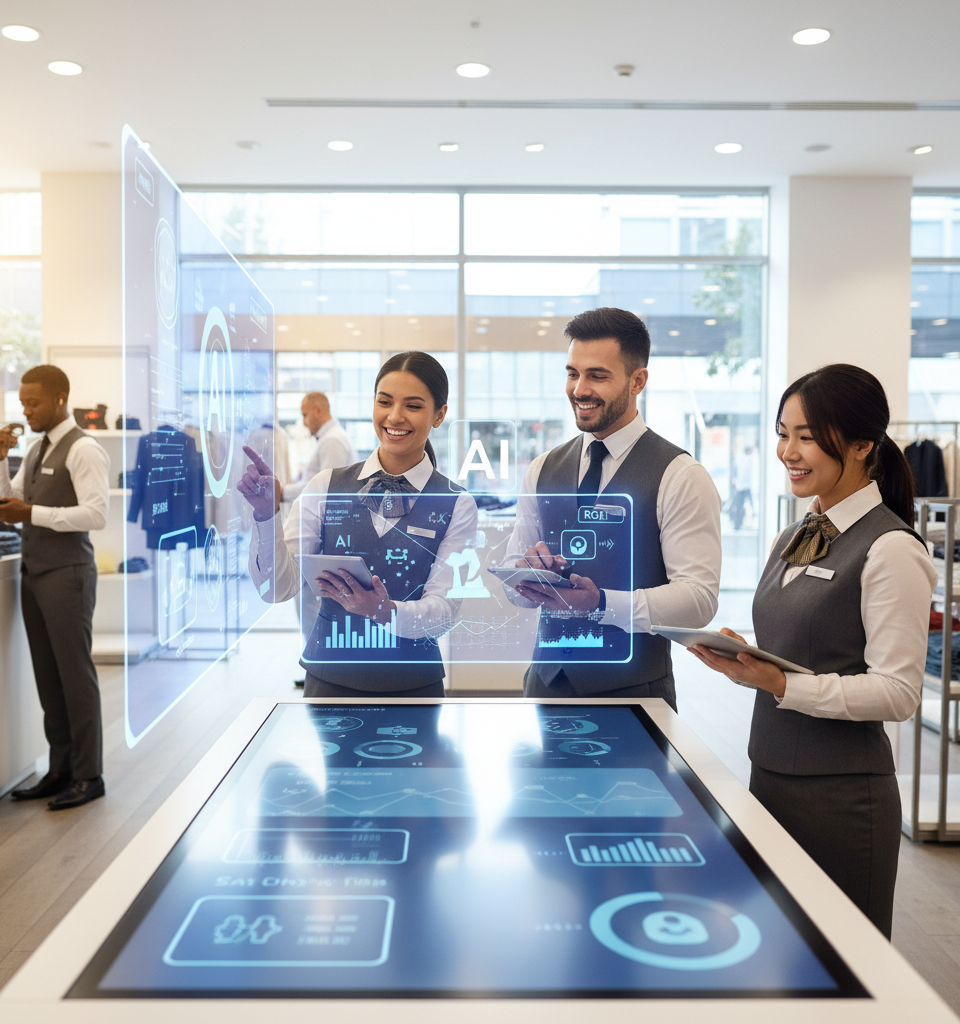
In the burgeoning landscape of retail innovation, the effectiveness of substantial artificial intelligence investments designed to elevate customer experiences appears intrinsically linked to the proficiency of in-store associates. Industry analysts and retail strategists are increasingly pointing to the performance and preparedness of store-level personnel as the pivotal determinant for achieving a meaningful return on investment from advanced AI platforms.
The Strategic Importance of Human-AI Interaction
The current enthusiasm for AI in retail is driven by its potential to personalize shopping journeys, optimize inventory, and streamline operations. However, the ultimate efficacy of these technological advancements in shaping stronger customer experiences depends heavily on how well store associates integrate AI tools into their daily interactions. Without adequate training, clear directives, and a supportive technological ecosystem for front-line staff, even the most sophisticated AI systems risk falling short of their transformative potential. This interdependency underscores a growing concern among retail executives: the potential for a significant "associate gap" to undermine strategic technology initiatives.
Unlocking AI's Full Potential
The strategic rationale for integrating AI within the retail sector is clear: to create friction-less, highly personalized, and efficient customer interactions. AI-powered tools can provide associates with real-time product information, customer preferences, inventory levels, and even predictive analytics to anticipate customer needs. Yet, the leap from providing these tools to realizing tangible improvements in customer satisfaction and sales requires associates to effectively wield them. For instance, an AI system suggesting personalized recommendations is only as effective as the associate's ability to interpret, articulate, and follow through on those recommendations with a customer.
Industry Impact and Competitive Edge
Across the retail industry, from fashion to electronics, companies are pouring resources into AI. Early adopters who successfully empower their associates with AI are likely to gain a significant competitive advantage. Conversely, those who neglect the 'human factor' in their AI deployment strategies may find their investments yield only marginal gains. The broader market trend indicates a bifurcation: retailers prioritizing comprehensive associate training alongside AI implementation are poised for greater success in enhancing customer loyalty and driving sales growth, while others risk lagging behind.
Expert Insights on Workforce Readiness
Retail technology pundits emphasize that the current focus should not solely be on AI capabilities, but equally on workforce readiness. Experts contend that a disconnect often exists between the C-suite's vision for AI-driven customer experiences and the operational realities faced by store associates. Success, they argue, necessitates a holistic approach that includes robust training programs, intuitive user interfaces for AI tools, and a culture that encourages associates to embrace technology as an enabler, not a replacement. This perspective highlights the need for retail leaders to invest in their people as much as, if not more than, the technology itself.
The Path Forward: Bridging the Gap
Looking ahead, retailers are expected to increasingly prioritize initiatives aimed at closing this 'associate gap.' This will likely involve a multi-pronged approach, including enhanced digital literacy training for all store personnel, the development of user-friendly AI associate tools, and performance metrics that acknowledge and reward effective AI utilization. Furthermore, the role of the store manager is anticipated to evolve, becoming central to fostering an environment where associates can effectively leverage AI to deliver superior customer experiences. Without addressing this fundamental human element, the full promise of AI in retail customer experience may remain largely untapped. The coming months are expected to see a greater emphasis on integrating human capital development with technology strategy, setting the stage for a new standard in retail CX.