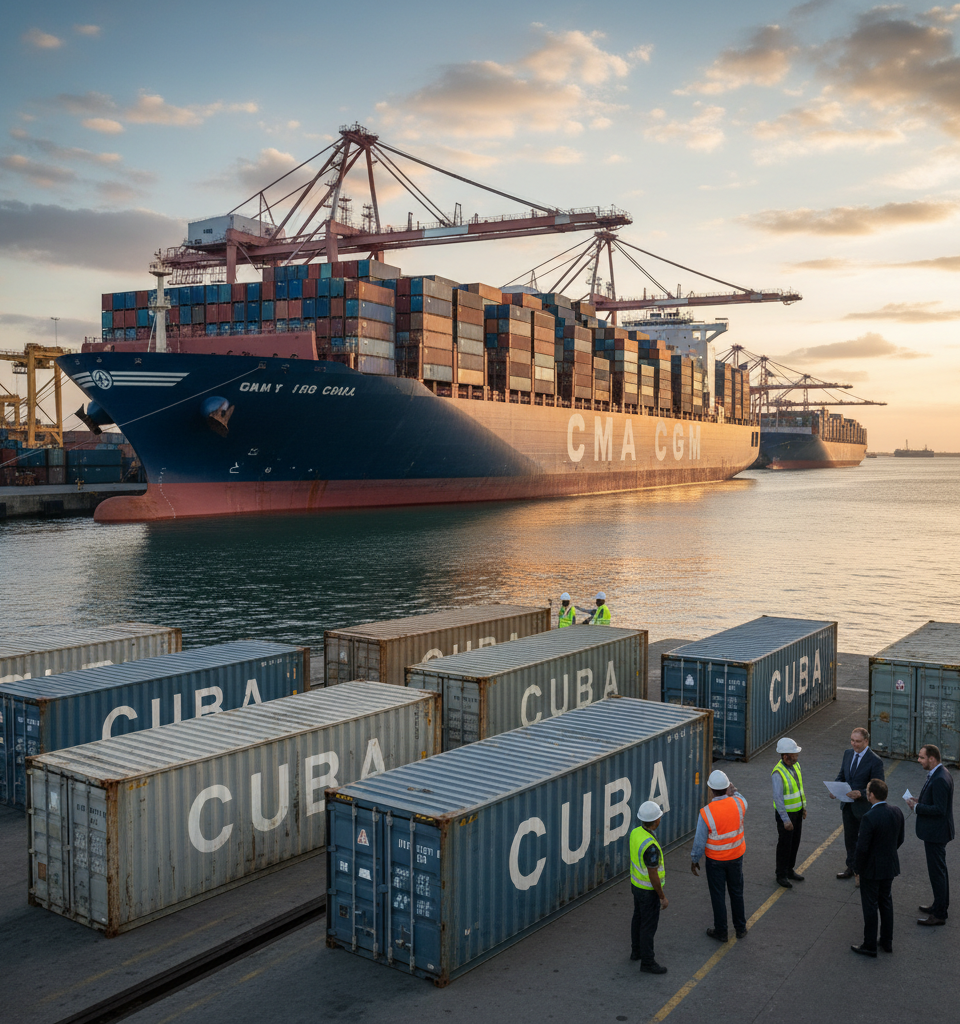
Marseille, France – In a significant move reverberating through global trade, French shipping giant CMA CGM has announced the immediate suspension of all new bookings to Cuba. The company, the third-largest container shipping group worldwide, confirmed the halt this week, attributing the decision directly to the stricter enforcement of US economic sanctions against the island nation. This action is a direct response to a newly implemented executive order by the US administration, dramatically increasing the risk profile for foreign entities engaging in certain activities with Cuba.
Escalating US Sanctions and Their Reach
The suspension by CMA CGM marks a critical juncture in the ongoing economic pressure exerted by the United States on Cuba. For decades, the US has maintained an embargo against Cuba, codified largely through the Cuban Liberty and Democratic Solidarity (LIBERTAD) Act of 1996, also known as the Helms-Burton Act. While previous administrations varied in their application of certain provisions, recent executive orders have invigorated and expanded the scope of sanctions, specifically reactivating Title III of the Helms-Burton Act. This provision allows US citizens to sue companies, including foreign entities, for allegedly 'trafficking' in property confiscated by the Cuban government since the 1959 revolution. The threat of legal action and financial penalties under this expanded framework has evidently compelled CMA CGM to reassess its operational exposure.
Operational Impacts and Industry Challenges
CMA CGM's decision sends a clear signal to the shipping and logistics industries about the growing complexities of navigating US sanctions. The company's internal directive, reportedly disseminated to clients and partners, explicitly cites the need to adhere to international regulations and mitigate potential legal and financial repercussions. While specific details of the executive order's impact on CMA CGM were not disclosed, the implied legal liabilities for operating service to Cuba under the new interpretation of US law were deemed too significant to ignore. This disruption will force Cuban importers and exporters to seek alternative, potentially more costly and less efficient, shipping routes, exacerbating existing supply chain challenges for the island.
Broader Economic and Geopolitical Repercussions
The move by CMA CGM is not an isolated incident but rather indicative of a broader trend where non-US companies are increasingly forced to choose between access to the vast US market and operations in sanction-hit countries. Other international firms, particularly in the financial and tourism sectors, have also scaled back or ceased operations in Cuba in recent months due to heightened US pressure. This contributes to Cuba's economic isolation, impacting its ability to secure essential goods and services, and strains its already fragile economy. The decision also highlights the extraterritorial reach of US law, a point of contention for many international allies who believe such measures infringe upon national sovereignty.
Expert Insights on Compliance and Risk
Maritime law experts and sanctions compliance officers have been closely monitoring these developments. "CMA CGM's action is a textbook example of primary and secondary sanctions at play," commented Dr. Eleanor Vance, a senior analyst specializing in international trade law. "The risk of asset freezing, hefty fines, and reputational damage for non-compliance with US regulations makes it almost impossible for major global players like CMA CGM to maintain services to targets of stringent US sanctions, even if their home countries do not impose similar restrictions." She further noted that the financial penalties for even inadvertent breaches can run into hundreds of millions of dollars, making a conservative approach the most financially prudent.
The Unfolding Future for Cuba's Trade
Looking ahead, the road for Cuba's international trade appears increasingly challenging. The withdrawal of a major shipping line like CMA CGM is likely to be followed by similar actions from other companies or, at minimum, significantly increased surcharges and reduced service frequency from those that continue to operate. This could lead to further shortages of imported goods and hinder Cuba's export capabilities, particularly for its key products like nickel and cigars.
The Cuban government will likely need to explore new trade partnerships, potentially with countries more willing to defy US sanctions or those with less exposure to the US financial system, though such alternatives often come with higher logistical costs and greater operational risks. The long-term economic stability of Cuba hinges on navigating these intensifying international pressures and securing reliable trade routes.