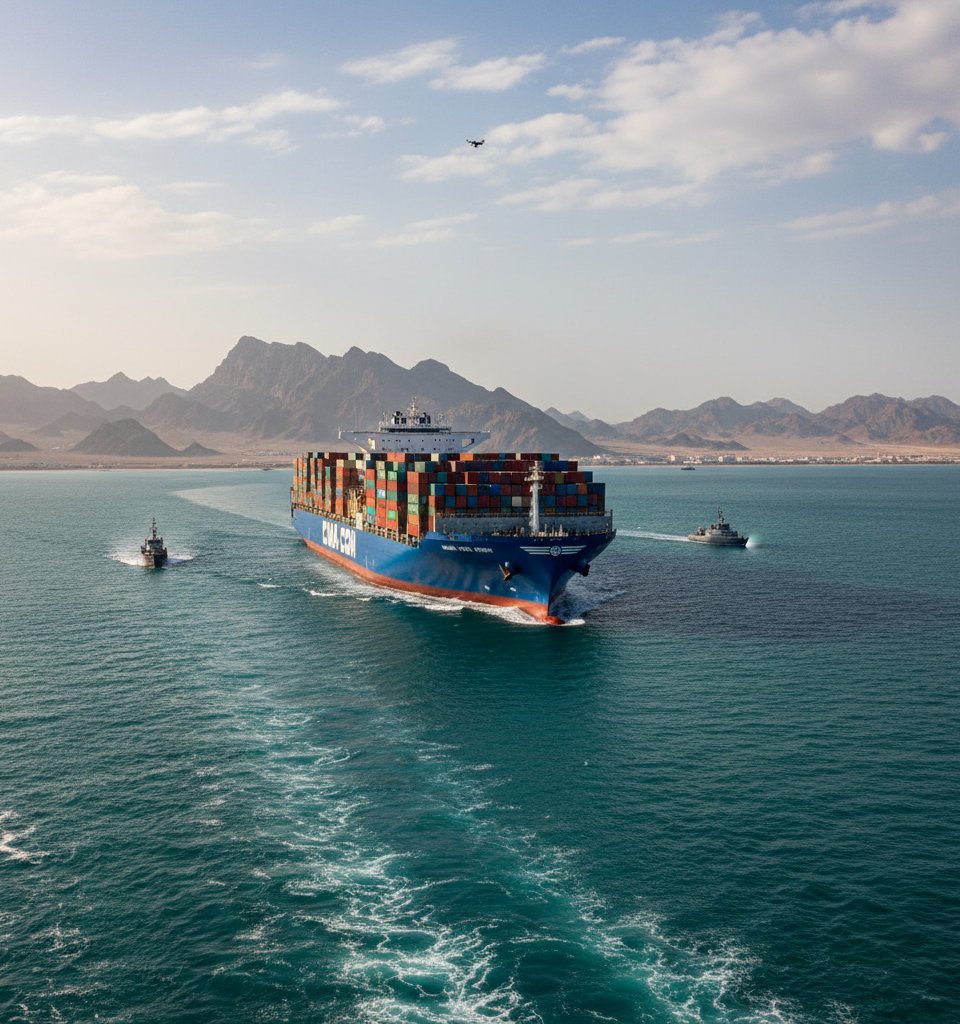
DUBAI, UAE – In a development signaling cautious optimism for international maritime commerce, a 5,500-TEU container vessel operated by French shipping conglomerate CMA CGM successfully transited the Strait of Hormuz, the first such passage by a major ocean line. This landmark event, which occurred recently, demonstrates the persistent demand for global trade routes even amidst heightened geopolitical sensitivities surrounding the Iran-controlled waterway, a crucial chokepoint for a significant portion of the world's oil and gas shipments and a growing volume of containerized cargo.
Historical Context and Geopolitical Significance
The Strait of Hormuz, a narrow sea passage between the Persian Gulf and the Arabian Sea, is arguably the most strategically important waterway globally. Historically, it has been a flashpoint for international tensions, particularly involving Iran, which borders its northern shore. With approximately one-fifth of the world's total petroleum consumption and a substantial percentage of liquefied natural gas (LNG) transiting through its waters daily, its security is paramount to global energy markets. Until now, major container shipping lines have often exercised extreme caution, sometimes diverting routes or delaying transits during periods of elevated risk, highlighting the significance of CMA CGM's decision to proceed.
Key Details of the Transit
The specific vessel involved in the transit was a 5,500-TEU (Twenty-foot Equivalent Unit) container ship, a substantial size within the global fleet. While CMA CGM has not publicly elaborated on the specific security protocols or arrangements made for this particular voyage, the successful passage implies a degree of confidence in the current security posture of the region, or at least a calculated risk assessment by the carrier. The transit demonstrates the imperative for international shipping to utilize the most efficient routes, even when those routes present potential challenges. This particular vessel's journey underscores the ongoing efforts by commercial entities to maintain operational continuity and supply chain integrity in complex geopolitical landscapes.
Industry and Market Impact
The successful navigation by CMA CGM is a bellwether for the broader shipping industry. It may encourage other major carriers, which have previously been hesitant, to reassess their risk mitigation strategies for the Strait of Hormuz. The consistent and secure transit of international shipping through such vital chokepoints is crucial for maintaining global supply chain fluidity and controlling shipping costs. Disruptions in this region can lead to significant increases in insurance premiums, longer transit times due to diversions, and ultimately, higher costs for consumers. While this single transit doesn't eliminate all concerns, it provides a precedent for larger carriers.
Expert Perspective on Regional Stability
Maritime security analysts are closely watching this development. Dr. Elaine Thompson, a senior fellow at the Maritime Geopolitics Institute, commented, "CMA CGM's decision reflects a delicate balance between commercial imperative and risk management. While it suggests a momentary easing of overt threats, the underlying geopolitical tensions in the Persian Gulf remain a constant. This transit is more a testament to the resilience of global trade than a definitive pronouncement on regional stability. Carriers will continue to monitor intelligence closely, and any escalation could quickly reverse this trend." She further noted that the implied cooperation or understanding from regional state actors, particularly Iran, is a critical, though often unstated, component of such transits.
What's Next: Future Implications
The successful transit by CMA CGM could pave the way for increased confidence among other major shipping lines in utilizing the Strait of Hormuz, potentially leading to a normalization of traffic for larger vessels. However, the long-term outlook remains tied to the broader geopolitical environment. Any renewed escalation of tensions, changes in international diplomatic postures, or specific incidents could quickly revert the industry to a more cautious stance. The focus will now be on whether this becomes a regular occurrence for major carriers and if it translates into a reduction in war risk insurance premiums, which are currently significantly elevated for voyages through the Strait. This transit serves as a crucial data point in the ongoing assessment of maritime risk in the Persian Gulf, influencing strategic decisions for carriers, insurers, and governments alike.