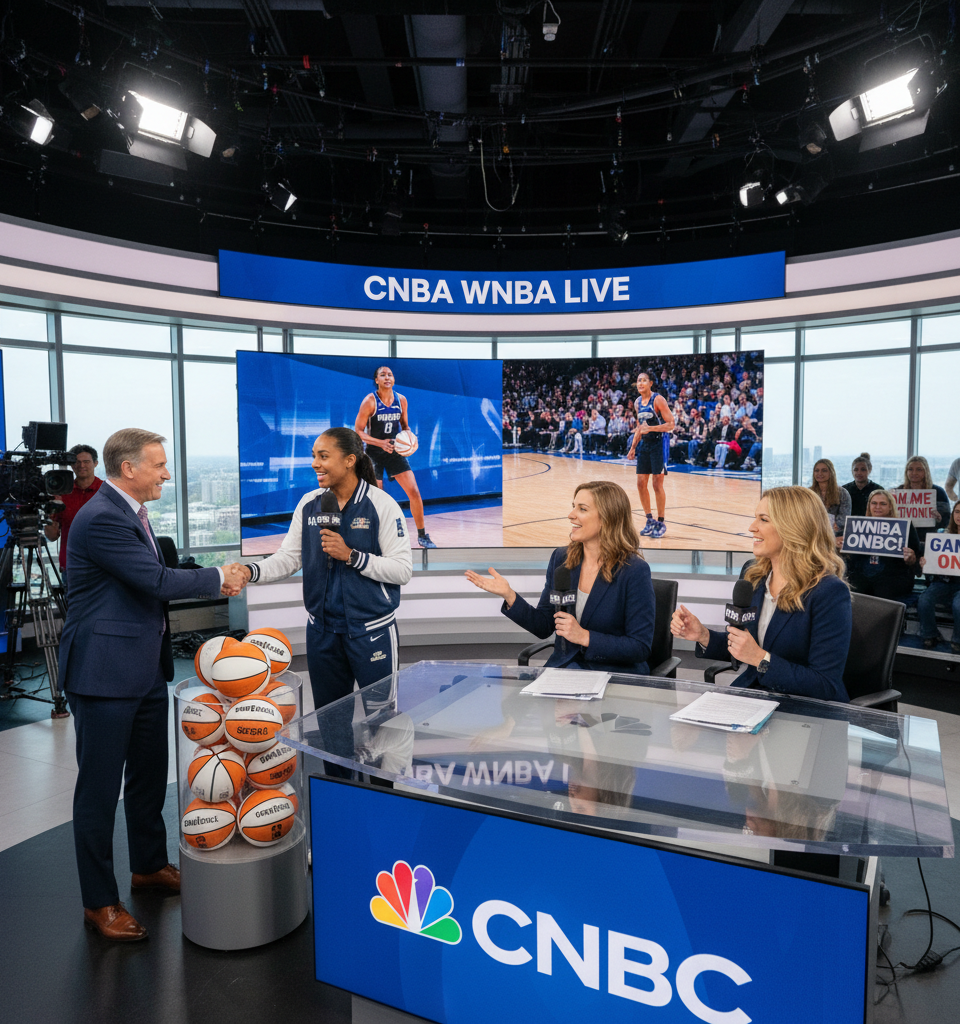
CNBC, traditionally known for its business and financial news programming, is preparing to significantly expand its live sports offerings with the simulcast of 11 Women's National Basketball Association (WNBA) games. This strategic move is expected to introduce the popular women's basketball league to a new, affluent demographic of viewers typically tuned into CNBC's financial reporting. The forthcoming broadcasts represent a pivotal development for the network, particularly as it navigates its independent future having recently spun out from its former parent company, Comcast.
Strategic Expansion into Live Sports
The decision to broadcast WNBA games signals a calculated effort by CNBC to diversify its content portfolio and potentially capture new viewership segments. While the network has historically focused on financial markets, business news, and high-profile interviews with corporate leaders, the inclusion of live sports, especially a rapidly growing league like the WNBA, could provide a fresh avenue for audience engagement. This expansion also aligns with a broader trend in media where traditional news outlets are increasingly exploring alternative content to maintain relevance and attract viewers in a competitive landscape.
Targeting an Affluent Demographic
One of the primary strategic benefits for the WNBA in this partnership is the exposure to CNBC's established audience. CNBC has long been a go-to source for investors, business executives, and individuals with a keen interest in financial matters, generally characterized by higher disposable incomes. Introducing WNBA games to this demographic could significantly broaden the league's fan base and potentially attract new sponsors and investors interested in aligning with both the sport and its new, financially sophisticated audience. This cross-pollination of viewers offers a unique opportunity for both entities.
CNBC's Post-Comcast Era
The simulcast arrangement also carries added significance given CNBC's recent reclassification following its spin-out from Comcast. This independent operational phase allows the network greater flexibility in shaping its content strategy and pursuing new ventures. The WNBA deal could be seen as one of the first major strategic initiatives under this new structure, indicating a proactive approach to evolving its brand and market position beyond its traditional core. It suggests a willingness to innovate and experiment with programming that might not directly relate to financial markets but can still appeal to its key demographic or expand its reach.
Broader Media Landscape Implications
This development is indicative of a broader trend within the media industry where live sports content continues to be a highly coveted asset. As traditional television viewership habits shift, live events, particularly sports, remain one of the strongest drivers of linear television consumption and subscriber engagement for streaming platforms. For CNBC, securing WNBA games not only diversifies its programming but also positions it within this valuable niche, potentially enhancing its appeal to advertisers and media partners looking to reach diverse audiences through live content.
The WNBA's Growing Momentum
The WNBA itself has been experiencing a surge in popularity, driven by increasing media coverage, rising fan engagement, and the emergence of highly marketable stars. Partnerships like the one with CNBC underscore the league's growing influence and its ability to attract interest from non-traditional sports broadcasters. This exposure on a prominent business news channel could further elevate the league's profile, providing a platform to showcase its athletic talent and compelling narratives to viewers who may not typically follow sports-specific channels. This could translate into increased attendance, merchandise sales, and overall brand value for the WNBA.
Future Outlook
The success of these 11 simulcasts will likely be closely monitored by both CNBC and the WNBA, as well as by other media organizations. If the ratings prove strong and the audience engagement is positive, it could pave the way for further collaborations between the business network and sports leagues. This initial foray could serve as a blueprint for CNBC to explore other niche sports or live events that align with its audience's interests, marking a significant evolution in its broadcasting strategy in the years to come.