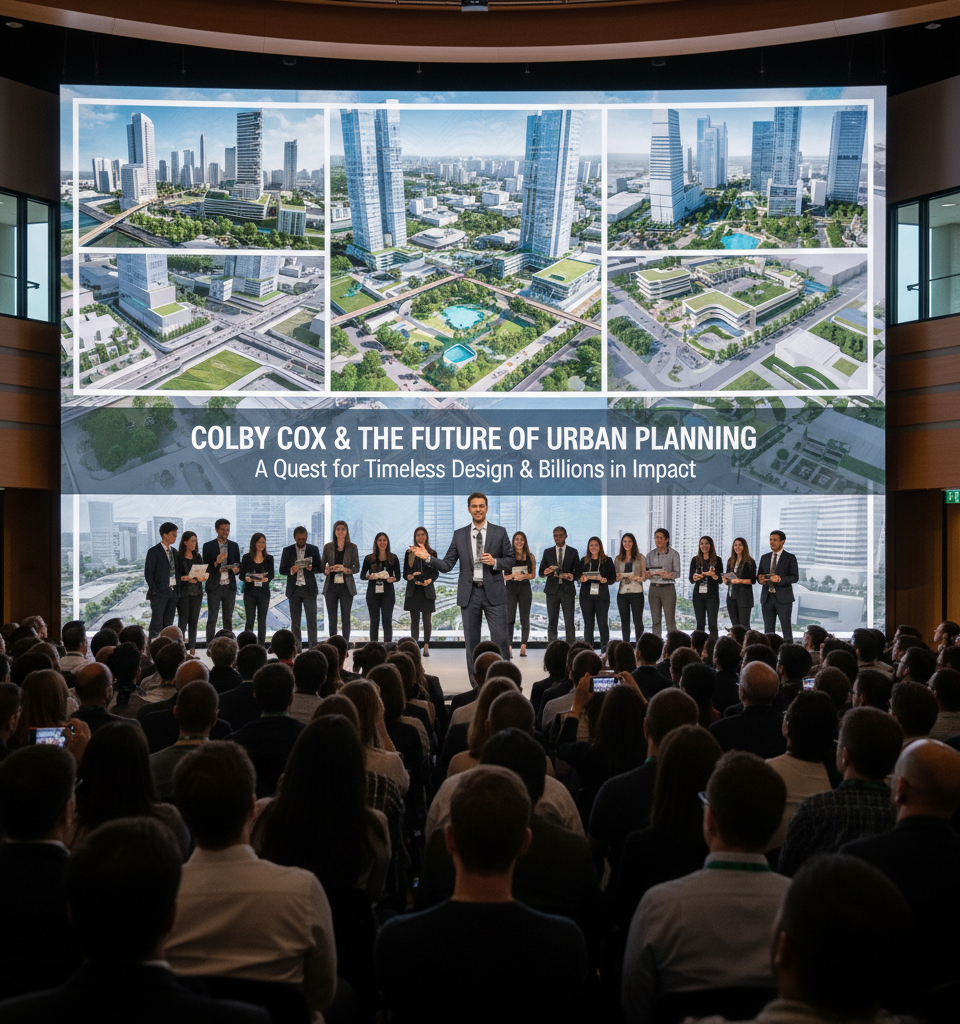
Washington D.C. — In a significant pivot for urban development, architect and planner Colby Cox is spearheading a movement toward a 'post-New Urban' master plan, emphasizing timeless balance and integrated design in the U.S.'s colossal building and planning industry. This initiative comes as the nation invests an estimated $945 billion annually in the creation, maintenance, and enhancement of spaces for human habitation and flourishing. Cox's philosophy challenges conventional approaches, advocating for a deeper understanding of how built environments intrinsically entwine with human well-being, moving beyond what he perceives as the limitations of existing urban planning doctrines.
The Imperative for a New Urban Vision
The sheer scale of capital allocated to urban development underscores the profound impact of planning decisions on society. For decades, ideologies like New Urbanism have shaped communities, emphasizing walkability, mixed-use development, and traditional neighborhood design. However, Cox posits that while valuable, these frameworks often fall short in addressing the dynamic complexities of modern life, sometimes verging on prescriptive rather than adaptive. His quest is for a methodology that transcends fleeting trends, embedding principles of resilience, sustainability, and genuine community cohesion into the very fabric of development. This approach acknowledges the scientific reality that our homes and surroundings are not merely structures but extensions of our identity and well-being, a fact he asserts has remained unchallengeable by pseudoscientific claims.
Key Principles of Cox's 'Post-New Urban' Framework
Cox's vision is rooted in a refined understanding of 'convergence' in urban planning – the deliberate alignment of diverse elements to create optimal environments. This is a concept he argues, "does not occur by chance." Central to his model is the integration of ecological principles, socioeconomic equity, and architectural longevity. He champions designs that are locally adaptive, respecting regional vernaculars while offering universal appeal. This includes a robust emphasis on green infrastructure, smart technology integration, and flexible spatial arrangements that can evolve with a community’s needs. "Our objective," Cox states in a recent address, "is not merely to build, but to cultivate environments that foster generations of prosperity and connection, without capitulating to transient fads."
Shifting Tides in the Development Landscape
Cox’s initiative comes at a critical juncture for the U.S. development industry. The $945 billion annual investment is not merely in new construction; it encompasses vital infrastructure upgrades, adaptive reuse projects, and technological innovations in building management. A shift towards a 'post-New Urban' paradigm could significantly influence investment patterns, material sourcing, and labor demands. Developers might increasingly prioritize long-term value, reduced environmental footprints, and community-centric designs over short-term gains. This could lead to a reprioritization of public-private partnerships focused on equitable development and the adoption of more stringent, yet flexible, zoning and land-use policies across municipalities.
Expert Analysis: Beyond Dogma to Pragmatism
Industry analysts are keenly observing Cox's work. Dr. Evelyn Reed, an urban geographer at the National Planning Institute, comments, "Cox’s emphasis on 'timeless balance' offers a much-needed corrective to urban planning dogma. The market, both residential and commercial, is increasingly demanding durable, adaptable, and genuinely sustainable solutions. His framework moves beyond stylistic adherence to fundamental principles of good design and community health." She adds that the broad acceptance of such a nuanced approach could unlock new avenues for funding and innovation, especially in under-served communities that stand to benefit most from thoughtfully planned environments.
The Road Ahead: Shaping Future Skylines and Communities
The immediate future will see Cox and his team engaging with municipalities, private developers, and academic institutions to pilot projects embodying the 'post-New Urban' philosophy. The adoption of these principles could lead to a discernible shift in urban design standards over the next decade, impacting everything from zoning ordinances to architectural school curricula. Expect to see early-stage projects focusing on mixed-income developments, integrated public spaces, and highly efficient, resilient building technologies. This foundational re-evaluation of urban planning promises to redefine how places are conceived, constructed, and experienced, striving always for that elusive, yet crucial, timeless balance in an ever-changing world.