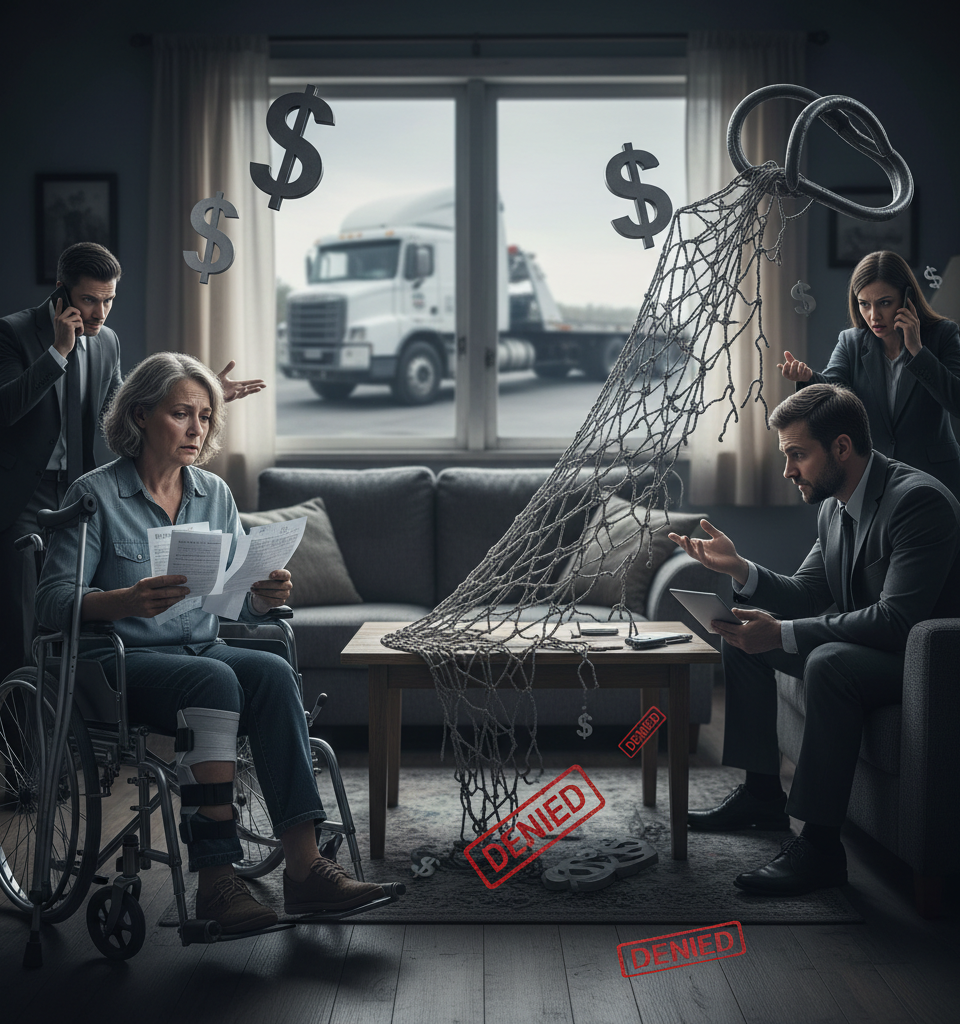
Washington D.C. — A recent investigation casts a harsh spotlight on the precarious financial landscape underpinning a segment of America's trucking industry, revealing how a network of high-risk insurers, specifically Risk Retention Groups (RRGs), and aggressive factoring companies are leaving accident victims in financial ruin. This intricate web, designed to provide a safety net for often dangerous carriers, is increasingly proving to be a conduit for risk rather than mitigation. When catastrophic accidents occur, the collapse of these financial entities frequently leaves those severely injured, and their families, without the promised compensation, sparking urgent calls for regulatory oversight and increased transparency.
This alarming situation is not merely an isolated incident but rather a systemic issue rooted in the intricate dynamics of the trucking insurance market. Historically, the intent behind RRGs was to allow businesses with similar risks to self-insure, providing an alternative to traditional, often more expensive, insurance markets. However, in the trucking sector, this has attracted carriers with poor safety records or those struggling to secure conventional coverage. The symbiotic, yet often parasitic, relationship with factoring companies – which provide immediate cash flow to carriers by purchasing their invoices at a discount – further compounds the problem. While essential for small operators, aggressive factoring often pushes carriers into unsustainable financial practices, accelerating their eventual collapse when an RRG, their insurer of last resort, proves insolvent.
Key findings from the investigation reveal a disturbing trend. Many RRGs operating in this space are thinly capitalized, lacking the robust reserves necessary to cover large-scale claims. In multiple documented cases, victims of severe truck accidents have faced years of litigation only to discover that the RRG insuring the negligent carrier has declared insolvency or has insufficient funds to pay out multi-million dollar settlements. For instance, one case highlighted a victim with over $1 million in medical bills left uncompensated after the insuring RRG collapsed, leaving a major life-altering injury without restitution. This not only devastates victims but also strains public assistance programs as individuals are forced to seek alternative support for their long-term care needs.
This intricate problem has profound implications for the broader transportation and insurance industries. The rise of these high-risk financial structures erodes public trust in the insurance mechanism and creates an uneven playing field. Reputable carriers who invest heavily in safety measures and robust insurance coverage are effectively subsidizing a system that allows less scrupulous operators to continue. The ripple effect extends to supply chains, as financially unstable carriers can introduce inefficiencies and risks that impact the entire logistics ecosystem. Furthermore, the lack of immediate and full compensation for accident victims can lead to increased social costs and a perception of injustice that tarnishes the industry's reputation as a whole.
Industry experts and legal analysts are sounding the alarm. "We are witnessing a slow-motion regulatory failure," states Dr. Evelyn Richards, a professor specializing in insurance law at a prominent university. "The patchwork of state-level oversight for RRGs, coupled with the largely unregulated factoring market within this niche, creates significant loopholes. There's a clear need for federal intervention or at least dramatically improved interstate cooperation to ensure these groups are adequately capitalized and transparent about their financial health." Others point to the need for stricter underwriting standards and more rigorous safety audits for carriers seeking coverage from RRGs. "If you're too risky for a traditional insurer, you shouldn't just disappear into an unregulated black box," commented a veteran insurance broker specializing in commercial auto.
Looking ahead, stakeholders anticipate increased pressure for legislative action. Discussions are reportedly underway among consumer advocacy groups and transportation safety organizations to push for federal reforms that would enhance oversight of RRGs, particularly those insuring high-risk commercial operations. This could include mandatory federal capital requirements, more stringent audit processes, and a centralized reporting system for RRG financial stability. Additionally, there may be calls for increased scrutiny of factoring companies that engage with carriers exhibiting poor safety records. The outcome of these discussions will largely determine whether the "safety net" for America's trucking industry transforms into a robust safeguard or continues to unravel, leaving accident victims in its wake and exposing profound systemic vulnerabilities within the country's vital logistics networks.