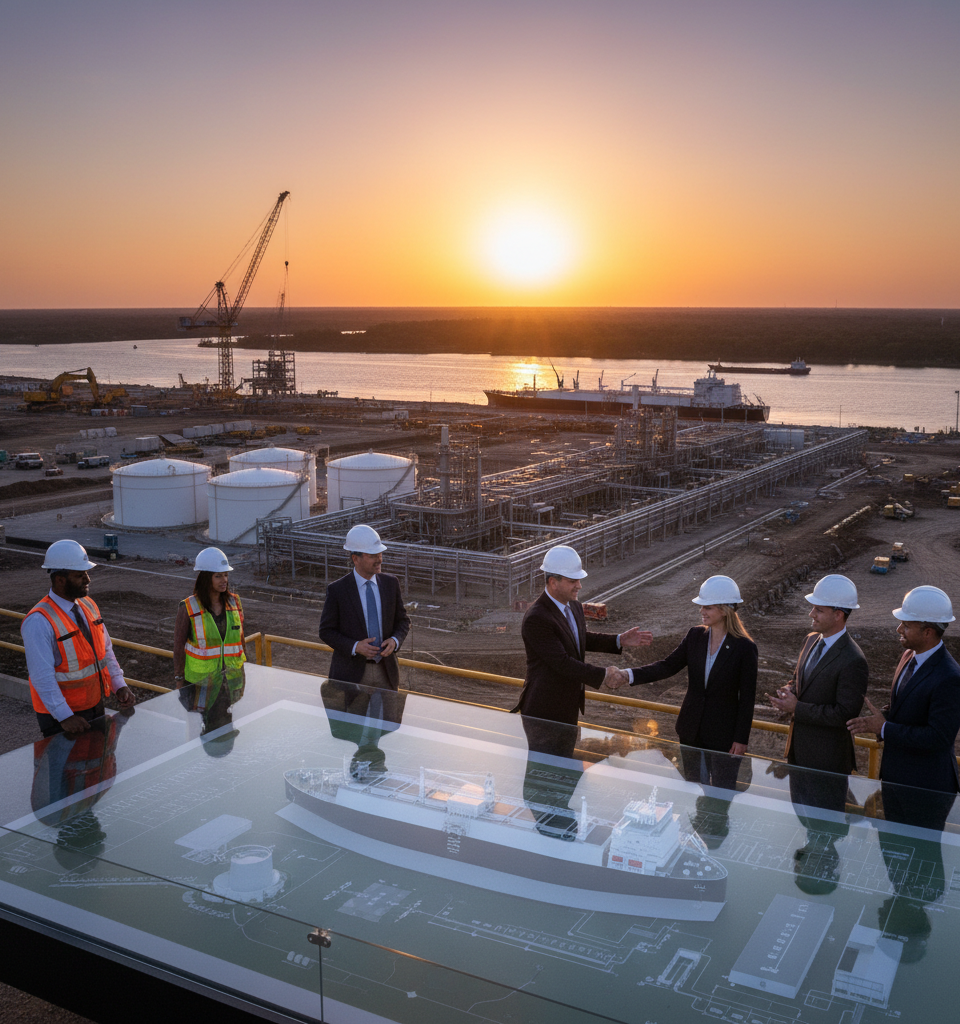
Commonwealth LNG announced on May 15 that it has achieved a Final Investment Decision (FID) for its liquefied natural gas (LNG) export facility in Cameron Parish, Louisiana. This critical milestone greenlights the construction of the multi-billion-dollar project, marking another substantial booster for the burgeoning U.S. LNG export industry as global demand for natural gas remains robust.
Context and Significance
The United States has rapidly transformed into the world's leading LNG exporter, a dramatic shift from its status as a net importer just over a decade ago. This strategic pivot has been driven by the shale gas revolution, which unlocked vast domestic reserves, coupled with geopolitical events, most notably the war in Ukraine, that have amplified Europe's need for secure, diverse energy supplies away from Russian pipeline gas. The Commonwealth LNG project, with its planned capacity, is poised to further solidify this dominance, providing critical energy security to allies and meeting burgeoning demand in Asian markets.
Project Specifics and Investment
The Commonwealth LNG terminal is designed to have an export capacity of 9.3 million tonnes per annum (MTPA) through six liquefaction trains, utilizing a modular, re-deployable processing technology. The total estimated cost of the project is approximately $10 billion. Key financial backing has been secured through a combination of equity commitments from entities like Glencore and long-term liquefaction and offtake agreements with major energy players. Notably, Commonwealth LNG has already signed firm offtake agreements for a significant portion of its capacity, underpinning the project's financial viability and market demand. Construction is expected to commence in the third quarter of this year, with initial operations projected to begin in late 2027 or early 2028.
Industry and Market Impact
This FID by Commonwealth LNG underscores a broader trend of expansion within the U.S. energy sector. It contributes directly to increasing the nation's total LNG export capacity, which is crucial for maintaining competitive pricing and reliability in the international market. The project's location in Louisiana, a hub for LNG infrastructure, will also create thousands of construction jobs and hundreds of permanent operational roles, providing a significant economic stimulus to the region. For global buyers, especially those in Europe and Asia seeking long-term energy security agreements, additional U.S. supply translates to greater options and potentially more stable pricing, reducing reliance on volatile regions.
Expert Perspectives
Energy analysts have largely welcomed the news, viewing it as a testament to the enduring strong fundamentals of the global gas market. "Commonwealth LNG reaching FID is another strong signal that the market anticipates sustained long-term demand for natural gas," commented a senior energy analyst for a global commodities firm. "The modular design should also enable quicker commissioning and operational flexibility, which is a key advantage in today's dynamic energy landscape." Others point to the critical role of these projects in strengthening geopolitical alliances by providing energy independence. "U.S. LNG exports are not just about commerce; they are a vital tool of foreign policy, ensuring energy access for our partners," noted another industry observer.
Future Implications and Developments
The FID for Commonwealth LNG sets the stage for further developments in the highly competitive U.S. LNG sector. Several other proposed projects are currently awaiting similar investment decisions, and the success of Commonwealth could provide a blueprint and boost confidence for these ventures. Future challenges will include navigating evolving environmental regulations, managing construction costs in an inflationary environment, and securing labor. However, with robust demand projections, particularly from Asia's growing economies and Europe's ongoing need for energy diversification, the trajectory for U.S. LNG exports appears firmly upward, positioning the nation as a pivotal player in the global energy transition for decades to come.