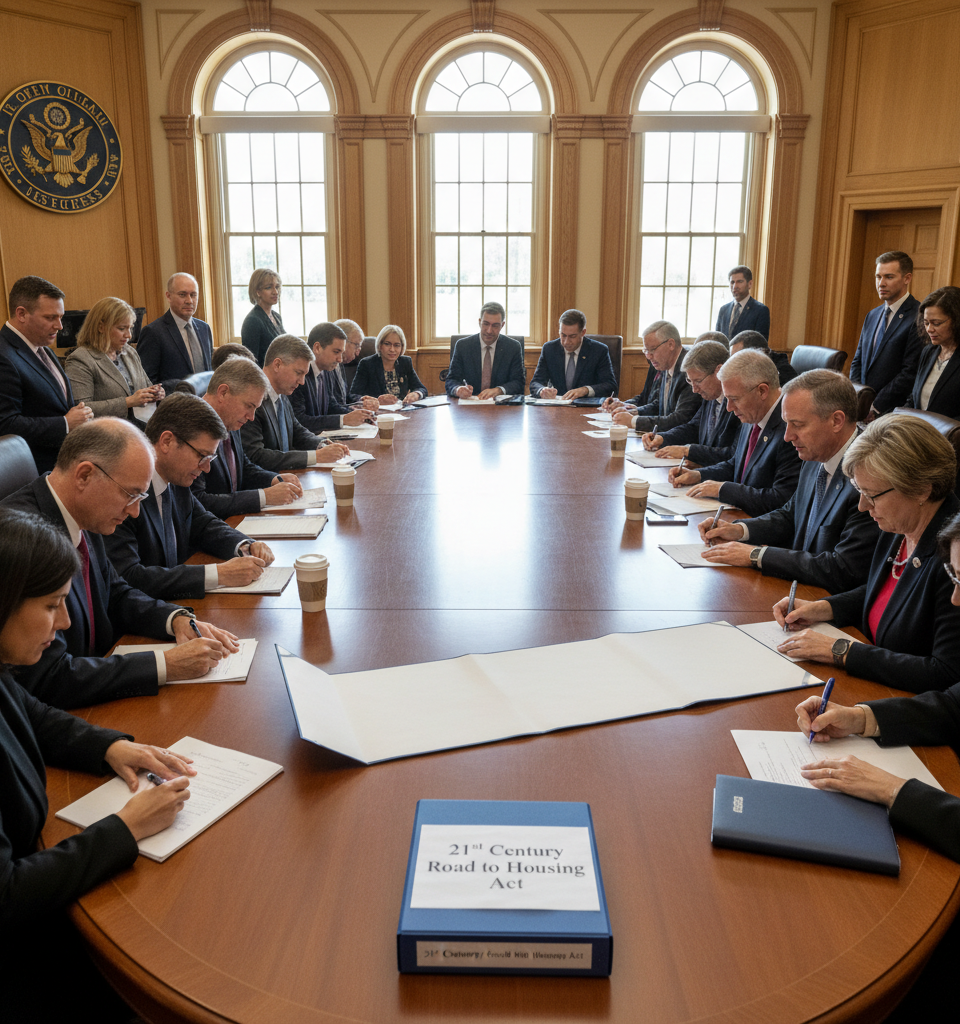
S. Congress, representing diverse districts and political affiliations, have lodged a formal objection to a provision within the Senate's proposed "21st Century Road to Housing Act" that seeks to prohibit institutional investors from acquiring single-family homes. This pushback directly challenges a policy initially advocated by former President Donald Trump, highlighting a critical legislative battle over the future of housing affordability and market accessibility in the United States.
The bipartisan move, announced this week, underscores a complex debate regarding the role of large-scale investment in the nation's housing ecosystem. This legislative action comes at a time of heightened public and political scrutiny over housing affordability and the burgeoning presence of institutional capital in residential markets. Critics of institutional ownership, including former President Trump, argue that these entities inflate home prices, diminish housing stock available to individual homebuyers, and transform communities.
Proponents, however, contend that institutional investment can provide necessary capital for development, improve property management efficiency, and offer rental options in undersupplied markets. The proposed ban, intended to curb speculative investment and stabilize home prices, faces significant opposition from within Congress, signaling a potential stalemate on a core component of the ambitious housing bill.
Key Legislative Details and Dissenting Voices
The objection, articulated in a letter signed by 76 representatives, cites concerns that a blanket ban could inadvertently harm the very housing market it intends to protect. While specific details of the proposed ban within the "21st Century Road to Housing Act" remain under negotiation, early drafts suggested strict limitations or outright prohibitions on corporate entities and large funds purchasing single-family residences. Congressional dissenters argue that such measures could stifle vital capital flows into housing development and maintenance, leading to unintended consequences like reduced housing supply and limited rental options. "While the intent behind limiting institutional investment in the housing market is understandable, a complete ban could create more problems than it solves," stated one congressional aide familiar with the negotiations, requesting anonymity due to ongoing discussions. The letter emphasized the need for a nuanced approach that addresses predatory practices without crippling legitimate investment essential for market liquidity and growth.
Industry and Market Implications
The real estate industry is closely watching this legislative battle, as a ban on institutional investors could send ripples through various sectors, including real estate development, property management, and financial markets. Institutional investors, ranging from pension funds to private equity firms, have significantly increased their footprint in the single-family rental market over the past decade, especially following the 2008 financial crisis. According to a recent report by the National Association of Realtors, institutional investors accounted for approximately 15% of all single-family home purchases in some key metropolitan areas in 2023, representing billions of dollars in capital. A complete withdrawal of this capital could lead to a sudden decrease in demand for certain properties, potentially impacting home values and the profitability of related services. Conversely, proponents of the ban believe it would rebalance the market in favor of individual homebuyers, potentially leading to more stable, community-oriented neighborhoods.
Expert Analysis and Economic Outlook Economists and housing policy experts offer varied perspectives on the potential impact of such a ban. Dr. Eleanor Vance, a senior housing economist at the American Housing Policy
Institute, commented, "While the immediate goal of increasing homeownership is commendable, an abrupt cessation of institutional investment could disrupt market mechanisms that currently provide a significant chunk of rental housing and contribute to urban development. Policymakers should consider targeted regulations over broad bans." Other experts, like Dr. Marcus Thorne of the Center for Urban Studies, suggest that while short-term volatility might occur, a long-term shift favoring individual homeowners could foster greater housing equity and sustainability. "The challenge," Thorne notes, "is to design policy that addresses the genuine concerns about affordability without creating a capital void that hinders future housing supply growth."
The Road Ahead for Housing Legislation
With congressional opposition now firmly articulated, the "21st Century Road to Housing Act" faces a significant hurdle in its current form. The bipartisan pushback necessitates a reevaluation of the proposed institutional investor ban, possibly leading to amendments, compromises, or even its removal. The legislative path forward will likely involve extensive subcommittee hearings, negotiations between the House and Senate, and lobbying efforts from various real estate stakeholders. Future developments could include a scaled-down version of the ban, a focus on specific types of institutional investors, or the introduction of incentives to encourage individual homeownership. The outcome of this debate will not only shape the final form of this landmark housing bill but also significantly influence the structure and accessibility of the American housing market for decades to come. The broader context of rising interest rates and persistent inflation further complicates an already contentious policy debate, emphasizing the urgency for a viable legislative solution.