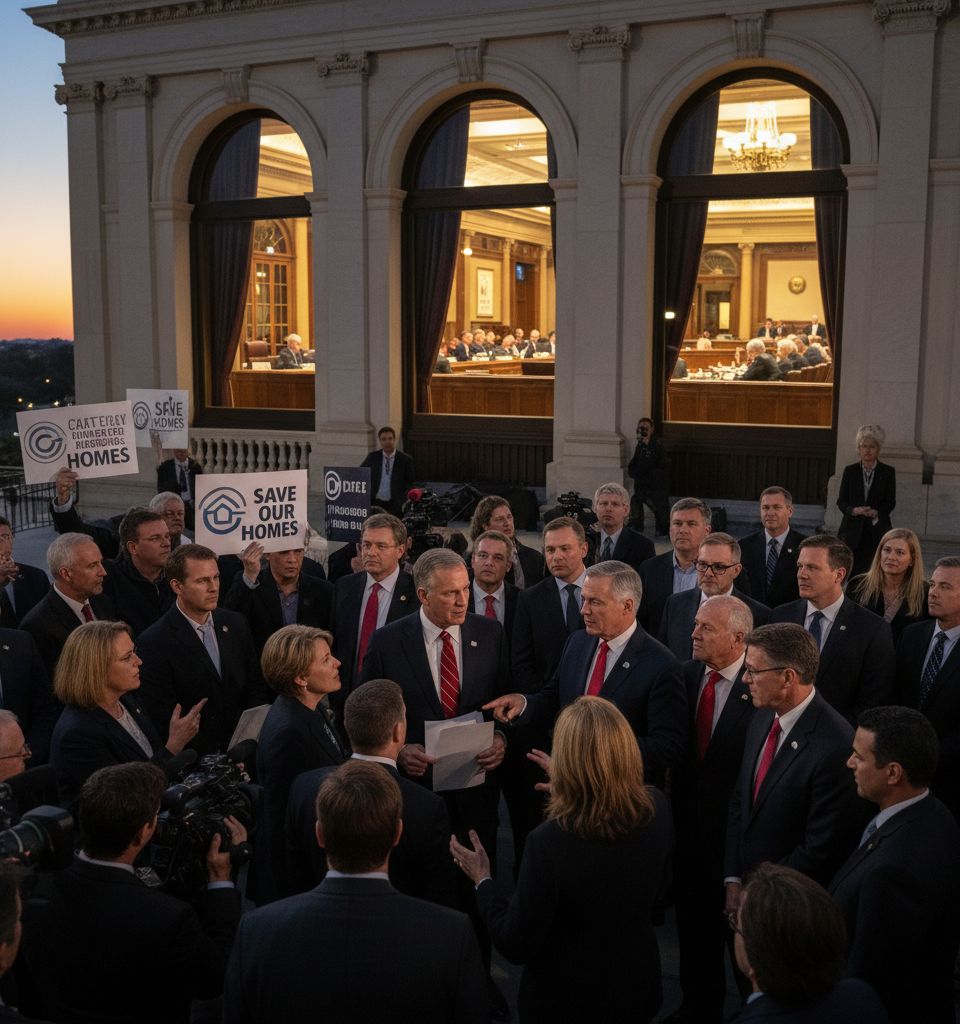
Washington D.C. has become the epicenter of a legislative battle as the mortgage industry mobilizes against contentious provisions within the Senate-passed 21st Century ROAD to Housing Act. The Mortgage Bankers Association (MBA) recently issued a Mortgage Action Alliance (MAA) Call to Action, urging its members to contact their U.S. Representatives to address what it describes as “troubling provisions” before the House formulates its response. This concerted effort underscores deep-seated anxieties among various stakeholders regarding the potential impacts of the legislation on housing accessibility, affordability, and industry practice.
Context and Background
The 21st Century ROAD to Housing Act arrives at a critical juncture for the American housing market, which continues to face challenges ranging from inventory shortages to affordability crises. Previous attempts at comprehensive housing reform have often stalled due to the complex interplay of financial interests, regulatory concerns, and consumer advocacy. This bill, intended to streamline aspects of housing development and finance, has inadvertently ignited a fresh round of debates, pitting powerful industry lobbies against proposed governmental oversight or structural changes. The phrase “this time it’s different,” often a harbinger of significant shifts, now echoes through the halls of Washington as stakeholders brace for potential reforms.
Key Details and Industry Objections
The MBA's call to action specifically targets provisions perceived as detrimental to the stability and functionality of the mortgage market. While the exact details of these “troubling provisions” are subject to ongoing negotiation, industry sources suggest they relate to changes in loan origination standards, oversight of government-sponsored enterprises (GSEs), or shifts in regulatory burdens. Beyond the MBA, the National Association of Home Builders (NAHB) has expressed concerns over potential impacts on construction costs and the feasibility of new projects, citing challenges in material availability and skilled labor.
The Manufactured Housing Association for Regulatory Reform (MHARR) has also voiced strong opposition, arguing that certain clauses could disproportionately affect the manufactured housing sector, which serves a vital role in providing affordable housing options. Their collective objections highlight a widespread belief that the bill, in its current form, could inadvertently stifle growth and innovation rather than promote it.
Industry and Market Impact
Should the contested provisions pass into law, the ripple effects could be substantial. Lenders might face increased compliance costs, potentially leading to tighter credit markets or higher interest rates for consumers. For homebuilders, new regulations could exacerbate existing supply chain issues and labor shortages, driving up housing prices even further. The manufactured housing sector, often a last resort for affordable homeownership, fears that increased regulatory burdens could diminish its capacity to deliver cost-effective solutions. The net effect could be a less dynamic housing market, with reduced access for first-time buyers and those in lower income brackets. Analysts are closely watching how these legislative developments might intersect with current Federal Reserve monetary policy, which is already putting pressure on the housing market.
Expert Perspective
Industry analysts and policy experts offer a mixed perspective on the unfolding situation. Some believe that certain provisions are necessary to address long-standing systemic issues within the housing market, such as mitigating future financial risks or ensuring greater consumer protection. “While industry groups naturally resist changes that increase their operational costs, some level of reform is often critical for long-term market health,” noted Dr.
Evelyn Reed, a housing economist at the National Policy Institute. Others caution that poorly conceived legislation could have unintended negative consequences, particularly if it fails to account for the diverse needs and operational realities of different housing segments. “The devil is truly in the details with this bill; broad strokes often miss the nuances that make a significant difference to market participants,” commented Mark Jensen, a senior fellow at the Center for Economic Dynamics.
What’s Next?
The battle is far from over. The House of Representatives is now tasked with deliberating on its version of the housing bill, providing an opportunity for amendments and modifications. Lobbying efforts from the MBA, NAHB, and MHARR are expected to intensify, aiming to influence House members to revise or remove the contentious clauses. Industry observers anticipate a lengthy and complex legislative process, potentially involving subcommittees, expert testimonies, and extensive negotiations. The outcome will ultimately hinge on the ability of stakeholders to find common ground, balancing the desire for reform with the need to maintain a robust and accessible housing market. Further hearings and revisions are anticipated in the coming months, with a final vote not expected until late this year or early next year.