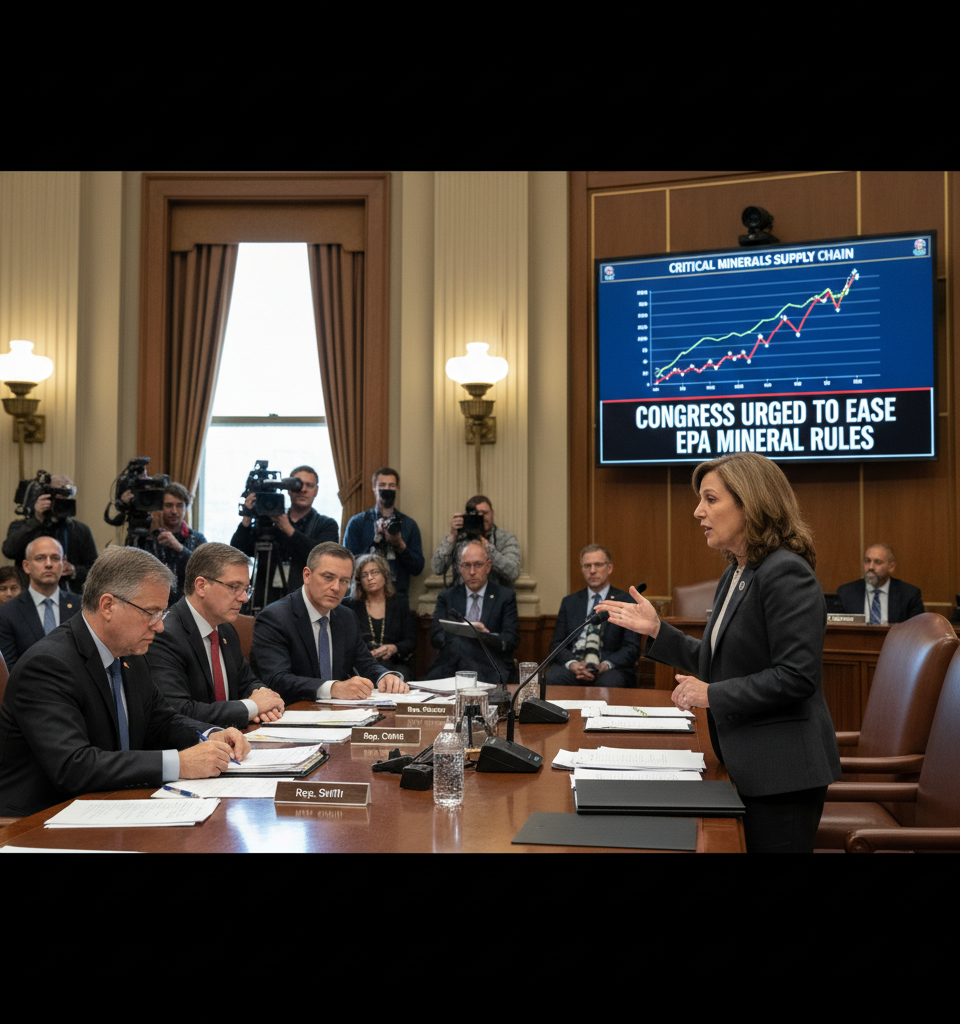
C. — Congressional leaders are being urged to re-evaluate the impact of stringent environmental regulations on the nation's critical minerals supply chain, following testimonies heard at a House Energy and Commerce subcommittee hearing last week. Industry stakeholders and experts articulated how current interpretations and applications of the Toxic Substances Control Act (TSCA) and the Resource Conservation and Recovery Act (RCRA) are creating significant bottlenecks, hindering domestic production and processing of minerals vital for national security, economic growth, and the energy transition.
The growing concerns underscore a delicate balancing act for policymakers: protecting environmental health while simultaneously ensuring a robust supply of materials crucial for modern technologies. The United States currently relies heavily on foreign sources, particularly China, for many of these critical minerals. This dependence poses substantial economic and geopolitical risks, especially in an era of heightened global competition and supply chain fragility.
The testimony sought to illuminate specific regulatory hurdles that, while well-intentioned, are inadvertently exacerbating this strategic vulnerability. Key witnesses presented detailed accounts of how current EPA regulations translate into prohibitive costs and delays for mining, processing, and recycling facilities. For instance, processes involving mineral byproducts are often classified as hazardous waste under RCRA, triggering extensive and costly permitting requirements, prolonged environmental reviews, and elevated disposal fees.
Similarly, TSCA's broad definitions and testing mandates for chemical substances can impact new mineral processing technologies or the reclassification of existing materials, adding layers of bureaucratic complexity and impeding innovation. One witness cited examples where a single project could face delays of several years and cost increases exceeding 20-30% due to these regulatory complexities alone.
Industry and Market Impact
The ripple effects of these regulatory burdens are profound, impacting a wide array of sectors from defense manufacturing to renewable energy. The electric vehicle (EV) industry, in particular, is heavily reliant on critical minerals like lithium, cobalt, and nickel. Delays in domestic supply chains mean that manufacturers must predominantly source these materials from overseas, often from countries with less stringent environmental or labor standards. This not only undermines the goal of supply chain resilience but also increases the lifecycle carbon footprint associated with transportation and processing. The lack of a robust domestic critical minerals industry also dissuades foreign direct investment, potentially costing the U.S. billions in economic activity and tens of thousands of high-paying jobs.
Expert Perspective Analysts emphasize that the existing regulatory framework, largely designed decades ago for different industrial landscapes, struggles to accommodate the nuances of modern critical mineral extraction and processing.
"These laws were written in a different era, before the full strategic importance of critical minerals was understood," stated one policy expert. "They need to be harmonized to reflect current technological realities and national priorities, without compromising environmental protection." Suggestions include creating fast-track permitting processes for projects deemed critical to national security or the energy transition, offering regulatory clarity on recycled mineral byproducts, and investing in research for cleaner processing technologies that might circumvent some current classifications.
What's Next The subcommittee's hearing represents an important step in bringing these complex issues to the forefront of congressional debate.
While no immediate legislative action was announced, the testimonies are expected to inform potential amendments or carve-outs to existing environmental statutes. Industry groups are actively lobbying for targeted reforms that could streamline regulatory approvals and reduce compliance costs. The coming months will likely see continued discussions among lawmakers, industry, and environmental organizations to forge a path forward that balances economic competitiveness, national security, and prudent environmental stewardship. The outcome will significantly influence the U.S.'s ability to secure a reliable and sustainable critical minerals supply chain for the foreseeable future, potentially defining its leadership in the global clean energy transition over the next decade.