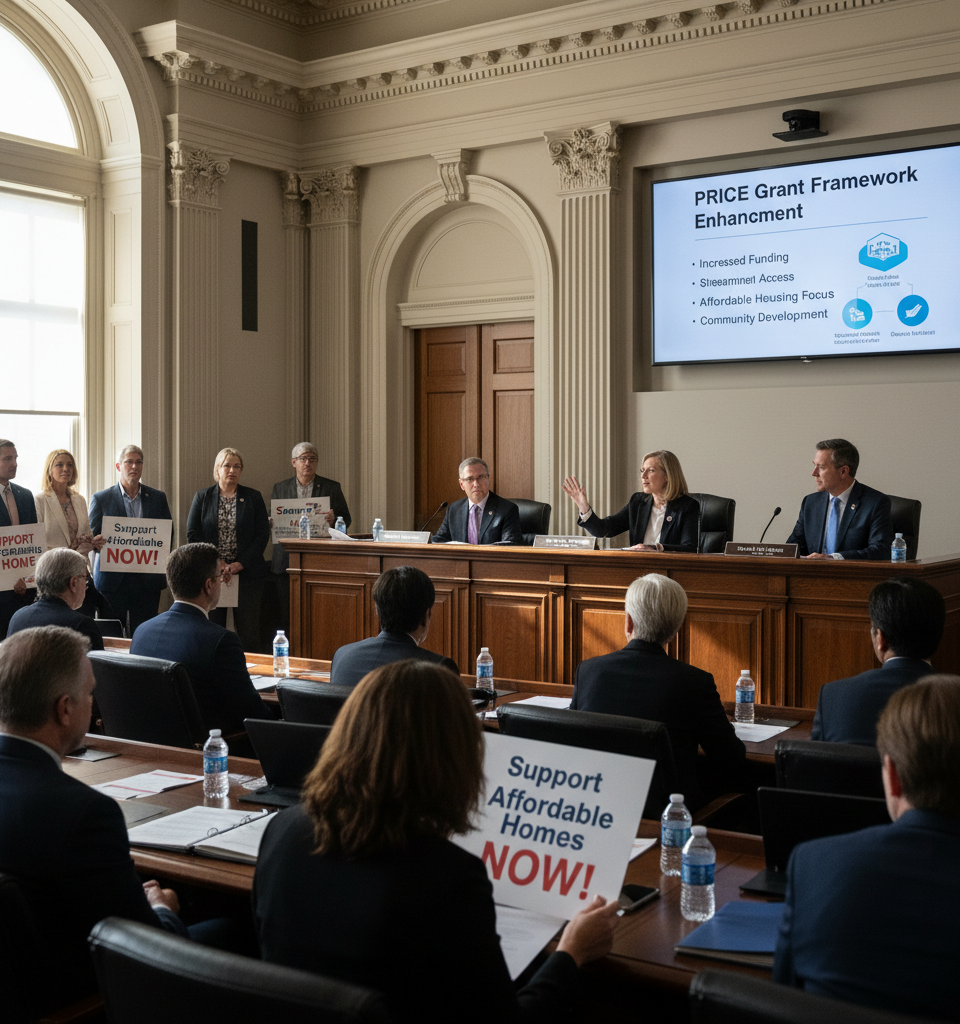
A concerted effort is underway in Washington D.C. to amend Section 304 of the 21st Century Road to Housing Act, aiming to fortify the framework governing Preservation and Reinvestment Initiative for Community Enhancement (PRICE) grants. The proposed adjustments seek to channel federal funding more efficiently into preserving and enhancing manufactured housing communities, which serve as a critical cornerstone of affordable housing, particularly for low- and moderate-income families. This legislative push highlights a growing recognition of manufactured housing's role in addressing the nation's housing crisis and the urgent need to protect these communities from predatory acquisitions and displacement.
The Urgency of Preservation
The current housing landscape is characterized by soaring costs and limited inventory, making affordable housing increasingly scarce. Manufactured housing communities, often more commonly known as mobile home parks, represent a significant segment of this affordable housing stock, providing homes for an estimated 22 million Americans. However, these communities are frequently targeted by institutional investors and private equity firms seeking to maximize profits, often leading to rapid rent increases, neglect of infrastructure, and even conversion of the land to more lucrative uses.
This trend displaces vulnerable residents and diminishes the supply of affordable homes, exacerbating the housing crisis in many regions. The 21st Century Road to Housing Act, enacted to address various housing challenges, includes the PRICE grant program intended to support these communities. Yet, advocates argue its current structure is insufficient to stem the tide of investor-driven displacement.
Strengthening PRICE Grants: Key Proposals
Central to the proposed reforms are provisions designed to incentivize and prioritize resident and non-profit ownership models. Experts and housing advocates suggest that stronger language within Section 304 could mandate that a significant portion of PRICE grants be allocated to entities committed to long-term affordability and community control. For instance, proposals include setting aside at least 50% of PRICE funds for resident-owned communities (ROCs) or mission-driven non-profits.
Additionally, there's a call for explicit criteria that favor grant applications demonstrating robust resident engagement, transparent governance, and a clear plan for maintaining affordability for decades. Currently, up to $225 million is authorized for PRICE grants, and ensuring these funds are strategically deployed is paramount. The current structure, while well-intentioned, lacks the explicit guardrails necessary to prevent funds from being used in ways that inadvertently contribute to the problem.
Industry and Market Implications
The potential strengthening of PRICE grants could significantly alter the dynamics of the manufactured housing market. By supporting resident and non-profit ownership, the legislation would introduce a powerful counterweight to the purely profit-driven acquisition strategies that have dominated recent years. This shift could stabilize rents, improve community infrastructure, and offer residents greater security. It would also likely foster a more diverse ecosystem of manufactured housing ownership, moving away from consolidation by large corporate landlords. Industry analysts predict that greater support for ROCs could lead to increased private capital investment in such models, as their long-term stability and social impact become more recognized, potentially inspiring new financing mechanisms.
Expert Perspectives on Long-Term Sustainability
Housing policy experts largely agree that empowering resident and non-profit ownership is the most effective path to long-term sustainability for manufactured housing communities. "When residents own their communities, they have a direct stake in its upkeep and future," states Dr. Elena Petrova, a senior fellow at the Affordable Housing Institute.
" Organizations like the Manufactured Housing Institute (MHI) have also expressed support for measures that promote stable, affordable communities, acknowledging the critical role manufactured housing plays in the overall housing supply. However, MHI often emphasizes the need for a balanced approach that also encourages private investment, suggesting that any legislative changes should not unduly constrain market flexibility.
The Path Forward
The immediate future will see continued lobbying efforts from housing advocates, community development financial institutions (CDFIs), and homeowner groups aimed at influencing the legislative process. Congressional committees are expected to engage in further discussions on potential amendments to Section 304. Key stakeholders are pushing for these reforms to be included in upcoming appropriations bills or broader housing legislation within the current legislative session. Should the amendments pass, the true impact would unfold over several years, as new grant cycles prioritize these strengthened criteria, leading to a visible increase in resident-owned and non-profit-controlled manufactured housing communities across the United States, thereby safeguarding a vital and often-overlooked segment of affordable housing for generations to come.
This legislative action is not just about preserving housing; it's about preserving communities and ensuring that an affordable path to homeownership remains accessible to millions of Americans.