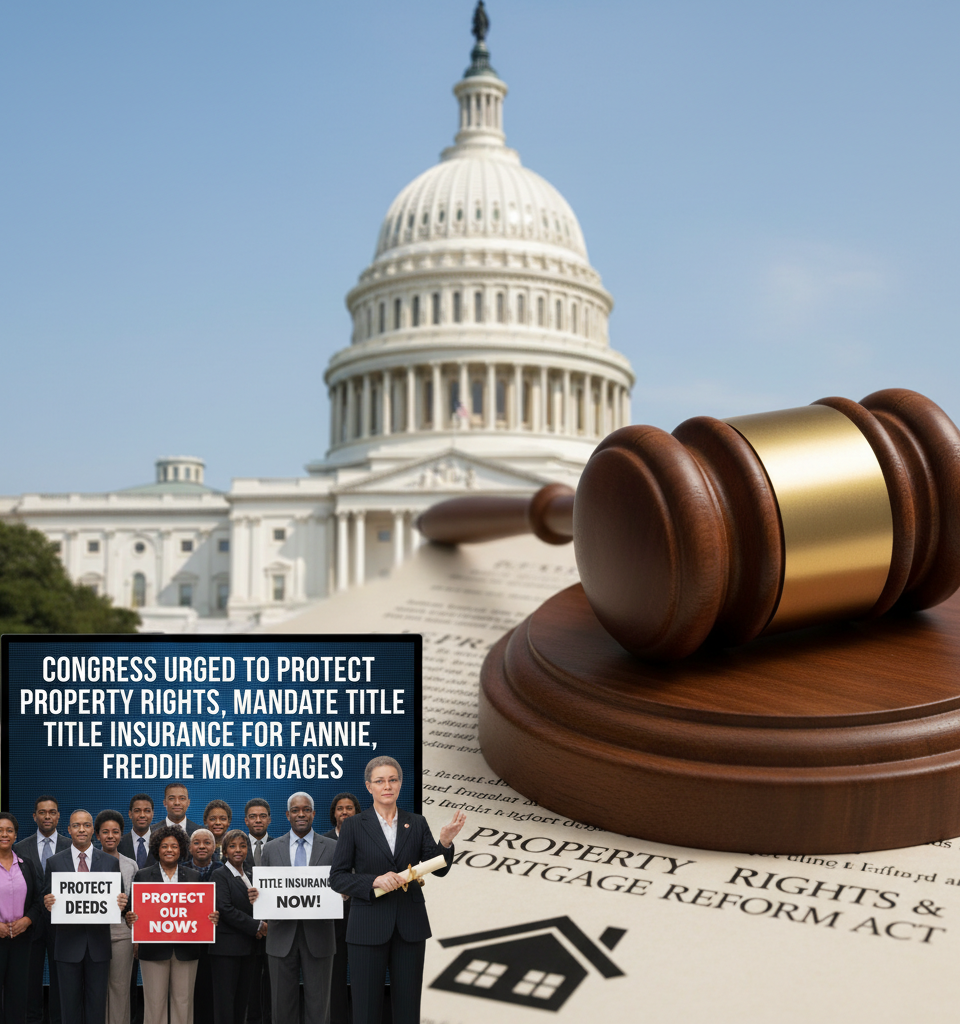
Congress is being strongly urged to pass the Protecting America’s Property Rights Act, a piece of legislation aimed at amending the current landscape of mortgage transactions. The proposed Act seeks to mandate state-regulated title insurance for all mortgages supported by government-sponsored enterprises (GSEs), specifically Fannie Mae and Freddie Mac. This move is presented as a critical safeguard for both consumers and financial institutions against the inherent risks of hidden title defects in property transactions.
The Imperative for Title Protection
The push for this legislation stems from a growing concern over the potential for substantial financial exposure should title defects emerge post-transaction. Title defects, which can range from undisclosed liens and easement disputes to outright fraud and forgery, have the potential to invalidate property ownership, leading to protracted legal battles and significant financial losses for homeowners and lenders alike. Currently, while many mortgages utilize title insurance, the absence of a universal mandate for Fannie Mae and Freddie Mac-backed loans leaves a notable gap in consumer protection.
Critiquing Unregulated Alternatives
A primary driver behind the proposed Act is the perceived inadequacy of unregulated alternatives, particularly "attorney opinion letters," as a substitute for comprehensive title insurance. While attorney opinion letters offer a legal assessment of a property's title, they typically do not provide the same level of financial indemnity against future claims that title insurance offers. Critics argue that relying on such alternatives inherently shifts a greater burden of risk onto homebuyers and lenders, as these letters often lack the robust backing and regulatory oversight characteristic of state-regulated insurance products. The vulnerability to fraud and forgery is significantly heightened when transactions are not underpinned by the due diligence and financial guarantees provided by title insurance.
Industry and Market Implications
The passage of the Protecting America’s Property Rights Act could have profound implications for the mortgage and real estate industries. For lenders, it would standardize the level of risk mitigation associated with the vast portfolio of loans sold to or guaranteed by Fannie Mae and Freddie Mac, potentially leading to greater stability and predictability in the secondary mortgage market. For consumers, the mandatory requirement for title insurance would act as an additional layer of financial protection, insulating them from unexpected claims against their property, which can arise years after a purchase. This standardization could also streamline the closing process in the long term by reducing variability in title examination practices.
Protecting Economic Stability
Advocates for the Act frame it as a measure designed not just for individual consumer protection but also for broader economic stability. The financial health of Fannie Mae and Freddie Mac, which play a pivotal role in the nation's housing finance system, is intrinsically linked to the quality and security of the mortgages they back. By mitigating the risks of title defects upstream, the legislation aims to fortify these institutions against potential losses, thereby contributing to the overall resilience of the housing market. The cost of addressing widespread title issues, if unregulated alternatives prove insufficient, could be substantial and ultimately borne by taxpayers.
The Path Forward in Congress
The proposed legislation faces the typical congressional review process, requiring bipartisan support to move forward. The debate is expected to center on the balance between consumer protection, regulatory burden, and market efficiency. Proponents will likely emphasize the long-term benefits of enhanced security and reduced risk, while opponents might raise concerns about potential increases in closing costs or perceived over-regulation. The outcome will depend on how effectively advocates can demonstrate the critical need for robust, standardized title protection in the national mortgage market against the backdrop of potential financial vulnerabilities.
This legislative effort underscores a fundamental principle: that the security of property rights is a cornerstone of economic confidence. By proactively addressing title risk through mandated, regulated title insurance, Congress has an opportunity to prevent future financial hardships for homeowners and maintain the integrity of the nation's housing finance system.