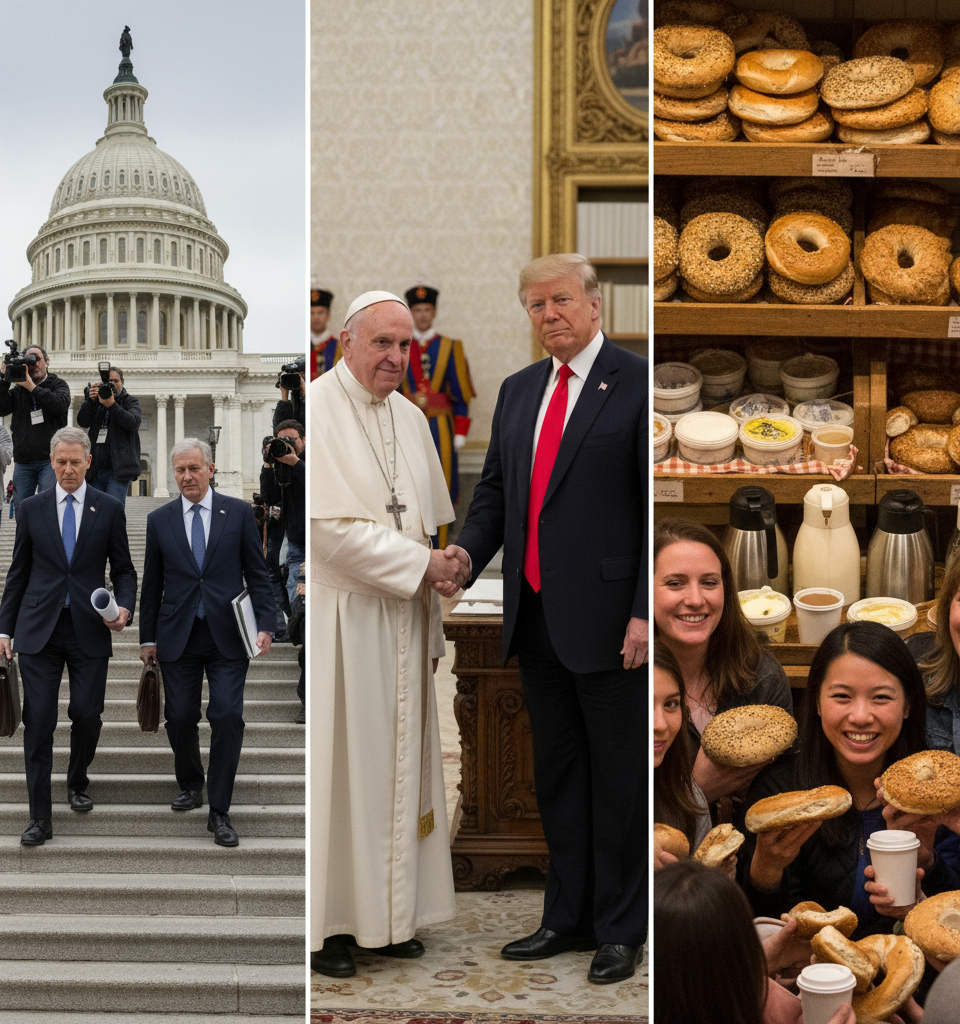
Washington D.C. was gripped this week by a confluence of unexpected political developments, as two prominent members of the U.S. Congress announced their immediate resignations, sending ripples through their respective caucuses. These departures coincided with a renewed and public diplomatic back-and-forth between the Holy See and the White House, featuring Pope Francis and former President Donald Trump, highlighting persistent ideological divides. Amidst these high-stakes political narratives, an intriguing economic trend also caught attention: the unexpected ascent of the 'big bagel' industry, signaling a notable shift in consumer behavior and food service demands across urban centers.
The Broader Context of Political Volatility
These congressional resignations, while stemming from distinct personal circumstances yet to be fully disclosed, underscore a period of heightened political volatility and partisan gridlock within the U.S. legislative body. Historically, mid-term resignations can signify internal party fractures, impending scandals, or strategic moves ahead of electoral cycles. The specific timing of these announcements, coming just months before a critical election year, amplifies their potential impact on legislative agendas and the balance of power. Coupled with the ongoing, sometimes contentious, dialogue between a global spiritual leader and a prominent American political figure, the week's events paint a picture of a nation grappling with both internal political realignments and its role on the international stage.
Unpacking the Key Details and Public Statements
While the identities of the resigning congressional members have been withheld pending formal announcements to allow for personal privacy, sources within the Capitol Hill report that their departures are effective immediately, triggering special elections in districts currently represented by their parties with slim majorities. One resignation comes from a pivotal committee chair, potentially disrupting crucial legislative initiatives related to infrastructure. Meanwhile, the exchange between Pope Francis and Donald Trump, reportedly stemming from differing views on global migration policies and social justice, has been characterized by both subtle criticisms and attempts at diplomatic overtures. A recent statement from the Vatican emphasized the importance of 'fraternal dialogue,' while a spokesperson for Trump reiterated his stance on 'sovereign borders first.'
The Ascendance of 'Big Bagel' and Market Impact
In a surprising counterpoint to the political drama, the 'big bagel' industry has experienced a significant surge, with leading bagel chains and independent bakeries reporting a 15% increase in sales year-over-year. This growth, particularly pronounced in major metropolitan areas like New York, Chicago, and Los Angeles, is attributed to a combination of factors: evolving consumer preferences for substantial, customizable breakfast and lunch options, increased demand for comfort food, and effective marketing strategies targeting younger demographics. Analysts note that premium bagel shops, offering artisan varieties and locally sourced ingredients, are driving a substantial portion of this growth, with average purchase values increasing by approximately 8% to $12.50 per transaction.
Expert Analysis on Political and Economic Headwinds
Political analysts are closely monitoring the congressional vacancies, predicting intensified partisan battles for control of these swing districts. Dr. Eleanor Vance, a political science professor at Georgetown University, commented, "These resignations create immediate vulnerabilities for the parties involved and could significantly alter the legislative calculus for the next session." On the economic front, food industry consultant Mr. Julian Croft suggests, "The 'big bagel' phenomenon isn't just a fleeting trend; it reflects a deeper shift towards value for money in a single, satisfying meal, especially in a hybrid work environment." He projects continued growth, potentially reaching a market valuation of $6 billion within the next three years, up from an estimated $4.8 billion currently.
Looking Ahead: Elections, Diplomacy, and Culinary Trends
The immediate future will see expedited special elections to fill the congressional vacancies, with both major parties mobilizing considerable resources to secure these seats. The outcome of these races could have profound implications for the legislative agenda in the coming year. Concurrently, observers anticipate continued, albeit carefully worded, interactions between the Vatican and prominent political figures as global challenges persist. As for the 'big bagel' industry, market watchers predict further innovation in flavors and formats, alongside potential consolidation as larger food service companies seek to capitalize on this growing demand. This dynamic interplay of political shifts, international diplomacy, and evolving consumer tastes ensures a fascinating landscape to observe in the coming months.