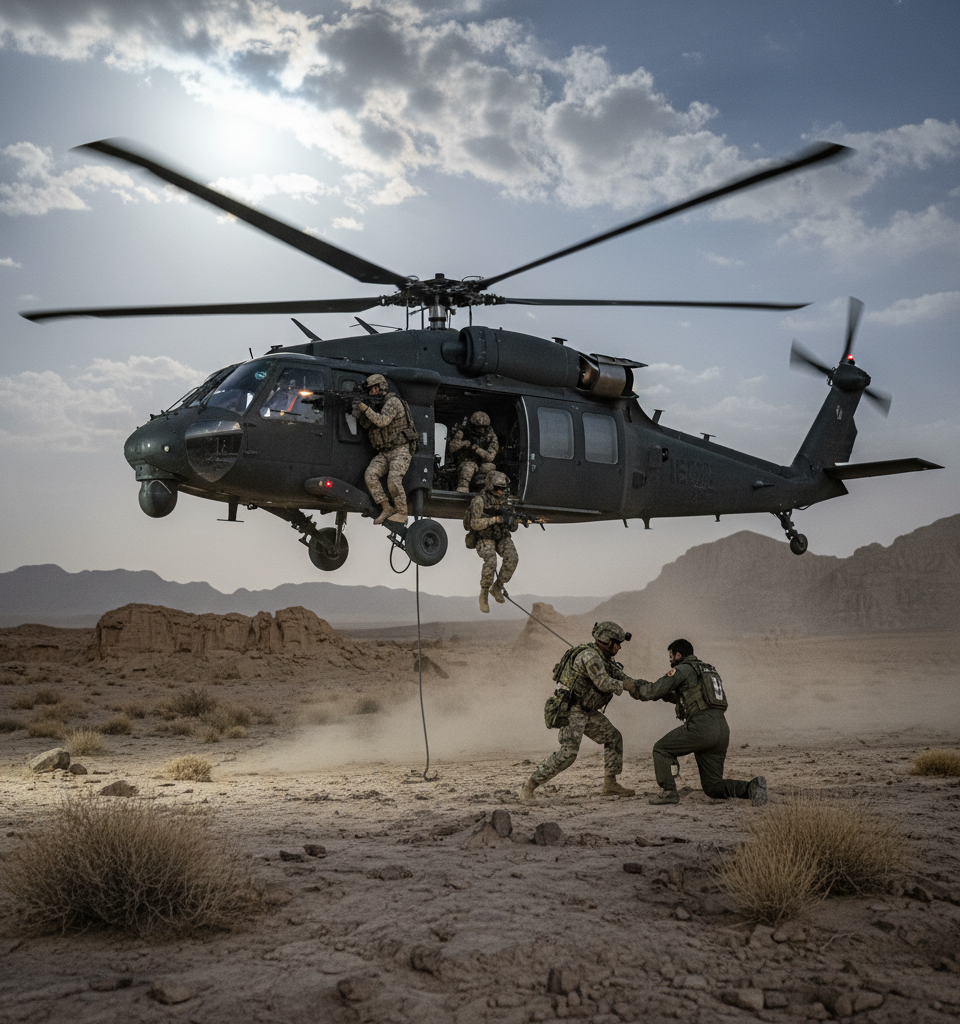
TEHRAN, IRAN – In a meticulously planned and executed operation, a downed United States airman was successfully extracted from a remote and hostile area within Iranian territory on. The highly sensitive mission, which involved unprecedented collaboration across numerous US government agencies, underscores the sophisticated capabilities required for such surreptitious endeavors and the delicate balance of international relations in a region fraught with tension. The airman, whose identity has not been disclosed for security reasons, was reportedly recovered after his aircraft encountered an undisclosed mechanical failure, forcing an emergency landing deep within Iranian borders.
Geopolitical Tensions and the Stakes of a Downed Airman
This incident unfolds against a backdrop of escalating geopolitical tensions between the United States and Iran. For decades, the two nations have been locked in a cold war of proxy conflicts, sanctions, and strategic maneuvering. The capture or prolonged detention of a US service member in Iranian territory could have triggered a major international incident, potentially leading to a severe diplomatic crisis, military escalation, or even hostage negotiations. The swift, covert nature of the rescue aimed to prevent such an outcome, sidestepping public confrontation and minimizing opportunities for Iranian authorities to exploit the situation for political leverage or propaganda. The historical context of the 1979 hostage crisis and the more recent detention of dual nationals further amplified the urgency and risk associated with this mission.
Operational Precision: A Multi-Agency Effort
While specific details remain classified, sources indicate the operation was a multi-faceted endeavor, likely involving intelligence assets from the Central Intelligence Agency (CIA), special operations forces from the Department of Defense (DoD), and diplomatic coordination efforts from the State Department. The logistical challenges were immense, given the remote location of the downed aircraft and the need to operate undetected within Iranian airspace and ground. Initial reports suggest the airman was able to communicate his approximate location, triggering the rapid deployment of specialized reconnaissance teams to assess the viability of extraction. This planning phase reportedly lasted several intense hours, involving advanced satellite imagery, signals intelligence, and covert human intelligence to map out a secure extraction corridor and identify potential threats. The use of stealth airframes and specialized ground teams, equipped with clandestine communication devices and survival gear, was integral to the mission's success.
Impact on Regional Dynamics and Covert Operations
The successful extraction, while a tactical victory, carries broader implications for regional dynamics. It sends a clear message about the US's capability and resolve to protect its personnel, even deep within hostile territory. However, it also raises questions about the frequency and scope of US intelligence-gathering and special operations activities in the region, which could potentially provoke a response from Iranian authorities if details were to surface. From an operational standpoint, this mission will likely serve as a case study for future covert rescue scenarios, reinforcing the importance of interoperability between intelligence, military, and diplomatic channels. The technological advancements demonstrated, particularly in evasion and extraction techniques, could influence defense spending and training priorities for specialized units across the globe.
Expert Analysis: A Testament to US Special Operations
According to Dr. Evelyn Reed, a senior fellow at the Center for Strategic and International Studies, "This operation, if confirmed, is a textbook example of the United States' unparalleled special operations capabilities. It demonstrates not just military prowess, but an intricate fusion of intelligence, diplomacy, and cutting-edge technology. The ability to conduct such a complex mission undetected in a highly monitored environment like Iran speaks volumes about the training and assets involved. The political cost of failure would have been astronomically high, making the success a significant strategic win for Washington." Analysts from various think tanks have begun dissecting the potential methods used, ranging from clandestine helicopter infiltrations to disguised ground exfiltration routes, highlighting the depth of planning involved.
What Lies Ahead: Continued Vigilance and Deniability
Moving forward, both the United States and Iran are likely to maintain a delicate balance of deniability and strategic posturing. The US will continue to avoid public acknowledgment of operational specifics to preserve intelligence sources and methods, and to prevent further escalation. Iran, while potentially aware of the breach, may also choose to remain publicly silent to avoid appearing vulnerable or to prevent international scrutiny of its airspace and border security. However, this incident will undoubtedly lead to intensified security measures on both sides and a re-evaluation of intelligence gathering strategies. The long-term implications will be observed in continued proxy engagements and the overarching geopolitical chess match being played in the Middle East, with each side now acutely aware of the other's hidden capabilities.