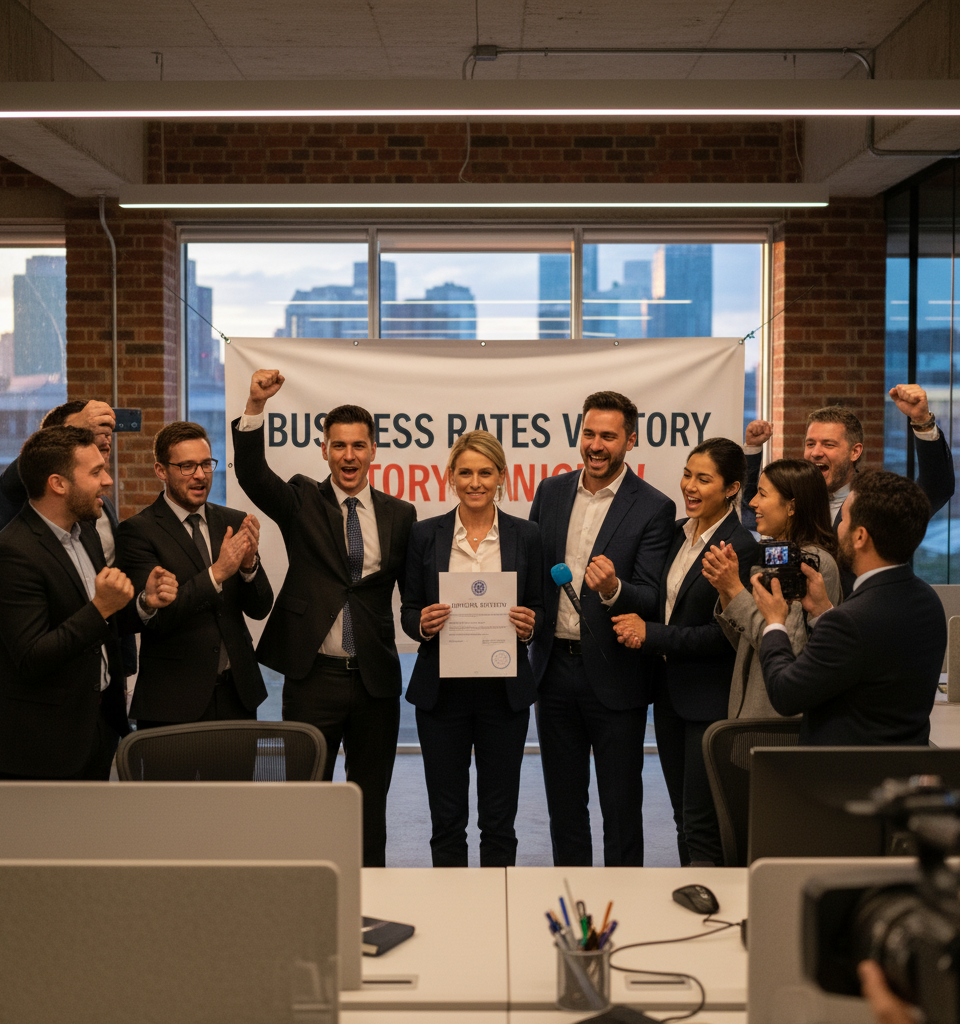
The contentious issue of business rates for flexible office operators is headed to a landmark judicial review, following a High Court decision to grant permission for an application by Hugo Warner, co-founder of the Fisheries London workspace in Hackney. This legal action, confirmed recently, will scrutinize the Valuation Office Agency's (VOA) updated approach to assessing flexible office spaces, particularly its method of backdating charges. The outcome could have profound implications for hundreds of coworking businesses across the UK grappling with significant and unexpected tax liabilities.
Context of the Dispute
This judicial review emerges from a landscape significantly altered by the VOA's decision to reclassify flexible office spaces for business rates purposes. Historically, individual desks or offices within a coworking space were often assessed separately. However, under the new guidance, the VOA has moved towards assessing the entire coworking building as a single hereditament, often resulting in substantially higher rates bills for operators. The additional layer of complexity, and a major point of contention, is the VOA's practice of backdating these revised assessments, sometimes spanning several years. This has led to operators receiving sudden invoices for hundreds of thousands, and in some cases millions, of pounds in unexpected arrears, threatening the viability of numerous businesses, especially smaller, independent operators.
Key Details of the Case Hugo
Warner's case against the VOA centers on the legality and fairness of this backdated reclassification. His application for judicial review argues that the VOA's methodology, particularly the retrospective application of the new framework, is unlawful and unjust. Warner, whose Fisheries London establishment in Hackney has felt the direct impact of these policies, has become a prominent voice for the sector. Sources close to the legal proceedings indicate that the High Court’s decision to grant permission for the review signals that there is a substantive legal argument to be heard, rather than it being dismissed as frivolous. The case will focus on the interpretation of existing rating legislation and the procedural fairness of the VOA's actions and communication with the industry. The exact quantum of the backdated rates owed by Fisheries London has not been publicly disclosed, but similar cases across London have involved claims ranging from £50,000 to over £1 million per property.
Industry-Wide Impact The flexible office sector, valued in the UK at an estimated £7 billion annually, has been particularly vulnerable to these changes.
Industry bodies, including the Flexible Space Association (FlexSA), have been actively lobbying against the VOA's methodology, warning that it poses an existential threat to many operators. Larger multinational players, while also affected, often have greater financial buffers to absorb such shocks, but independent operators and startups are disproportionately impacted. Many have reported freezing expansion plans, cutting costs, and even considering closure due to these unbudgeted liabilities. The outcome of Warner's judicial review will set a critical precedent for the entire sector, potentially forcing the VOA to revise its approach to both assessment and arrears.
Expert Perspectives Rating experts and legal analysts view this judicial review as a watershed moment for business rates in the
UK's commercial property sector. "The VOA's approach has been inconsistent and, in many cases, outright punitive for flexible workspace providers," noted a senior rating surveyor at a major property consultancy, who requested anonymity due to ongoing client work with the VOA. "This judicial review isn't just about the backdating; it's about the fundamental principles of fair assessment and the predictability businesses rely on for planning." Legal commentators suggest the court will scrutinize whether the VOA acted within its statutory powers and if its policy decisions were reasonable, particularly concerning the lack of clear guidance preceding the retrospective charges. The VOA, while not commenting on live legal cases, has previously asserted its actions are aligned with its mandate to ensure fair and accurate valuations across all property types.
What's Next for the Dispute
With permission granted, the case will now proceed to a full judicial review hearing in the High Court. This legal process is expected to take several months, potentially extending into early 2025 given the complexities involved. The VOA will be required to present its defense, justifying its methodology and the retrospective application of business rates. Should Warner's challenge succeed, it could compel the VOA to rescind or significantly modify its backdated rates demands, potentially leading to refunds or amended bills for operators nationwide. Conversely, if the VOA prevails, it would solidify their current approach, forcing the flexible workspace industry to fundamentally reconsider their operational and financial models in the UK. The industry awaits the proceedings with keen interest, recognizing the far-reaching economic implications for a vital and growing segment of the commercial real estate market.