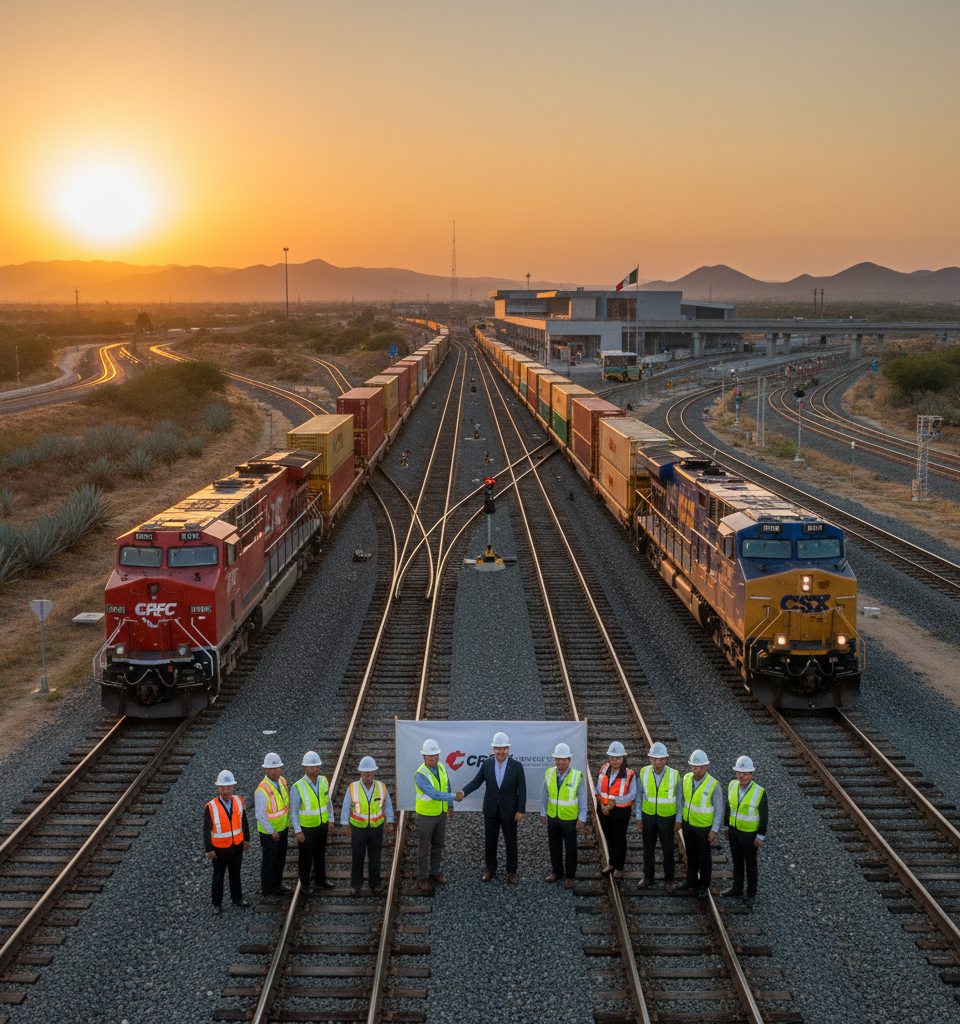
Canadian Pacific Kansas City (CPKC) and CSX have jointly announced the activation of an “improved” rail corridor linking the Southeast United States with key markets in Texas and Mexico. The enhanced service, which commenced operations this week, leverages recent infrastructure upgrades to streamline cross-border logistics, aiming to reduce transit times and operational costs for shippers. This initiative marks a significant step in bolstering North American supply chain resilience and facilitating increased trade between the three nations.
Context and Significance
The launch of this upgraded route is particularly timely, given the ongoing pressures on global supply chains and the increasing focus on nearshoring and friendshoring strategies. The North American Free Trade Agreement (NAFTA), now succeeded by the USMCA, has long underlined the importance of integrated logistics networks for economic growth. However, rail infrastructure, particularly across national borders, has often presented bottlenecks. This new service directly addresses those challenges, providing a more robust alternative to traditional trucking routes and existing, often congested, rail lines. For industries ranging from automotive to agriculture, a more predictable and efficient rail link can translate into substantial competitive advantages.
Key Details and Enhancements
S. with CPKC's extensive network in Texas and Mexico. While specific details on the exact transit time reductions were not publicly disclosed, both companies emphasized a material improvement over previous options.
The enhancements are a direct result of several years of strategic investments in rail infrastructure, including track upgrades, modernized signals, and improved interchange processes at critical junctions. Sources close to the project suggest that these operational efficiencies could shave days off current transit schedules for certain routes. Both CPKC and CSX touted the service as offering a single-billing solution, simplifying the administrative burden for customers navigating multi-rail journeys across international borders.
Executives from both companies expressed confidence that the combined network strength would provide an unparalleled service offering for shippers.
Industry and Market Impact
This enhanced rail service is poised to have a substantial impact on various sectors. The automotive industry, with its intricate cross-border supply chains between the U.S. and Mexico, stands to benefit significantly from greater reliability and speed. Similarly, industries dealing with bulk commodities, manufactured goods, and even refrigerated products will find new avenues for cost-effective and environmentally friendly transport. By offering a more competitive alternative to long-haul trucking, the service could also alleviate some of the strain on the trucking industry, which faces persistent driver shortages and rising fuel costs. This shift also aligns with broader environmental, social, and governance (ESG) goals, as rail transport is generally more fuel-efficient and emits fewer greenhouse gases per ton-mile compared to trucking.
Expert Perspectives
Industry analysts have largely welcomed the announcement, viewing it as a logical and much-needed development following the CPKC merger. "This isn't just about combining two networks; it's about optimizing them for modern supply chain demands," commented Sarah Chen, a senior logistics analyst at North American Rail Insights. "The seamless interchange and single billing are critical for reducing complexity. We could see a measurable shift of freight from road to rail, particularly for time-sensitive goods that previously relied solely on trucks due to perceived rail inefficiencies. This will strengthen the economic ties across the USMCA region." Others pointed to the potential for CPKC to capture a larger share of the lucrative Mexico-U.S. trade lane, leveraging its singular ownership of the only Class 1 rail network spanning all three North American countries.
What's Next?
Both CPKC and CSX indicated that this is just the initial phase of their collaborative efforts. Future enhancements could include further network optimizations, exploration of new terminal locations, and the integration of advanced digital tracking and analytics tools to provide shippers with real-time visibility into their cargo. The success of this initial launch will likely dictate the pace and scope of these subsequent developments. The companies are also expected to engage actively with key customers to gather feedback and tailor future offerings. This improved corridor sets a precedent for how major rail carriers can collaborate to create truly integrated, efficient, and resilient North American freight networks, paving the way for further economic integration across the continent in the coming years.