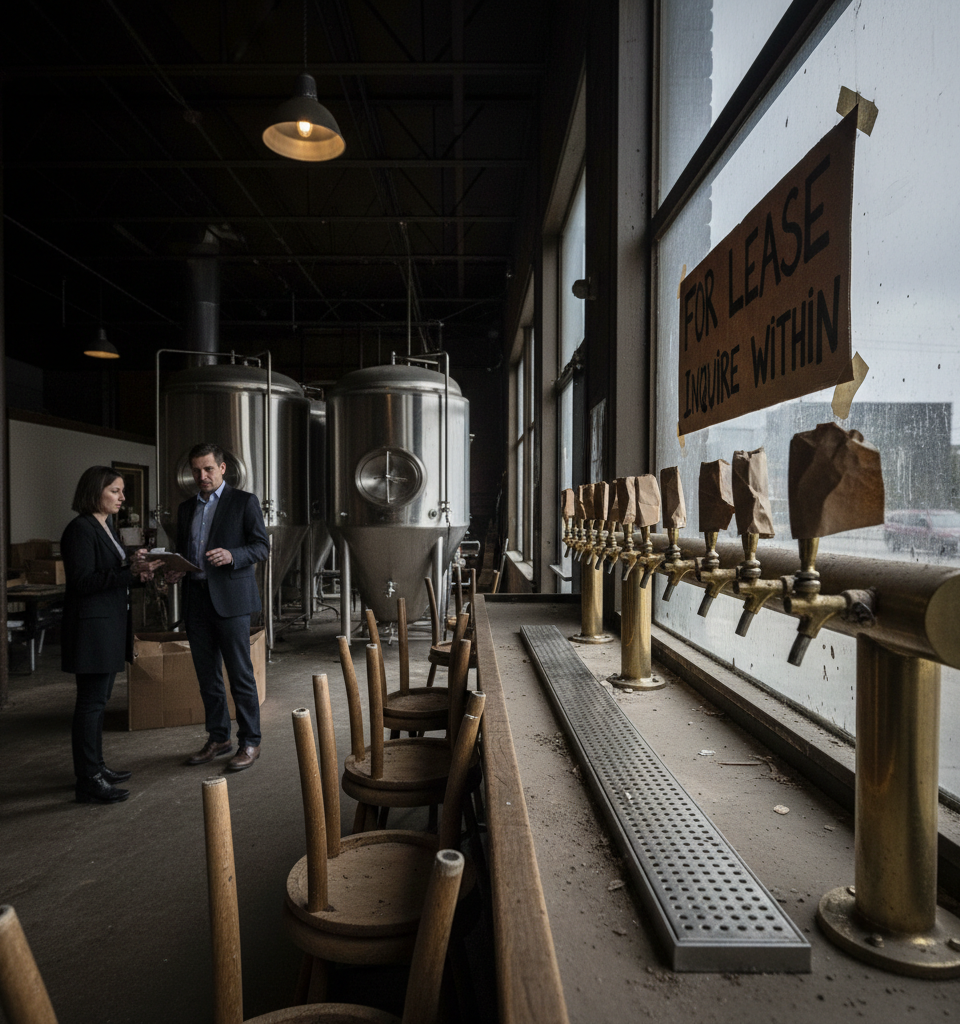
The vibrant craft beer scene, which transformed countless vacant warehouses and storefronts into bustling community hubs, is now contending with a stark reversal. A staggering 481 breweries across the United States ceased operations in 2025, marking a significant contraction for an industry that had experienced explosive growth for decades. This wave of closures has left a substantial amount of specialized commercial real estate – complete with brewing systems, taprooms, and unique infrastructure – vacant, posing a challenge for landlords and urban planners alike.
The Craft Beer Boom and Its Evolving Landscape
For nearly two decades, craft breweries were hailed as economic catalysts, revitalizing blighted urban areas and fostering local economies. These establishments, often characterized by their Edison bulbs, exposed beams, and communal taprooms, became synonymous with neighborhood authenticity. They offered more than just beer; they provided social spaces, drove foot traffic to local businesses, and cultivated a strong sense of community around local products. This growth was fueled by a consumer shift towards unique, locally sourced experiences and a burgeoning interest in diverse beer styles beyond mainstream lagers.
Challenging Realities Emerge for Breweries
The closure of 481 breweries represents a sharp increase from previous years and underscores a confluence of economic and market pressures. While exact figures for 2024 are still being compiled, estimates suggest a growing trend of consolidation and closures. Many of the shuttered businesses were smaller operations, often family-owned, struggling to compete in an increasingly saturated market.
Rising ingredient costs, particularly for malt and hops, coupled with escalating labor expenses and supply chain disruptions, have significantly squeezed profit margins. Additionally, changing consumer preferences, including a growing interest in non-alcoholic beverages and other alcoholic categories like spirits and ready-to-drink cocktails, have fragmented the market, leading to reduced demand in some segments of craft beer. The average craft brewery operates on thin margins, often just 5-10%, making them particularly vulnerable to these external pressures.
Impact on Commercial Real Estate
The commercial real estate market is now grappling with the aftermath of these closures. Breweries typically occupy spaces demanding specific modifications: reinforced floors for heavy equipment, specialized plumbing for wastewater treatment, high ceilings for fermentation tanks, and extensive HVAC systems. These unique build-outs make repurposing brewery sites particularly challenging and expensive. Unlike a standard retail storefront or office space that can be adapted for various businesses, a former brewery often requires substantial demolition and renovation to suit new tenants, driving up costs and extending vacancy periods. A recent report from a national real estate firm indicated that average vacancy rates for properties specifically zoned and built for brewing operations have surged by nearly 8% in the past year in key craft beer markets.
Expert Perspectives on Market Correction
Industry analysts view the current wave of closures as a market correction. "The craft beer industry exhibited unsustainable growth for a period, and what we're witnessing now is a necessary, albeit painful, adjustment," explains Dr. Evelyn Reed, an economics professor specializing in small business trends. "Many new entrants during the boom era perhaps underestimated the intense competition and the challenges of scaling a production-heavy business with significant overhead. It's not just about making good beer anymore; it's about sophisticated business acumen and marketing." Industry data from the Brewers Association indicated that while overall craft beer volume grew marginally, the number of new brewery openings has slowed considerably, with closures outpacing openings in certain segments for the first time in over a decade.
Future Outlook for Craft Beer and Vacant Properties
The immediate future suggests continued consolidation within the craft brewing sector, with larger, more established breweries potentially acquiring smaller struggling operations. For the emptied real estate, creative solutions will be necessary. Some properties may find new life as distilleries or wineries, leveraging a portion of the existing infrastructure. Others might require significant capital investment to convert into upscale food halls, event venues, or even specialized manufacturing facilities. Local governments in heavily impacted areas are exploring incentive programs to attract diverse businesses to these unique commercial spaces. The hope is that just as breweries once breathed new life into overlooked urban areas, new entrepreneurial ventures will emerge to re-energize these now-vacant sites, contributing to the ongoing evolution of local economies.