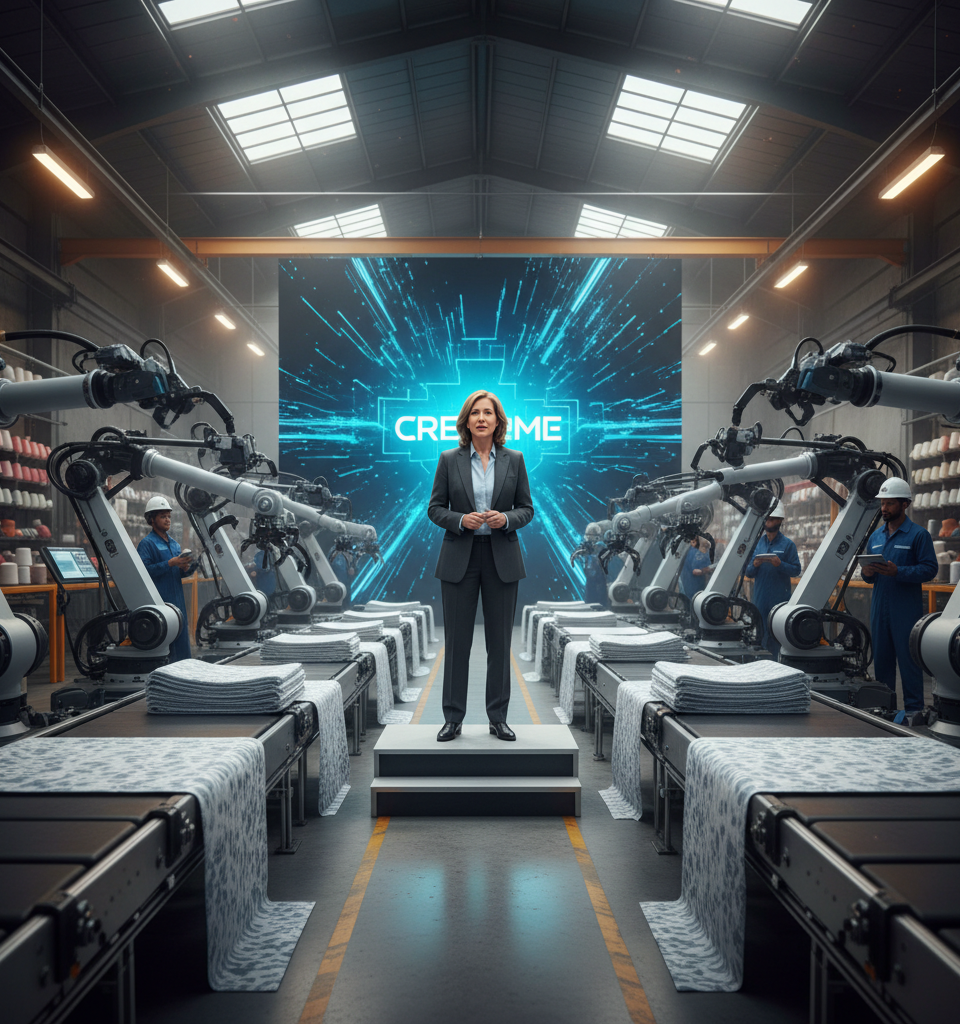
Physical artificial intelligence (AI) has reached a critical juncture, capable of broader implementation in specific applications, according to Cam Myers, CEO of CreateMe. Myers' company, specializing in automated soft materials manufacturing, has successfully deployed systems leveraging physical AI to fundamentally transform textile production. This development signals a significant step in industrial automation, moving beyond purely digital AI applications to tangible, machine-controlled operations.
The Evolution of Physical AI
The assertion from Myers underscores the growing maturity of physical AI, which refers to AI systems designed to interact with and manipulate the physical world. Unlike AI primarily focused on data processing, pattern recognition, or virtual environments, physical AI imbues robotic systems with the intelligence to perform real-world tasks. Historically, the challenge has been bridging the gap between AI's analytical prowess and the complex, often unpredictable nature of physical environments. CreateMe's work in textile manufacturing exemplifies how these challenges are being overcome, particularly in tasks requiring precision and adaptability with soft, pliable materials.
CreateMe's Transformative Approach
CreateMe's innovative systems demonstrate a practical application of physical AI. By revamping textile manufacturing processes, the company highlights the technology's immediate utility. These systems can now control robots performing specific, limited tasks within the manufacturing workflow, suggesting an era where highly specialized, AI-driven machinery can contribute significantly to production efficiency and quality. This specialization allows for the mastery of individual operations, paving the way for eventual broader integration across entire manufacturing chains.
Industrial Impact and Future Prospects
Myers' statement suggests a positive outlook for sectors beyond just textiles. Industries relying on precise manipulation, assembly, or handling of delicate materials could find similar benefits. The ability of physical AI to control robots for discrete tasks opens up possibilities for enhanced automation in areas such as electronics assembly, food processing, and advanced materials handling. This indicates a shift towards more adaptable and intelligent robotic workforces, capable of executing complex instructions without constant human intervention in highly defined operational envelopes.
Broader Economic Implications
Improved automation through physical AI could lead to several economic benefits. For manufacturers, it promises increased production efficiency, reduced waste, and potentially lower labor costs for repetitive or hazardous tasks. Countries investing in these technologies may see a resurgence in domestic manufacturing capabilities, as advanced automation can offset some of the cost advantages traditionally held by overseas production centers. Furthermore, the development and deployment of physical AI systems will spur innovation in related fields, including advanced robotics, sensor technology, and AI algorithms specifically designed for physical interaction.
The Path Forward for Adoption
While Myers notes that physical AI is ready for wider adoption in some applications, he also implicitly acknowledges that its widespread, general-purpose deployment is still on the horizon. The current readiness pertains to scenarios where tasks are well-defined, environments are relatively controlled, and the scope of robotic action can be delimited. This measured readiness provides a clear roadmap for other industries to identify specific pain points or inefficiencies that could be addressed by tailored physical AI solutions. The experiences of pioneers like CreateMe will serve as critical case studies for future implementations, guiding the responsible and effective integration of this transformative technology into the global industrial landscape.