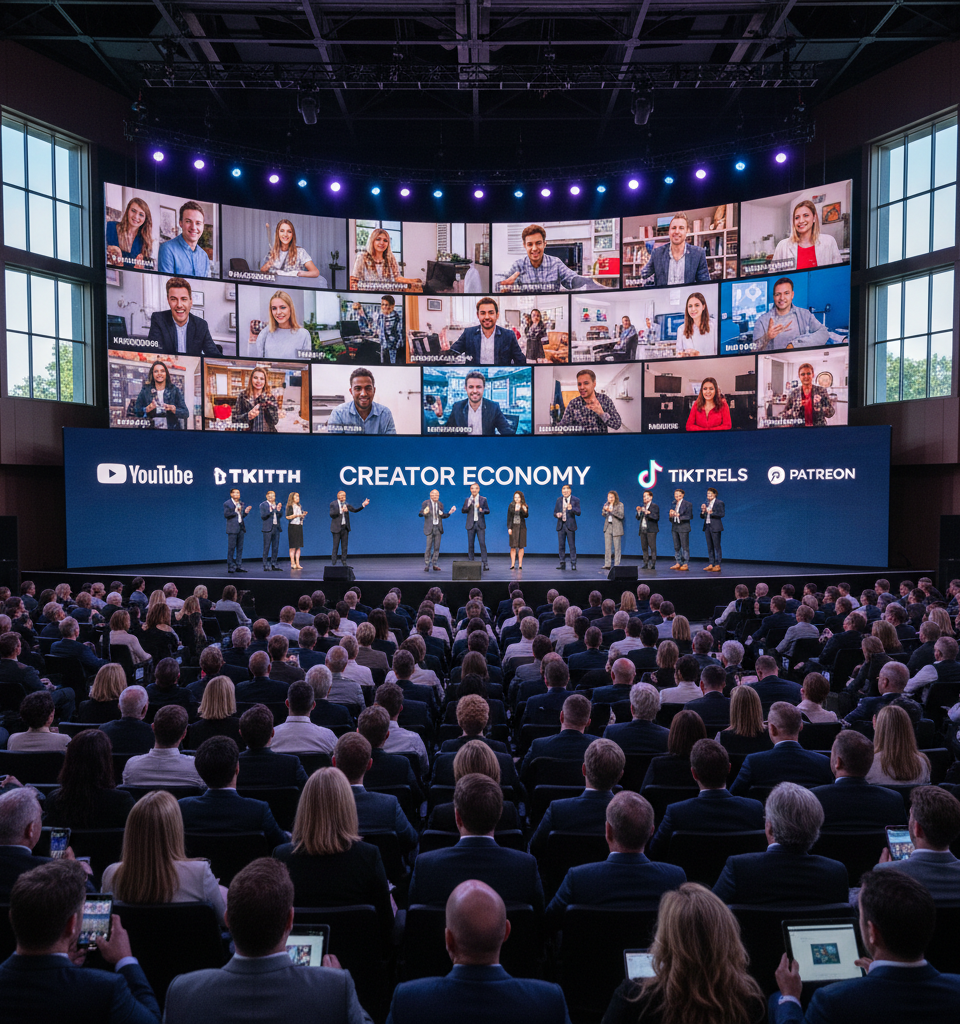
NEW YORK — The annual television upfronts, typically a showcase for network television's fall lineups, underwent a significant transformation this week as major media conglomerates across New York City increasingly integrated creator-generated content into their presentations. This strategic pivot signals a growing recognition among traditional broadcasters and streaming giants that the creator economy is not just a niche phenomenon but a critical component for reaching younger, digitally native audiences and securing new advertising dollars. The move highlights a broader industry trend where user-generated content, once relegated to digital-only platforms, is now being embraced on mainstream stages.
Shifting Dynamics in Media Buys
For decades, the upfronts have served as a cornerstone of the television advertising market, where billions of dollars in ad commitments are made. Historically, these events focused on prime-time dramas, sitcoms, and sporting events. However, the rise of digital consumption, particularly among Gen Z and younger millennials, has compelled media companies to rethink their offerings. The inclusion of creator content this year reflects an acknowledgment that these audiences are often found on platforms like TikTok, YouTube, Instagram, and even Snapchat, engaging with personalities and micro-influencers rather than solely traditional linear programming. This represents a fundamental shift in how media buyers are being asked to allocate their budgets, blurring the lines between linear TV and digital media.
Key Players and Strategies
Major players like NBCUniversal, Paramount, and The Walt Disney Company were among those championing creator content. NBCUniversal, for instance, highlighted its robust creator partnerships across various platforms, emphasizing the authenticity and direct connection these creators foster with their audiences. Paramount showcased initiatives that integrate creators into its streaming ecosystem, leveraging their reach to drive engagement with original content.
Disney, too, emphasized its ability to connect advertisers with a diverse array of creators across its vast portfolio, from short-form video to longer-form digital series. The message was clear: these companies are not just distributing creator content but actively developing strategies to integrate it into their core advertising propositions, offering marketers a seamless path to younger demographics. Notably, these companies are moving beyond simply reselling YouTube inventory to proactively developing and packaging their own creator-based offerings.
The Allure of Younger Audiences
One of the primary drivers behind this trend is the persistent challenge of reaching younger demographics through traditional television. Data consistently shows a decline in linear TV viewership among individuals under 35. Creator content, by its very nature, resonates strongly with these groups, often providing a more authentic, relatable, and interactive viewing experience. By bringing creators to the forefront at the upfronts, media companies are attempting to demonstrate to advertisers that they possess the scale and infrastructure to connect brands with these coveted, often elusive, younger consumers. This isn't just about eyeballs; it's about engagement and influence within communities that are highly responsive to creator recommendations.
Expert Insights on Market Impact
Industry analysts view this development as a necessary evolution for traditional media. "The upfronts have always been about showcasing where the audience is, and increasingly, the audience is engaging with creators across multiple platforms," commented Sarah Jenkins, a senior media analyst at VergePoint Research. She added, "This isn't merely an incremental addition; it's a foundational shift in how media companies are valuing and packaging their inventory. Expect to see substantial investment in creator studios and talent partnerships in the coming years." Another expert noted that the ability to offer advertisers integrated campaigns spanning premium TV, streaming, and creator content provides a highly attractive, holistic solution, potentially consolidating ad spend currently fragmented across various digital vendors.
Financial Implications and Ad Spend Trends
The financial implications are significant. The market for influencer marketing is projected to reach approximately $21.1 billion globally in 2023, representing a substantial, and rapidly growing, revenue stream that traditional media deeply covets. By formally incorporating creator content into their upfront pitches, media companies aim to capture a larger share of this budget. Advertisers, in turn, are keen on the enhanced targeting capabilities and perceived higher engagement rates offered by creator partnerships. This strategic move allows traditional media to present themselves as one-stop shops for a full spectrum of media buying, from premium, brand-safe environments to authentic, community-driven content. The integration is also expected to drive up the overall value of ad deals, as integrated packages typically command higher price points.
The Road Ahead: Evolution and Challenges
The future of media upfronts will likely see an even deeper integration of creator content and strategies. Expect more robust analytical tools to measure ROI for creator campaigns, further development of in-house creator studios, and innovative cross-platform activations. Challenges remain, particularly around brand safety in user-generated content and the complexities of measuring consistent audiences across disparate platforms. However, the commitment demonstrated at this year's upfronts suggests that the creator economy is no longer an ancillary add-on but a central pillar of the industry's advertising future. Media companies are betting that by embracing this dynamic shift, they can secure their relevance and profitability in an ever-evolving media landscape.