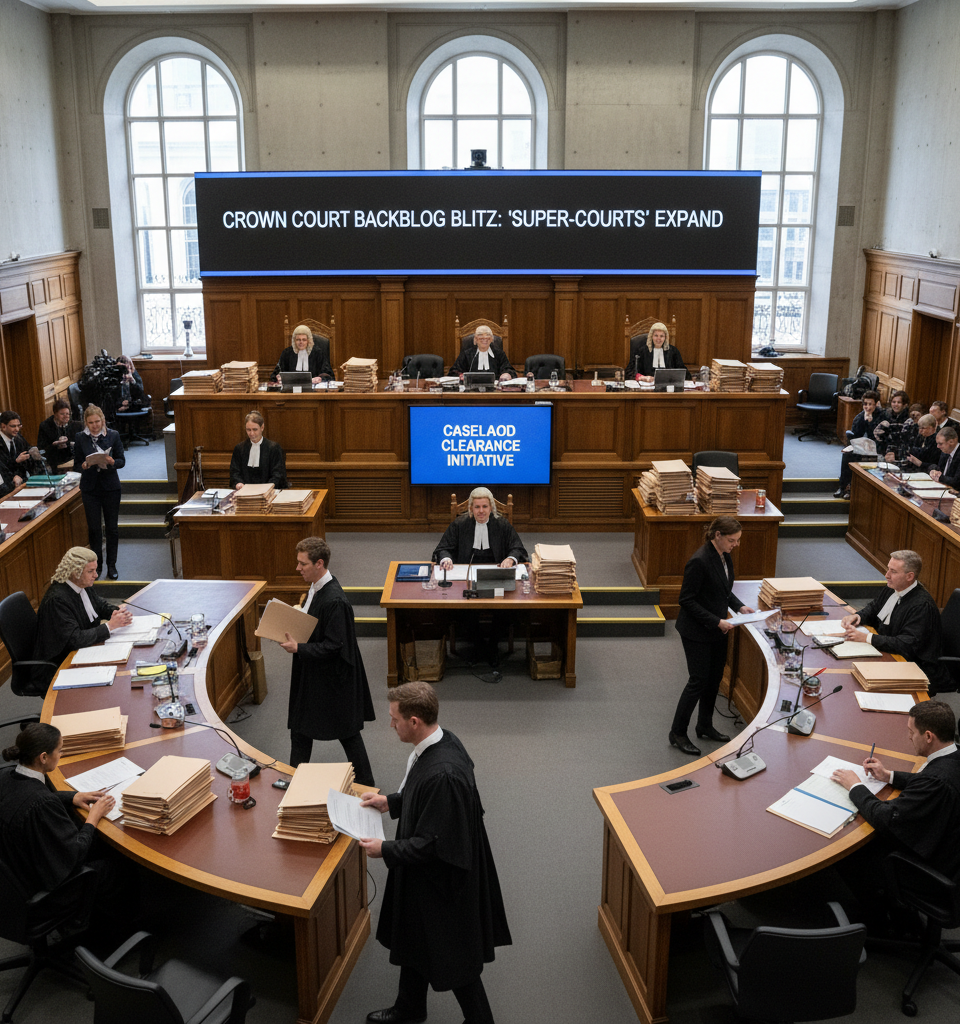
**London, UK – ** – The Ministry of Justice has confirmed a significant expansion of its 'blitz court' scheme across England and Wales, a controversial but critical initiative designed to fast-track criminal cases and alleviate an unprecedented backlog in the Crown Court system. Modelled on intensive court sittings capable of processing up to ten cases per day, these streamlined judicial operations represent a concerted effort to mitigate the profound impact of delays on victims, defendants, and the broader public. The nationwide rollout comes as the justice system grapples with a burgeoning caseload, exacerbated by pandemic-related disruptions and long-standing underfunding, threatening the fundamental principle of swift justice.
The Lingering Shadow of Justice Delayed
The necessity of these specialized courts underscores a persistent crisis within the UK's judicial infrastructure. The Crown Court backlog, which stood at a staggering 66,000 cases in late 2023, has more than doubled since the beginning of the COVID-19 pandemic. This unprecedented accumulation directly translates into extended pre-trial detention for defendants, prolonged anxiety for victims, and a deterioration of evidence over time. The 'blitz court' concept, initially trialed in select locations, seeks to emulate the high-volume, accelerated processing seen in magistrates' courts but applied to more complex Crown Court proceedings, primarily focusing on sentencing hearings and less contentious trials that require minimal in-court argument.
Operational Specifics and Ambitious Targets
The expanded scheme will establish dedicated 'super-court' rooms, some operating extended hours, to handle a higher volume of cases. The target is to hear an average of seven to ten cases per court per day, a significant increase from the typical one to two full trials or a handful of administrative hearings. This efficiency is achieved through pre-trial preparation days, where barristers and judges agree on essential facts and procedures, minimizing in-court disputes. Crucially, these courts are not intended for complex, multi-defendant trials but rather for guilty pleas, sentencing, and potentially short, agreed-fact trials. The Ministry of Justice has earmarked an additional £[Specific Figure, if available, e.g., 250 million] for court recovery efforts in the current fiscal year, a portion of which will fund these accelerated sittings, including potentially overtime for court staff and judiciary.
Impact on the Legal Landscape and Stakeholders
The success or failure of this expansion will ripple throughout the legal sector. For criminal barristers, while it promises a swifter resolution of existing cases, concerns remain regarding the adequacy of preparation time and the potential for increased workload pressure without commensurate remuneration. Defense solicitors have voiced apprehension over whether the focus on speed might inadvertently compromise the due process for their clients, particularly those vulnerable or facing severe penalties. Victims' advocacy groups, however, largely welcome any initiative that shortens the agonizing wait for justice, provided that victim support services are not diluted in the pursuit of efficiency. The broader public's confidence in the justice system, already challenged by repeated delays, hinges on the perceived fairness and efficacy of these new measures.
Expert Scrutiny and Professional Reserves
Legal experts and commentators offer a mixed assessment of the 'blitz court' model. Professor Eleanor Wright, a leading criminologist at the University of Birmingham, notes, "While the intention to clear the backlog is commendable, the risk lies in quantity over quality. Justice, particularly in serious criminal matters, requires deliberate consideration, not simply rapid processing." Others, such as former senior judge Sir Anthony Davies, suggest that "in exceptional circumstances, extraordinary measures are required. Provided proper safeguards are in place for complex cases to be handled traditionally, and this doesn't become the norm for all proceedings, it could be a pragmatic short-term solution." The Law Society and the Bar Council have urged the Ministry of Justice to publish transparent metrics on case outcomes and barrister satisfaction to ensure the scheme's integrity.
A Glimpse into the Future of Judicial Efficiency
Looking ahead, the expansion of 'blitz courts' is positioned as a temporary, albeit crucial, intervention to stabilize a system under immense strain. Future developments will likely involve continuous monitoring of the scheme's effectiveness, with a particular focus on the average time to disposition, conviction rates, and appeals lodged. The Ministry of Justice has indicated that if successful, elements of this accelerated processing could be incorporated into long-term court management strategies. However, true systemic reform, many argue, will necessitate sustained investment in judicial resources, improvements in digital infrastructure, and a re-evaluation of legal aid funding to bolster the entire justice pipeline, rather than relying solely on high-pressure short-term fixes. The coming months will be a decisive test for the UK's commitment to delivering timely justice in the face of daunting challenges.