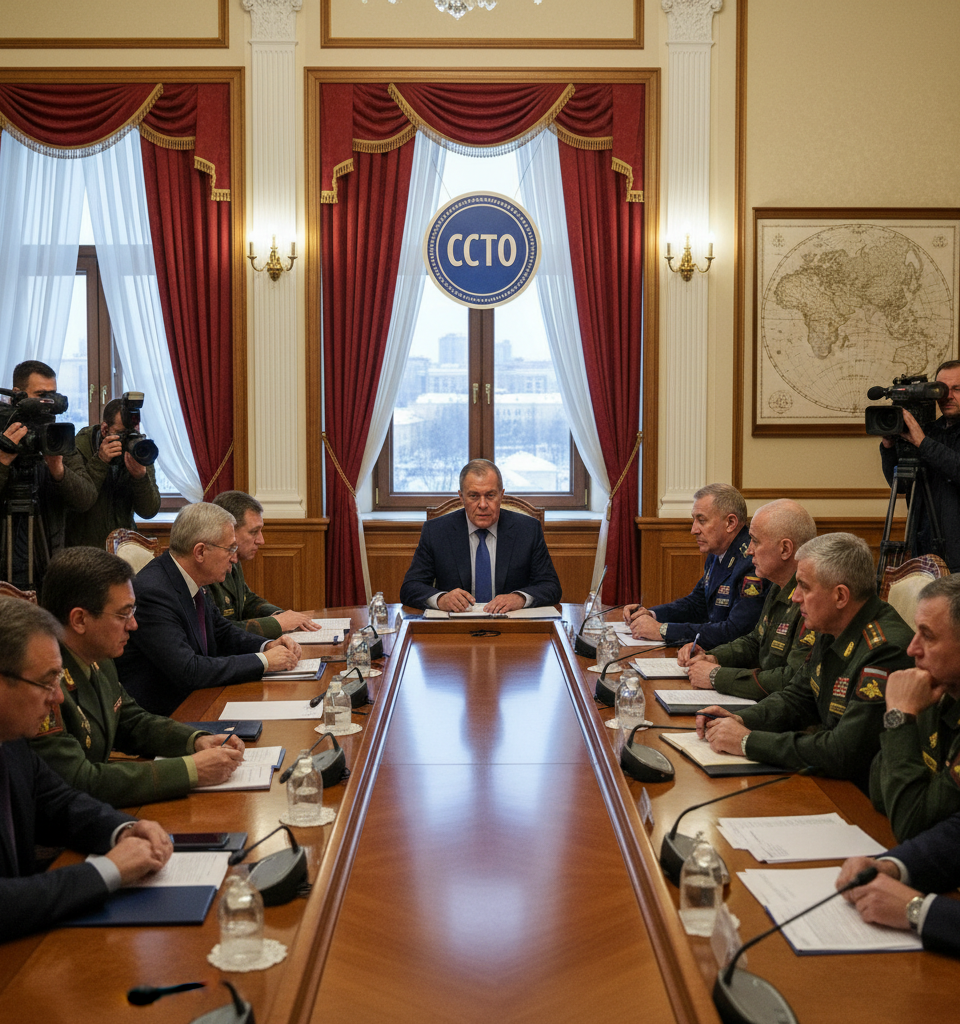
Moscow is preparing to host a high-level meeting of the Collective Security Treaty Organization (CSTO) on May 26, a critical summit aimed at addressing mounting internal tensions within the military alliance. The gathering in the Russian capital comes as several member states voice increasing concerns over the bloc's direction, its response to regional conflicts, and its perceived subservience to Russian strategic interests. Observers suggest the meeting will be crucial for assessing the future cohesion and relevance of the Russia-led security pact.
Contextual Undercurrents and Historical Precedent
The CSTO, often dubbed Russia's answer to NATO, was formally established in 2002, evolving from the Collective Security Treaty signed in 1992. Its stated mission is to strengthen peace, international and regional security, and stability, offering collective defense to its current six members: Armenia, Belarus, Kazakhstan, Kyrgyzstan, Russia, and Tajikistan. However, recent years have seen growing cracks in this facade of unity.
Armenia, particularly, has openly criticized the CSTO's perceived inaction during its conflicts with Azerbaijan, even boycotting recent drills and high-level meetings. This dissatisfaction underscores a broader sentiment among some members who feel the alliance has not adequately protected their interests, raising questions about its foundational principles and operational effectiveness. The regional security landscape has also been complicated by the ongoing conflict in Ukraine, further straining relations and diversifying strategic priorities among member states.
Key Issues and Voices of Dissent
The May 26 meeting is expected to delve into several contentious issues, including collective response mechanisms, regional security threats, and the future strategic orientation of the alliance. ” This stance has created significant friction within the bloc, challenging Moscow's traditional leadership role. Kazakhstan, another key member, has also demonstrated a more independent foreign policy in recent years, balancing its ties with Russia with expanding relationships with Western and Asian powers.
Analysts predict that topics such as joint military exercises, budgetary contributions, and consensus-based decision-making will be hot-button issues on the agenda, potentially leading to heated exchanges as members seek to redefine their roles and expectations within the alliance.
Regional and Geopolitical Impact
The outcome of this meeting holds significant implications for regional stability in Eurasia, a vast region spanning Central Asia, the Caucasus, and Eastern Europe. A weakened or fractured CSTO could create a security vacuum, potentially inviting increased influence from other global powers like China or Turkey. Furthermore, the alliance's internal struggles could embolden non-member states or adversarial actors in contested regions. Economically, any destabilization within CSTO member states, particularly in resource-rich Central Asia, could disrupt trade routes, energy supplies, and investment flows, affecting global markets. For instance, any instability in Kazakhstan, a major oil producer, could send ripples through international energy prices, impacting not just regional economies but also global supply chains.
Expert Analysis and Strategic Implications
Security analysts are closely watching the developments. Dr. Eleanor Vance, a senior research fellow specializing in post-Soviet security, notes, “The Moscow meeting is not just about procedural discussions; it's a litmus test for the CSTO’s very existence as a credible military force. The increasing divergence of national interests, particularly evident in Armenia's stance, reflects a broader trend of member states asserting greater autonomy from Moscow.” She adds that while Russia desires to maintain the CSTO as a bulwark against Western influence and a tool for regional stability, its ability to project uncontested leadership is diminishing. “The alliance needs a compelling new narrative and genuine commitment from all members, not just a historical reliance on Russia’s strength, to survive in its current form.”
The Path Forward: Challenges and Potential Realignments
The immediate future of the CSTO hinges on this meeting's ability to bridge divides and articulate a renewed shared vision. Without concrete assurances and reforms addressing the concerns of dissatisfied members, the alliance risks further erosion of trust and efficacy. Potential outcomes range from a reaffirmation of collective security principles, albeit with concessions to dissenting members, to a more ambiguous communiqué that sidesteps core issues, effectively postponing deeper fractures.
In a more drastic scenario, continued internal bickering could lead to a reduced operational scope or even withdrawals from the alliance, fundamentally altering the security architecture of Eurasia. The May 26 summit will undoubtedly set the tone for the CSTO's trajectory in a rapidly evolving geopolitical landscape, defining whether it remains a significant regional player or gradually fades into strategic irrelevance. Further meetings and bilateral discussions are expected in the subsequent months to address any unresolved issues, underscoring the ongoing nature of these complex dynamics.
Financial Aspects and Resource Allocation
While specific financial details of the CSTO's collective budget are not publicly disclosed at a granular level, member states do contribute to joint operational funds and partake in funding collective military exercises. Armenia, for example, has reportedly withheld some contributions or participation in certain joint drills as a form of protest, though specifics hover in a gray area. The overall expenditure on CSTO activities is estimated to be in the tens of millions of dollars annually, primarily used for training, peacekeeping forces, and shared logistical capabilities. Any significant shifts in commitment from major contributors like Kazakhstan or Belarus could force Russia to shoulder an even greater proportion of the financial burden, potentially straining its own resources, especially given its current economic priorities and military commitments elsewhere.
Humanitarian and Economic Considerations
Beyond military cooperation, the CSTO also aims to address humanitarian and economic challenges that could destabilize its members. Joint disaster response drills and anti-narcotics operations are key components of its mandate. However, the internal tensions could undermine these cooperative efforts.
For instance, disruptions in border security cooperation could exacerbate issues like drug trafficking from Afghanistan, impacting public health and safety across Central Asia and beyond. Economically, greater stability and aligned security policies generally foster more robust trade and investment within the bloc. Conversely, disunity could deter foreign investment in the region, create new trade barriers between member states, and hinder collaborative infrastructure projects crucial for regional economic prosperity.
The meeting will surely touch upon ways to strengthen comprehensive security, which encompasses not just military, but also state-level economic and social challenges.
Broader International Ramifications
International bodies and non-member states are keenly observing the CSTO's internal struggles. A more assertive Central Asian bloc within the CSTO could lead to a re-evaluation of regional partnerships by external powers like China, India, and the European Union. Conversely, a weakened CSTO might be perceived as an opportunity for increased engagement and influence in Central Asia by actors previously kept at bay. The long-term impact could reshape geopolitical alignments, balance of power dynamics, and security guarantees across a significant swath of the Eurasian continent. The decisions made on May 26 will not only resonate within the…