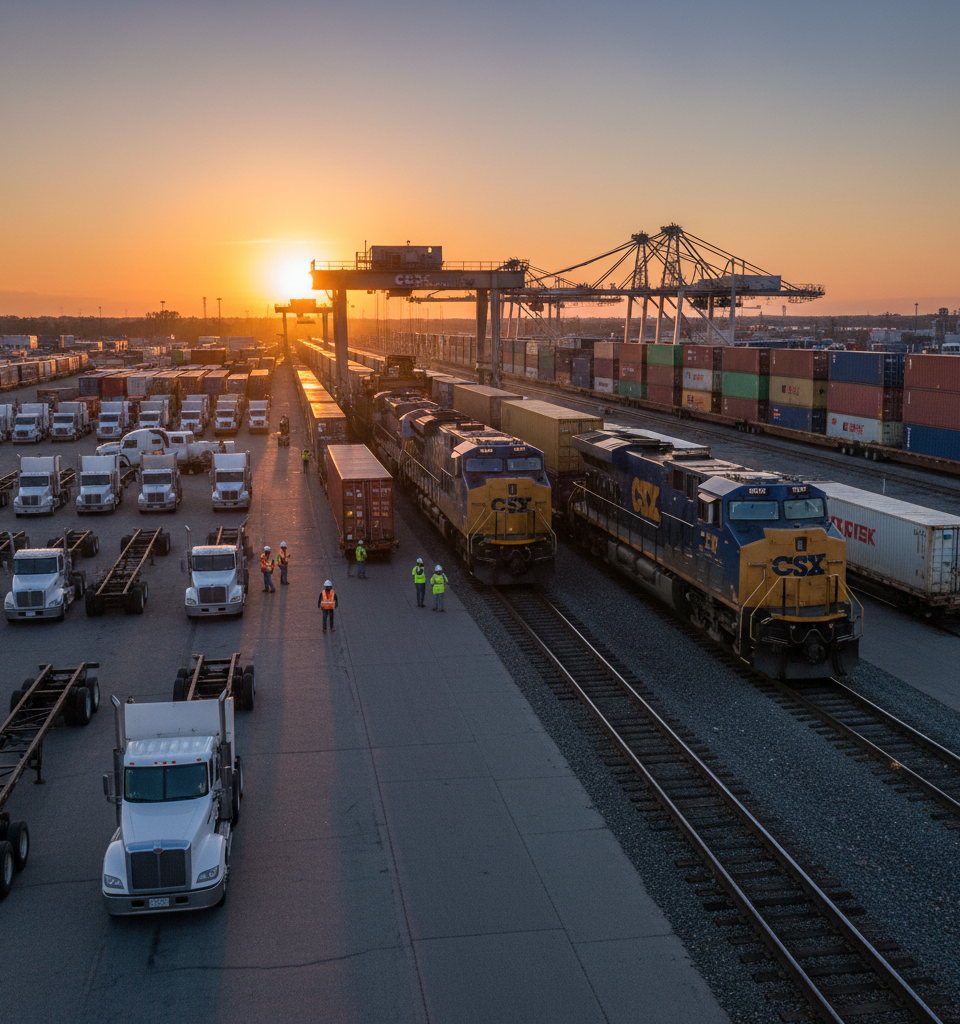
CSX Corporation, one of North America's leading freight rail companies, has reported a marked increase in freight volumes directly attributable to a growing number of shippers shifting from road to rail transportation. This pivotal development, driven primarily by persistently high fuel costs impacting the trucking sector, highlights a significant strategic advantage for the rail industry. The trend is not isolated to CSX, with fellow Class I railroads Union Pacific and Norfolk Southern also acknowledging similar optimistic signs, pointing to a potential recalibration in the logistics landscape.
Context and Economic Drivers
The current surge in truck-to-rail conversions marks a critical juncture for the U.S. supply chain, which has been grappling with volatility for several years. Historically, rail freight has offered a more economical and environmentally friendly alternative for long-haul shipping, particularly for bulk goods. However, the flexibility and speed of trucking often held sway for time-sensitive deliveries. The recent sustained increase in diesel prices, which reached an average of $4.10 per gallon nationally in the first quarter of this year, has dramatically altered this cost-benefit analysis. This economic pressure is compelling businesses to re-evaluate their transportation strategies, pushing rail back into the spotlight as an attractive option for optimizing operational expenditures.
Key Industry Insights and Performance
While specific quarterly figures were not immediately disclosed for the full extent of the conversion volume, CSX management indicated the trend is contributing measurably to their intermodal and merchandise segments. Intermodal, which involves moving freight in standardized containers or trailers that can be transferred between different modes of transport, is particularly benefiting. " This suggests a targeted and deliberate shift rather than a broad, indiscriminate move.
The cost savings can be substantial; industry analysts estimate that rail can be 10-20% cheaper than trucking for certain long-haul routes, a margin that becomes increasingly attractive as fuel surcharges accumulate on truck freight.
Broader Market and Supply Chain Implications
This shift carries significant implications for the broader logistics and transportation sectors. For trucking companies, while some will adapt by focusing on shorter hauls or specialized services, a prolonged exodus of long-haul freight could intensify competition and pressure profit margins. Conversely, the increased demand presents opportunities for railroads to expand their capacity, invest in infrastructure improvements, and further optimize their networks. It also underscores the resilience of rail infrastructure as a foundational component of the economy. From an environmental perspective, rail transportation is significantly more fuel-efficient and emits less carbon per ton-mile than trucking, aligning with growing corporate sustainability goals.
Expert Analysis and Outlook
Transportation analysts generally view this trend as a logical response to market conditions. "When diesel hits these levels, rail's cost advantage becomes undeniable, especially for distances over 700 miles," stated Dr. Evelyn Thorne, a logistics economist at Supply Chain Dynamics Group. "What's critical now is whether the railroads can effectively manage this increased demand without compromising service reliability, which remains a key differentiator for trucking." She also highlighted that while fuel is a primary driver, ongoing driver shortages in the trucking industry further exacerbate the appeal of rail, offering a solution to a multifaceted problem. This dual pressure on trucking—cost and labor—creates a powerful impetus for change.
Future Prospects and Challenges Ahead
The trajectory of this truck-to-rail conversion will largely depend on the sustained price of fuel and the railroads' ability to maintain and improve service levels. Major railroads are likely to accelerate investments in intermodal terminal expansions, locomotive fleet upgrades, and digital solutions to enhance network efficiency and customer experience. However, potential bottlenecks in rail infrastructure, particularly at intermodal hubs, could pose challenges. Policymakers may also become more engaged, potentially offering incentives for intermodal freight to support both economic efficiency and environmental objectives. The coming quarters will offer a clearer picture of whether this current uptick evolves into a sustained market realignment, fundamentally altering the competitive dynamics between road and rail freight in North America.
The ongoing geopolitical landscape and its impact on global energy markets will continue to be a dominant factor. Should fuel prices remain elevated or even increase, the momentum towards rail is expected to strengthen, solidifying its role as a preferred mode for a growing segment of the freight market.