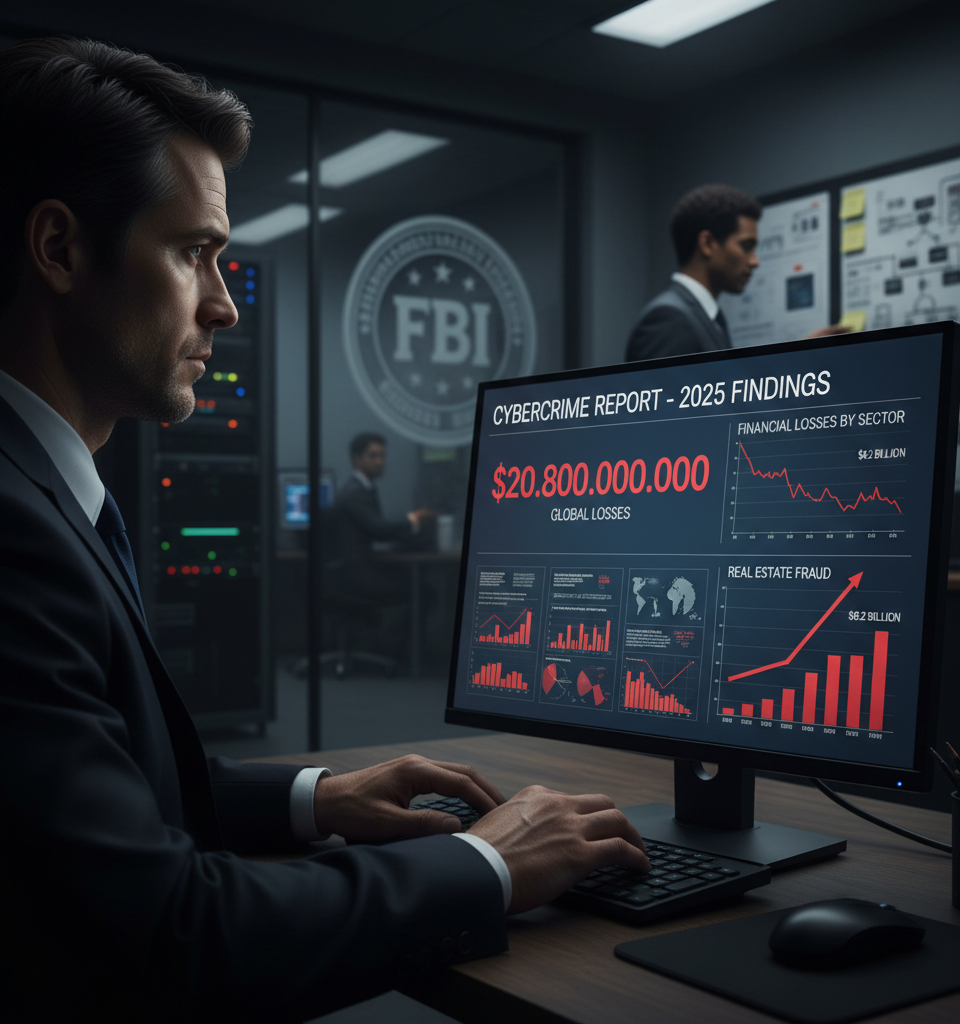
Washington D.C. – In a stark warning to businesses and consumers alike, a recent analysis by the Federal Bureau of Investigation (FBI) indicates that cybercrime losses reached an staggering $20.8 billion in 2025. This alarming figure underscores the rapidly evolving and increasingly sophisticated landscape of digital threats. Among the myriad forms of cybercrime, real estate fraud alone accounted for a substantial $275 million in reported losses, stemming from 12,368 complaints, highlighting a persistent and growing vulnerability within the housing sector.
This unprecedented surge in financial losses from cyber-attacks signifies a critical turning point in the battle against digital malfeasance. The FBI's findings, meticulously compiled from reported incidents, paint a grim picture of criminals exploiting technological advancements and human vulnerabilities to siphon off billions. The real estate sector, a cornerstone of economic activity, has become a prime target due to the high-value transactions involved and the often intricate, multi-party communication chains that can be easily compromised by bad actors.
The detailed report reveals a dramatic escalation from previous years, with the total reported losses jumping significantly. While the FBI did not provide specific year-over-year comparative data in this particular overview, the $20.8 billion figure represents a stark increase from earlier benchmarks, signaling an intensified cyber-threat environment. Business Email Compromise (BEC) and Email Account Compromise (EAC) schemes continue to be major contributors to these losses across various industries, often laying the groundwork for more targeted attacks like those seen in real estate.
For the real estate industry, the $275 million in losses from 12,368 complaints underscores a pervasive and direct threat to housing professionals and their clients. These fraud schemes often involve sophisticated phishing attacks, imposter scams, and wire transfer redirections, where criminals intercept legitimate communications to divert funds intended for property purchases or sales. The sheer volume of complaints indicates that these are not isolated incidents but rather a widespread and coordinated effort by criminal enterprises.
Industry experts are sounding the alarm, emphasizing the need for enhanced security protocols and increased public awareness. "The FBI's data confirms what we've been observing on the front lines," stated Dr. Evelyn Reed, a cybersecurity analyst at Quantum Secure Solutions. "Cybercriminals are increasingly targeting the soft underbelly of complex transactions, like those in real estate. The human element often remains the weakest link, making robust employee training and client education paramount alongside technological safeguards." She added that the focus should not only be on preventing breaches but also on rapid detection and recovery mechanisms.
Looking ahead, the FBI anticipates that cybercrime will continue to evolve, with criminals leveraging emerging technologies such as artificial intelligence and deepfake technology to craft even more convincing and deceptive schemes. The agency emphasizes the importance of a multi-pronged approach involving international cooperation, robust law enforcement efforts, and concerted private sector action. Businesses, especially those in high-risk sectors like real estate, are urged to invest in advanced cybersecurity measures, multi-factor authentication, and continuous employee training on recognizing and reporting suspicious activities. Furthermore, consumers receiving payment instructions via email should always independently verify them through a trusted, known contact method before initiating any transfers.
The battle against cybercrime is a continuous one, and the latest FBI report serves as a critical call to action. The significant financial implications and widespread impact on various sectors necessitate a unified and proactive response from all stakeholders to safeguard economic stability and protect individuals from falling victim to these increasingly sophisticated digital predators.
Key Takeaways from the Report
- Total Cybercrime Losses: $20.8 billion in 2025 across all reported incidents.
- Real Estate Fraud Impact: $275 million in losses from 12,368 reported complaints.
- Primary Threat Vectors: Business Email Compromise (BEC), Email Account Compromise (EAC), and imposter scams.
- Vulnerable Sectors: Real estate, coupled with other industries handling high-value transactions.
- Call to Action: Enhanced security protocols, employee training, public awareness, and international collaboration.
Impact on the Real Estate Market
The pervasive nature of real estate fraud, as evidenced by the FBI's report, is beginning to have tangible effects on transaction processes. Many title companies, lenders, and real estate agencies are now implementing more stringent verification procedures, often slowing down closing processes but significantly enhancing security. The increase in fraud often translates to higher insurance premiums for real estate professionals and increased due diligence costs, which can ultimately be passed on to consumers. Moreover, the reputational damage and legal ramifications for firms whose client funds are compromised highlight the critical need for proactive cybersecurity investment. Buyers and sellers are becoming increasingly wary, demanding transparent and secure communication channels, pushing the industry to accelerate its adoption of secure portals and verified communication platforms.
Future Outlook and Recommendations
The FBI, in conjunction with other federal and international agencies, is intensifying efforts to dismantle cybercriminal organizations. However, the sheer volume and global reach of these operations necessitate a collective defense. Recommendations for businesses include implementing a robust incident response plan, conducting regular security audits, and fostering a culture of cybersecurity awareness from the top down. For individuals, the advice remains consistent: practice strong password hygiene, enable multi-factor authentication, and exercise extreme caution when handling financial transactions online, especially those initiated via email. The dynamic nature of cyber threats means that vigilance and adaptability will be key to mitigating future risks.