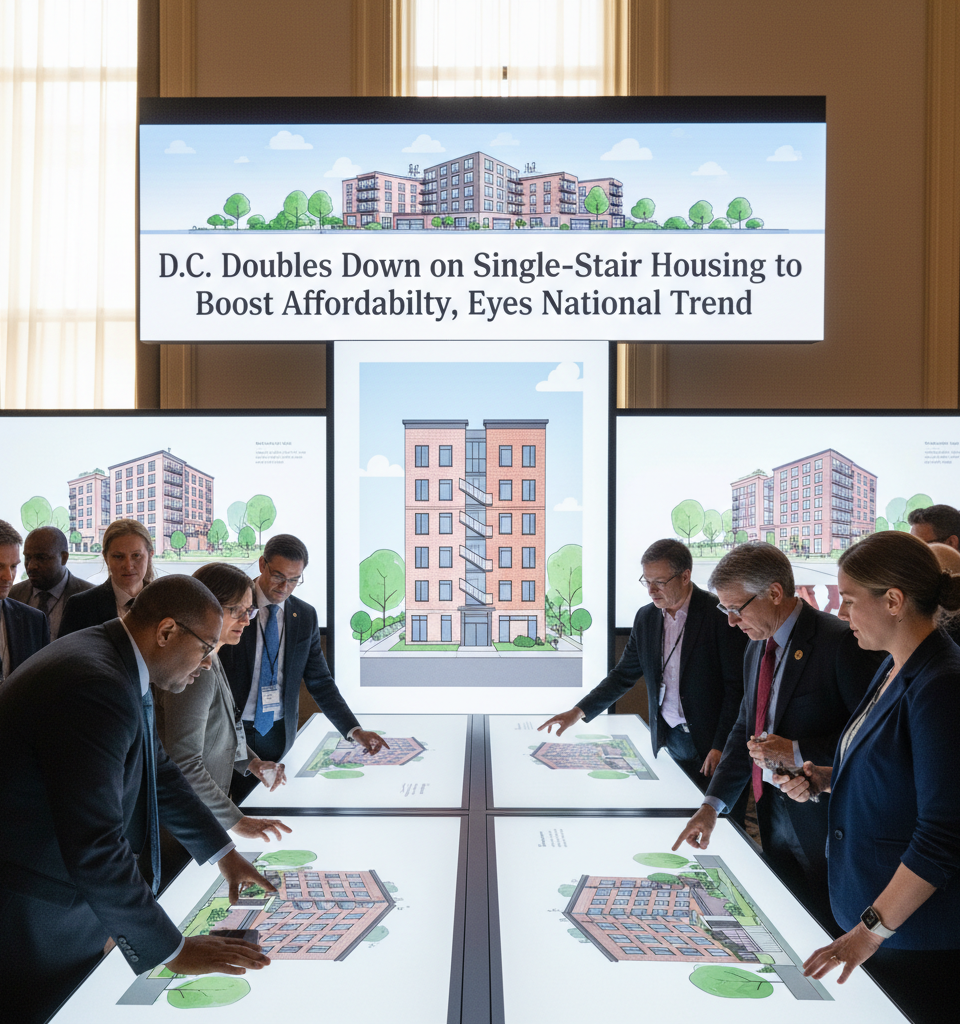
Washington, D.C. is on the cusp of a significant shift in its building codes, as the City Council unanimously advanced the "One Front Door Act" on Tuesday, April 23, 2024. This landmark legislation, if enacted after a second reading, will double the maximum height permitted for residential buildings constructed with a single stairway, aligning the nation's capital with a burgeoning national trend aimed at making small and mid-rise housing more affordable and accessible. The move reflects a strategic effort to address the city's acute housing shortage and reduce the escalating costs of urban development.
Addressing D.C.'s Housing
Challenge through Regulatory Reform
The push to relax single-stairway rules stems from a growing recognition that current building codes, often rooted in outdated fire safety regulations, inadvertently escalate construction expenses. Traditionally, multi-story residential buildings in D.C. have required two stairwells, a design mandate that consumes significant floor space and adds considerable material and labor costs. By permitting taller single-stair buildings, D.C. joins a cohort of cities and states, including California and Oregon, exploring similar regulatory reforms to facilitate the construction of more housing units, particularly in transit-rich and walkable neighborhoods. This legislative maneuvering is a direct response to the city's housing crisis, where median rents continue to climb and homeownership remains out of reach for many residents.
Key Provisions and Enhanced Safety Measures
The One Front Door Act specifically proposes to increase the maximum height for single-stair residential buildings from its current limit, likely around three stories, to approximately six or seven stories. This expansion, however, is not without stringent safety precautions. The bill incorporates enhanced fire safety requirements, which may include features such as superior fire suppression systems, direct access to the exterior from individual units where feasible, and robust fire-rated construction materials. These added safety measures are critical to assuaging concerns from fire departments and ensuring the well-being of residents, illustrating a balanced approach to innovation and public safety. Sources indicate that the specifics of these safety enhancements are being rigorously reviewed and refined in collaboration with fire safety experts.
Impact on the Development Landscape and Housing Market
This legislative change is expected to have a profound impact on D.C.'s development landscape. By reducing the footprint required for circulation, developers can fit more units into smaller parcels of land, thereby diminishing per-unit construction costs. Industry analysts estimate that eliminating a second staircase can reduce construction costs by 5-10% per unit, translating into significant savings that can be passed on to consumers or enable the viability of otherwise unfeasible projects. This could unlock numerous infill development opportunities, particularly for small-scale developers looking to build projects of 6-12 units, often referred to as "missing middle" housing. The resulting increase in housing supply is anticipated to exert downward pressure on rental prices and expand homeownership opportunities for middle-income residents.
Expert Perspectives on the Regulatory Shift
Urban planning experts and housing advocates have largely lauded the D.C. Council's proactive stance. Dr. Evelyn Reed, a prominent urban economist specializing in housing policy, commented, "This is a smart, targeted intervention. By thoughtfully updating codes, we can achieve substantial gains in housing affordability without compromising safety. Single-stair buildings are a proven model in many European cities, and D.C.'s approach, with its focus on enhanced safety, sets a strong precedent." Local affordable housing developer, Maria Rodriguez of Capital Homes Inc., added, "The current two-stair rule often made projects just slightly too expensive to pencil out. This change could make dozens of small urban infill sites viable, allowing us to build more affordably priced homes faster."
Navigating the Path to Final Enactment
The unanimous vote on the first reading indicates strong support for the One Front Door Act. The next crucial step is a second reading and final vote by the D.C. Council. Upon successful passage, the legislation would then be sent to the Mayor for signature. While the timeline for implementation following mayoral approval is subject to administrative processes, developers are already preparing to integrate these new design possibilities into their future projects. The D.C. Department of Buildings will subsequently issue updated guidelines and regulations to reflect the code changes, providing clarity for architects, engineers, and construction firms.
Broader Implications and National Replication
Should the One Front Door Act successfully become law and demonstrate its intended benefits in D.C., it could serve as a powerful case study for other American cities grappling with similar housing crises. The national trend towards rethinking single-stair limitations suggests a growing willingness among policymakers to challenge traditional building codes in pursuit of affordability and sustainable urban growth. D.C.'s refined approach, balancing regulatory reform with robust safety enhancements, positions it as a leader in this evolving national conversation, potentially inspiring a wave of similar legislative changes across the country and fundamentally altering the landscape of urban residential development for years to come.