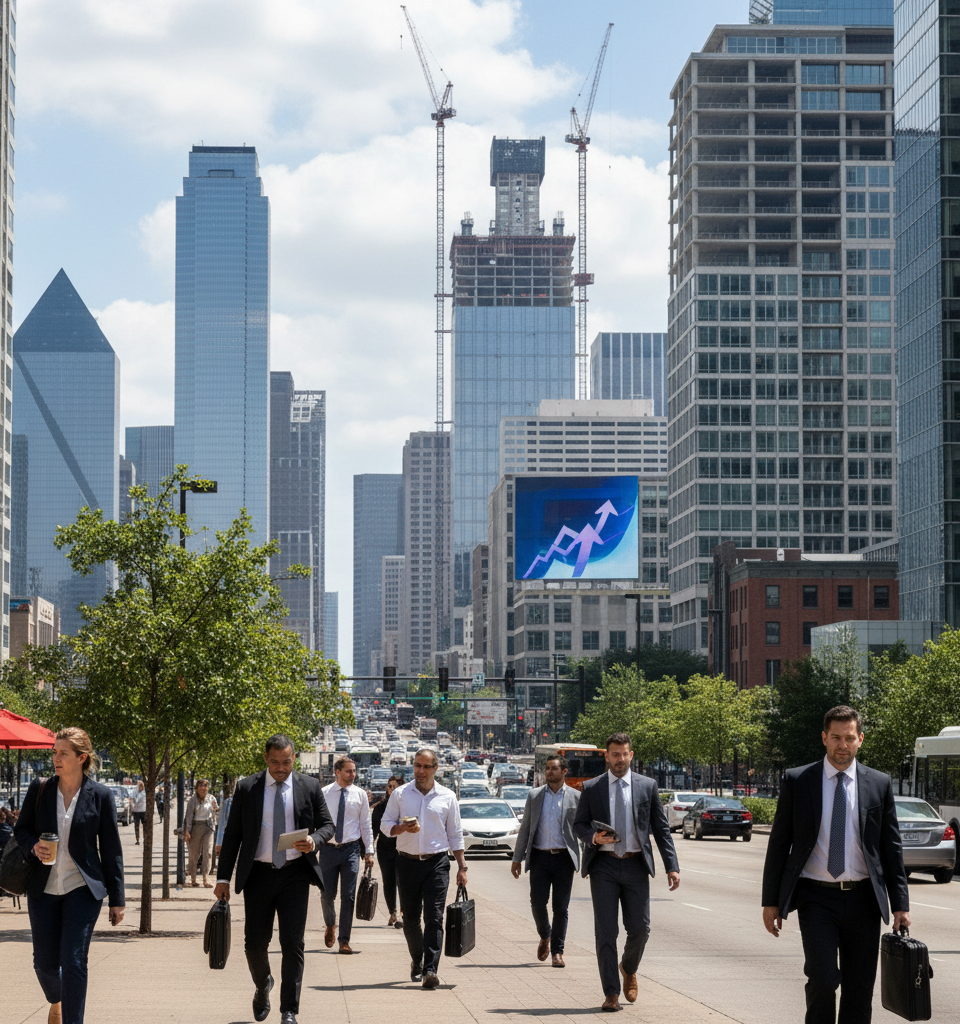
3 million by 2024. S. urban centers, is creating a robust demand for commercial real estate, particularly within the office sector. While other major cities grapple with post-pandemic office vacancies and shifting work paradigms, the North Texas region is demonstrating a unique resilience and an almost palpable optimism, hinting at an inevitable ascent to a top-tier metropolitan status in the coming years.
Contextualizing Growth: A National Anomaly
This rapid demographic shift for DFW is not merely a statistical anomaly but a critical indicator of the region's growing attractiveness as a business hub and a place to live. The period between 2020 and 2024 has been marked by significant economic volatility and a re-evaluation of urban living. Yet, Dallas-Fort Worth has consistently outperformed, drawing in a diverse range of new residents and businesses. This consistent inflow translates directly into increased demand for housing, services, and, crucially for this analysis, commercial office space, providing a sharp contrast to the more tempered growth or even declines observed in some coastal metropolitan areas.
Key Drivers and Market Specifics
The compelling narrative of Dallas-Fort Worth's office market success is largely driven by its strategic geographical location, business-friendly environment, and lower cost of living compared to major coastal cities. Companies are increasingly choosing DFW for corporate relocations and expansions, drawn by tax incentives and a burgeoning talent pool. For instance, according to a recent CBRE report, Dallas-Fort Worth saw over 2.5 million square feet of office leasing activity in Q3 2023, with a notable portion attributed to new-to-market companies. The region's diverse economic base, spanning technology, finance, logistics, and healthcare, provides a stable foundation, mitigating risks associated with over-reliance on a single industry. Average asking rents, while showing some fluctuations, generally remain competitive, averaging around $30 per square foot, making it an attractive proposition for businesses seeking value without compromising on quality.
Pervasive Industry Impact
The ripple effects of this population explosion and subsequent office market strength are felt across various sectors. The construction industry is experiencing a boom, with new office towers and mixed-use developments continually breaking ground to accommodate future demand. This, in turn, stimulates job creation in architecture, engineering, and various trades. The influx of businesses also necessitates a robust support infrastructure, from legal and financial services to hospitality and retail, all of which benefit from increased economic activity. Real estate investment trusts (REITs) and institutional investors are increasingly allocating capital to Dallas-Fort Worth, recognizing its sustained growth trajectory and strong return potential compared to more saturated or stagnant markets.
Expert Insights and Projections
Real estate analysts and urban planners widely regard Dallas-Fort Worth's growth as sustainable, albeit with an eye on managing its rapid expansion. "Dallas-Fort Worth has cultivated an ecosystem that is highly attractive to corporations and individuals alike," states Dr. Emily Chen, a senior economist specializing in metropolitan development. "The continuous migration, particularly of younger demographics and skilled labor, ensures a vibrant workforce and sustained demand across all real estate asset classes. While challenges like infrastructure strain and affordable housing will arise, the underlying economic fundamentals remain exceptionally strong, pointing towards continued office market stability and growth over the next five to ten years." This sentiment is echoed by local developers, who report healthy pre-leasing activity on new projects, underscoring confidence in future occupancy.
Envisioning the Future: Continued Momentum
Looking ahead, the prognosis for Dallas-Fort Worth remains overwhelmingly positive. Projections indicate that the region is on track to surpass 10 million residents within the next two decades, positioning it as one of the largest metropolitan areas in the United States. This continued growth will likely necessitate ongoing investment in public transportation, expanded educational facilities, and further diversification of the economic base. For the office market, this means a sustained need for new, modern, and amenity-rich spaces that cater to evolving corporate demands. The emphasis will shift towards creating adaptable workspaces that blend productivity with employee well-being, solidifying DFW's reputation not just as a hub for business, but as a model for dynamic urban development in the 21st century.